Oh Sehoon Announces “Measures to Promote Housing Supply”
Aiming to Shorten Average Redevelopment Project Period from 18.5 Years to 13 Years
Introducing a “Processing Deadline System” Throughout All Redevelopment Project Stages to Monitor Delays
Establishing Advance and Parallel Administrative Procedures, and Process and Conflict Management Systems
The Seoul Metropolitan Government has decided to shorten the total period from district designation to project completion by 5.5 years in order to accelerate housing supply. The goal is to reduce the time for designating redevelopment districts to 2 years, establishing cooperative associations to 1 year, and project implementation, management disposition approval, and relocation to 6 years. A system for process and conflict management will also be established to minimize project delays.
On July 24, Seoul Mayor Oh Sehoon personally visited the Sindang 9 District area in Jung-gu and announced the “Measures to Promote Housing Supply,” which contain strategies to accelerate redevelopment projects. The plan is to reduce the average redevelopment project period from 18.5 years to 13 years. To achieve this, measures to minimize delays in permits and project progress have also been prepared.
Mayor Oh Sehoon explained, “Until now, we have focused on securing as many redevelopment areas as possible and have done our best to save about 2 years up to the district designation stage through the Fast-track Integrated Planning. From now on, our goal is to proceed with the administrative procedures as quickly as possible while minimizing resident conflicts.”
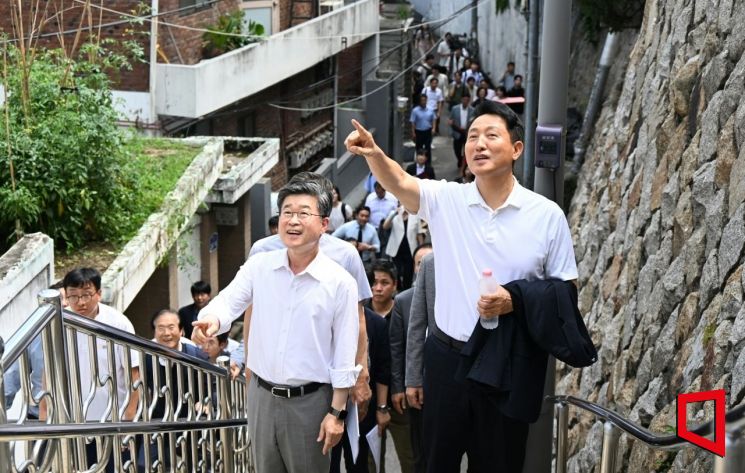 Seoul Mayor Oh Sehoon is inspecting the redevelopment site of Sindang 9 District on the afternoon of the 24th. Provided by Seoul City
Reducing the Redevelopment Project Period from 18.5 Years to 13 Years
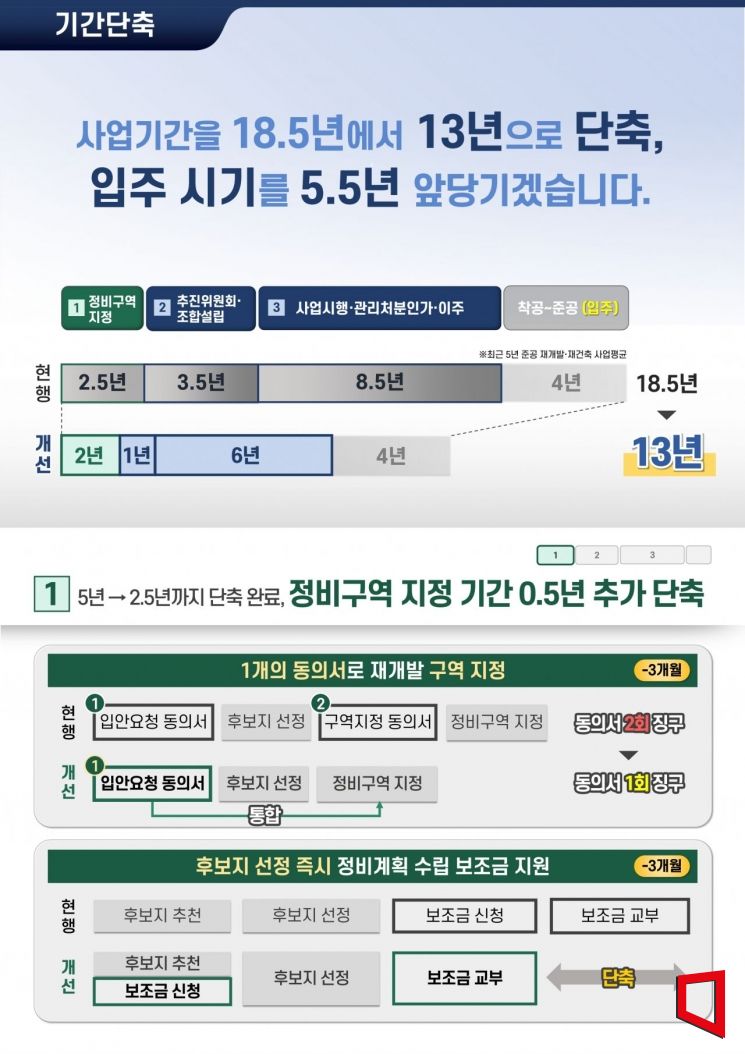
This measure focuses on “shortening the redevelopment project period” and “strengthening process management” to reduce project delays. The plan is to speed up the redevelopment process to increase supply by accelerating groundbreaking and move-in. The Seoul Metropolitan Government aims to shorten the redevelopment project period by reducing the “redevelopment district designation” from 2.5 years to 2 years, “promotion committee and cooperative association establishment” from 3.5 years to 1 year, and “project implementation, management disposition approval, and relocation” from 8.5 years to 6 years.
Immediately after selecting redevelopment candidates through the Fast-track Integrated Planning, the city will provide support for establishing redevelopment plans and omit the separate consent form for district designation, reducing the period to 2 years. To expedite the next stage of promotion committee and cooperative association establishment, the requirements and procedures for public subsidies will also be improved. Previously, subsidies were provided after achieving a resident consent rate of over 50% and completing the preliminary integrated planning consultation, but from now on, support will be provided immediately without a separate resident consent procedure. Through this, the city plans to shorten the period for establishing cooperative associations to within 1 year after district designation.
An advance and parallel administrative procedure system will also be introduced so that various redevelopment project procedures can be handled simultaneously. The period from cooperative association establishment to groundbreaking, which previously took an average of 8.5 years, will be shortened to within 6 years. For example, appraisal companies will be selected in advance so that appraisals can begin immediately after project implementation approval, and the draft project implementation plan will be prepared during the integrated review so that the application for project implementation approval can be submitted immediately after the review is completed.
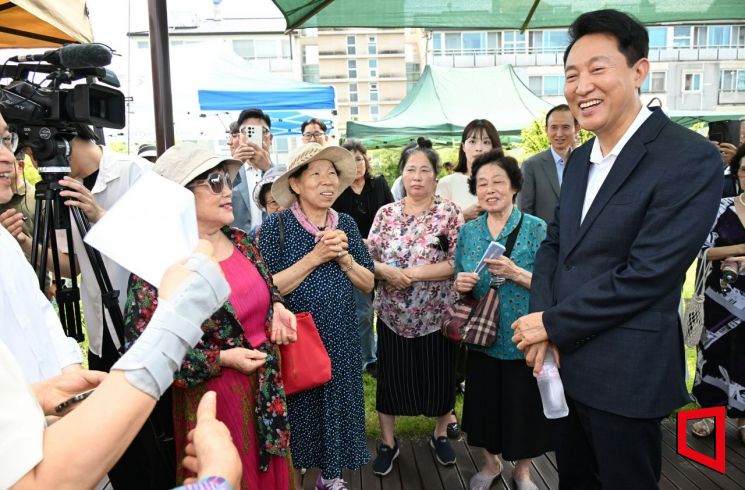 Seoul Mayor Oh Sehoon is talking with local residents after explaining the housing supply promotion plan at the Sindang 9 District redevelopment site on the afternoon of Thursday, the 24th. Photo by Seoul City
Introducing a “Processing Deadline System” for All Redevelopment Project Stages
A meticulous process management system will be implemented to ensure that permits and groundbreaking can proceed quickly without delay after the start of a redevelopment project. First, a “processing deadline system” will be introduced for all stages of the redevelopment project. Previously applied only at the district designation stage, the processing deadline system will now be expanded to all six stages of the redevelopment project, from designation to construction and completion. Standard processing deadlines will be set for each of the six stages, and the process will be divided into 42 detailed steps to monitor for delays.
A “process promotion officer” and a “conflict management officer” will also be designated for each project site. A process and conflict management system will be established to identify and resolve potential causes of project delays in the permitting stage in real time. The process promotion officer will diagnose the causes and prepare solutions for sites where the processing deadline has been exceeded or the schedule has been delayed, helping to normalize the project. The conflict management officer will mediate and assist project progress when conflicts arise in each district.
Since the introduction of the Fast-track Integrated Planning in 2021, the city has selected a total of 241 redevelopment and reconstruction sites, covering 378,000 housing units, and designated 145 districts, covering 194,000 housing units, as redevelopment districts. The city plans to designate a total of 312,000 housing units as redevelopment districts by June next year.
Mayor Oh stated that for areas where district designation has been completed, the city will accelerate the process so that move-in can be achieved within 11 years. He explained, “We will secure 45,000 housing units per year, and by setting deadlines for each stage of the project in a two-track approach, we have institutionalized our commitment to ensure that each procedure is completed within the specified period.”
The First Project Site for Height Regulation Relaxation: “Sindang 9 District”
The Sindang 9 District project aims to build eight apartment buildings, 315 housing units, and auxiliary facilities on a 18,651 square meter area at 432-1008 Sindang-dong, Jung-gu. The Seoul Metropolitan Government has selected Sindang 9 District as the first site for the “Height Regulation Area Public Contribution Relaxation” policy, the third regulatory reform measure, and is considering lowering the public contribution rate from the current 10% to as low as 2% when the zoning is upgraded.
This system was introduced to address the issue of being unable to realistically utilize the additional floor area ratio secured when upgrading the zoning in height-regulated areas such as altitude districts. At the first stage of zoning upgrade, the existing mandatory public contribution ratio (10%) can be relaxed to as low as 0% depending on local conditions.
In addition, the maximum building height standard for altitude districts will be relaxed from 28 meters to 45 meters, allowing the number of floors to increase from 7 to 15, and the floor area ratio will be greatly expanded from 161% to over 250% through project cost adjustment factors, dramatically improving project profitability.
Mayor Oh explained, “The Sindang 9 District began its redevelopment project 20 years ago and has attempted four times to find a developer, but none appeared. Through these three incentives?height restriction relaxation, increased project profitability, and reduced public contributions?a construction company has now come forward, making the project feasible.”
Mayor Oh added, “There are many areas in Seoul in similar circumstances to Sindang 9 District, and I hope that seeing the progress here will give residents the courage to unite and move forward with their own projects.”
© The Asia Business Daily(www.asiae.co.kr). All rights reserved.



















