WSJ Highlights the Craze for Hyper-Realistic Silicone Babydolls in the US
Raising Dolls Worth Over $8,000 Like Real Children
Benefits for Trauma Therapy... Some Say "It's Creepy"
'Real babydoll' dolls, crafted with intricate detail to resemble actual newborns, are gaining worldwide popularity. This trend is expanding beyond simple collecting to become a form of emotional healing and a sophisticated hobby, establishing itself as a new cultural phenomenon.
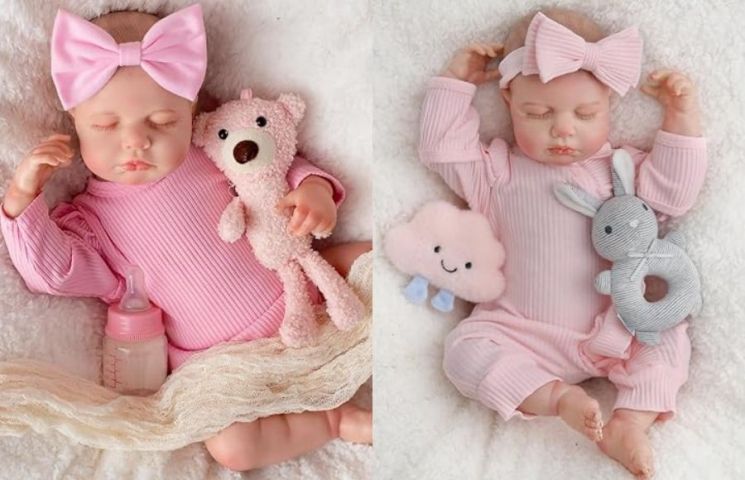
On the 23rd (local time), The Wall Street Journal (WSJ) reported, "Real babydolls are emerging as sources of psychological comfort and as a high-end hobby for collectors." Real babydolls are life-sized dolls meticulously made from silicone, with every process done by hand?from painting veins visible beneath the skin to implanting hair made from alpaca or goat fur. For high-end products, the price per doll can reach $8,000 (about 11 million KRW). Consumers immerse themselves in 'virtual parenting,' dressing the dolls, feeding them, and putting them to sleep as if they were real babies.
In June, about 1,500 enthusiasts gathered at a real babydoll expo held in North Carolina, United States, making the event a great success. At the venue, parenting advice such as supporting the doll's head when holding it was exchanged, and booths even sold 'baby scent' perfumes. WSJ described the scene as "an immersive space closely resembling real parenting," and highlighted related experiences such as doll painting and hair implantation workshops.
On this day, American YouTuber Kelly Maple (23) attended the expo, placed her real babydoll 'Naomi' in a car seat, and headed to a shopping mall where she transferred the doll to a luxury stroller. The sight of Naomi, lying in the stroller with a hairpin and dress, as Kelly Maple picked out baby clothes, looked like an ordinary mother and daughter at first glance, but in reality, it was 'virtual parenting' with a silicone doll, leaving a strong impression on observers.
This phenomenon is drawing attention not just as a form of 'collecting,' but also as a means of emotional healing. Experts analyze that real babydolls can provide psychological comfort not only to those who have lost children due to miscarriage or accidents, but also to people suffering from PTSD (post-traumatic stress disorder), dementia, or autism spectrum disorder. In fact, pop star Britney Spears, who experienced a miscarriage, was spotted holding a real babydoll, drawing public attention.
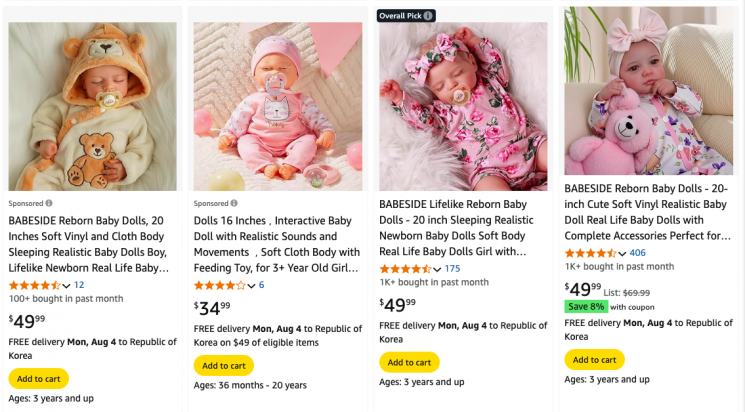
However, opinions toward real babydolls are divided. There are concerns that treating the dolls as real babies causes social discomfort. In Brazil, a bill has been proposed to ban real babydolls in public places, and the emergence of 'fantasy babydolls'?such as those with mermaid or rabbit ears?has also sparked social debate.
Regarding this, British artisan Johnstone, who crafts real babydolls, said, "People are split into two groups: those who love them and those who extremely dislike them, much like Marmite (a famous British spread)," adding, "Preferences are sharply divided, but this market has a strong identity and a dedicated consumer base."
Experts analyze that the real babydoll market is evolving beyond simple doll consumption into a premium niche market that combines psychological therapy, handcraft artistry, and personalized consumption. However, there are concerns that, in the long term, if social consensus on product safety, public order, and consumer ethics is not achieved, the expansion of the market may be restricted.
© The Asia Business Daily(www.asiae.co.kr). All rights reserved.


















