Cumulative Number of Heat-Related Illness Cases Surpasses 1,800 This Year
Significantly More Heat-Related Illness Cases Compared to Last Year
The ongoing heatwave has caused the number of heat-related illness cases to nearly double in just one day. The cumulative number of patients this year has surpassed 1,800.
According to the Korea Disease Control and Prevention Agency (KDCA) on July 23, there were 136 cases of heat-related illnesses reported at emergency rooms nationwide the previous day. This figure is twice as high as the number recorded on July 21.
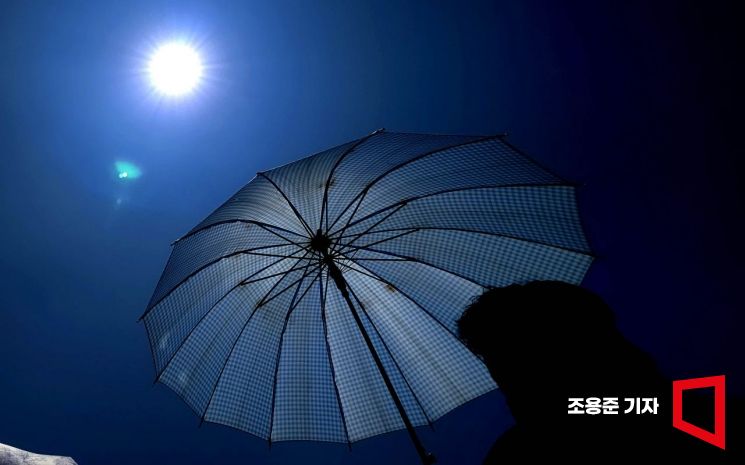 Citizens are walking in Insadong, Seoul, using parasols to shield themselves from the heatwave. Photo by Asia Economy DB.
Since May 15 of this year, the KDCA has been operating a heat-related illness surveillance system at 517 emergency rooms across the country. As of the previous day, the cumulative number of heat-related illness cases stood at 1,860, including 9 deaths.
Due to the impact of heavy rainfall, the number of heat-related illness cases remained in the single digits for five consecutive days starting July 15. However, with the return of the heatwave, the numbers have surged daily, with 45 cases on July 20, 68 cases on July 21, and 136 cases on July 22. Among these, the number of cases on July 21 was initially reported as 61 but was later revised to 68 after additional cases were confirmed.
The number of heat-related illness cases this year is significantly higher compared to last year. Based on the surveillance start date of May 20 last year, there have been 1,844 cases this year?2.72 times more than the 679 cases recorded during the same period last year. Of the cumulative cases this year, more than half?59.6%?were due to heat exhaustion. This was followed by heat stroke at 17.0%, heat cramps at 13.7%, and heat syncope at 8.3%.
Heat-related illnesses are acute conditions caused by heat and typically present with symptoms such as headache, dizziness, muscle cramps, and fatigue. If not treated promptly, they can lead to decreased consciousness and potentially become life-threatening. The most common location for these incidents was outdoor worksites, accounting for 30.9%. This was followed by rice fields at 13.4% and roadsides at 12.9%.
© The Asia Business Daily(www.asiae.co.kr). All rights reserved.

















