Analysis of Chinese Media on University Entrance Exam Applications
Top Scorers Flock to AI, Computer, and Electronic Engineering
"Medical Schools Shunned Due to Long Duration and Intense Workload"
The impact of China's generative artificial intelligence (AI) model DeepSeek has also been reflected in Chinese students' university entrance exam choices.
On July 22, Yonhap News, citing Zhejiang Daily and Zhengguan News, reported that "according to the status of university entrance exam applications announced by local governments across China as of the previous day, top-scoring students have flocked to advanced fields such as AI, computer engineering, and electronic engineering at prestigious universities in major cities, and the popularity of science and engineering majors has been proven regardless of university reputation."

The Gaokao, China's university entrance examination, is usually scored out of 750 points. Even considering that the admission thresholds at major prestigious universities have dropped slightly this year due to increased quotas, the admission cutoff for science and engineering majors at the National University of Defense Technology in Jiangsu Province reached 671 points, which is close to the scores required by China's top-tier universities such as Tsinghua University and Peking University.
In addition, according to Guangdong Province, top Gaokao scorers prefer the Beijing University of Electronic Science and Technology. Although this university is not officially designated as a prestigious university by the Chinese government, it is gaining popularity among applicants because its graduates have an advantage in securing government jobs. This trend is believed to reflect both the growing interest in science and engineering fields and the increasingly severe employment crisis in China.
Zhengguan News commented, "Both students and parents now value the intrinsic worth of a major and the stability of employment prospects over the prestige of the university itself," adding, "No matter how famous a university is, majors that are not popular have fallen significantly in the overall application rankings."
 On the afternoon of the 16th, at the 3rd China International Supply Chain Promotion Expo held at the Beijing International Exhibition Convention Center in China, an attendee is shaking hands with a humanoid robot from the Chinese IT company Lenovo. Photo by Yonhap News
Amid this clear preference for science and engineering, interest in clinical medicine has dropped significantly. Zhejiang Daily analyzed, "In the past two years, it has become difficult even for medical students to find jobs, and medical schools are increasingly avoided because the study period is long and the workload is heavy." The growing admiration for professions such as humanoid robot or AI and tech entrepreneurs and researchers in China also appears to have contributed to this trend.
Furthermore, the prolonged real estate slump has led to a decline in the popularity of civil engineering, and the preference for humanities colleges, where employment is not guaranteed, has also dropped sharply. In the Inner Mongolia region, not a single applicant applied for majors such as public project management at Peking University.
In China, while the central government sets the overall framework for university entrance exams, each local government manages admissions separately. This year, the number of Gaokao test-takers in China was about 13.35 million, a decrease of around 70,000 from last year, but still the second largest number ever recorded.
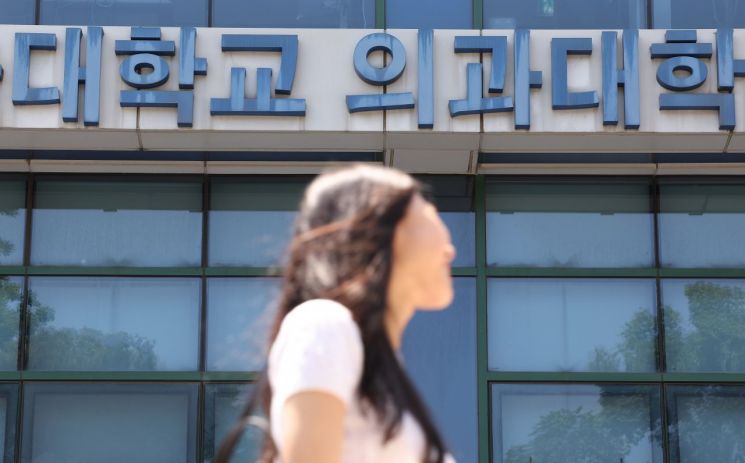
In contrast to China, South Korea is seeing a concentration of applicants to medical schools, resulting in a decline in preference for science and engineering majors. This trend has been further reinforced by the government's expansion of medical school quotas last year. According to Jongro Academy, the number of applicants for regular admissions to the 39 medical schools nationwide for the 2025 academic year was 10,519, an increase of 2,421 (29.9%) from the previous year. This is the first time in six years that the number of regular medical school applicants has exceeded 10,000.
On the other hand, the number of applicants to Korea Advanced Institute of Science and Technology (KAIST), Gwangju Institute of Science and Technology (GIST), Ulsan National Institute of Science and Technology (UNIST), and Daegu Gyeongbuk Institute of Science and Technology (DGIST) was 4,844, a decrease of 1,899 (28.2%) from the previous year's 6,743. In particular, the number of applicants to KAIST dropped from 2,147 for the 2024 academic year to 1,333 for the 2025 academic year, a decrease of 814 (37.9%) from the previous year.
© The Asia Business Daily(www.asiae.co.kr). All rights reserved.



















