A Blow to the Culture of Wearing Dress Shoes
Street Vendor Stalls Also on the Decline
"Reporter, you're wearing sneakers too. Take a look around?who even wears dress shoes these days?"
An Taekjong (74), who runs a shoe repair stand near Gongdeok Station in Mapo-gu, Seoul, made this comment while pointing at the shoes of people walking by. An has been polishing and repairing shoes on the street for over 30 years, but he said that the number of customers has declined over the past 7 to 8 years. "When things were good, I could make over 100,000 won a day, but these days, if I earn 30,000 to 40,000 won, that's considered a good day," he said. "If business drops any further here, I'll probably close up and quit within 2 to 3 years."
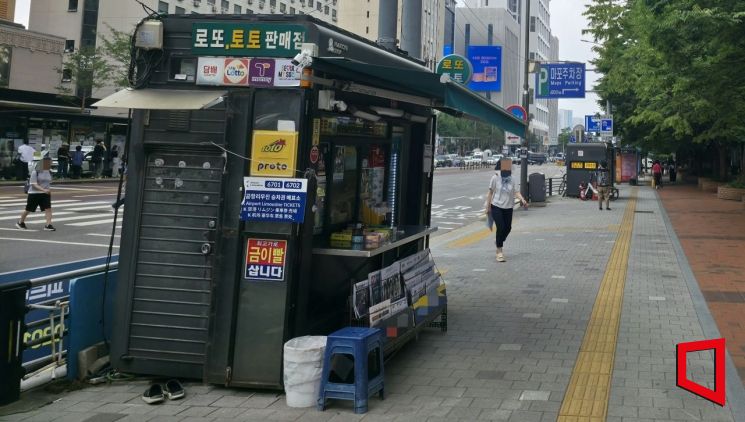
Shoe repair stands and street vendor stalls are disappearing, unable to adapt to the changing times.
According to the Seoul Metropolitan Government as of April this year, there are a total of 1,225 sidewalk business facilities (vendor stalls and shoe repair stands) currently operating in Seoul. Compared to 2011, the number of vendor stalls has dropped by 61%, from 1,284 to 500, while shoe repair stands have decreased by 43%, from 1,266 to 725.
Obokil (71), who has been repairing shoes next to the Mapo Police Station for 36 years, said, "In the past, almost everyone wore dress shoes, so I used to get up to 50 pairs a day just from the police station." He added, "Now, there are days when I have no sales at all, and the price of rubber materials has gone up a lot, so it's not easy." He continued, "After the dress code for public officials became more relaxed, there was much less shoe repair work. The world has changed."
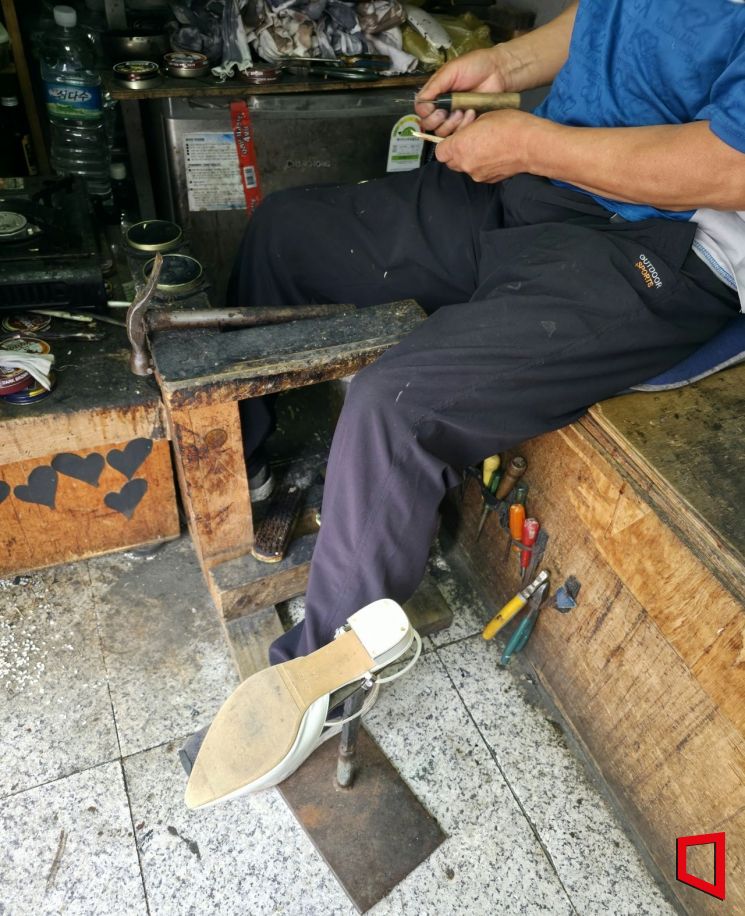
In fact, many office workers say they rarely wear dress shoes except on important occasions. Shin (29), an office worker, said, "The shoe repair man sometimes comes by to pick up shoes from the deputy managers and managers, but among the younger employees, hardly anyone wears them."
Seoul's policy of reducing sidewalk business facilities to improve the pedestrian environment is also part of this change. There have long been opinions that sidewalk business facilities should be restricted because they spoil the urban landscape, and since 2019, Seoul has been renewing business permits for these facilities on a yearly basis through the "Street Vendor Permit System." Every three years, the city checks the assets of vendors and only grants permit renewals to those whose net assets are less than 450 million won.
Experts point to changes in lifestyle and a lack of convenience as the reasons for the decline of vendor stalls and shoe repair stands. Lee Eunhee, a professor of consumer studies at Inha University, explained, "It's now possible to buy more products more conveniently at a convenience store right next to a vendor stall. People don't read paper newspapers anymore, and you can even buy lottery tickets online. There are fewer and fewer reasons to use a street vendor stall." Professor Lee added, "Even public officials now have more freedom in their dress, so they don't wear dress shoes as much, which naturally led to a decline in shoe repair stands. More office workers exercise after work, and people value convenience over formality."
© The Asia Business Daily(www.asiae.co.kr). All rights reserved.


















