A New Power Boom Expected with DC Conversion
Direct Current Distribution Emerges as a Next-Generation Core for Efficiency and Safety
Power Equipment and Cable Companies Move Quickly to Respond
As the government launches a long-term investment plan for power distribution networks with up to 40 trillion won in funding, the market for direct current (DC)-based distribution facilities, which enable electricity to flow in a specific direction, is emerging as a "next-generation power strategy." With the spread of renewable energy, DC technology is gaining attention as an efficient power transmission method. As the distribution network structure shifts, DC is expected to become a new growth axis.
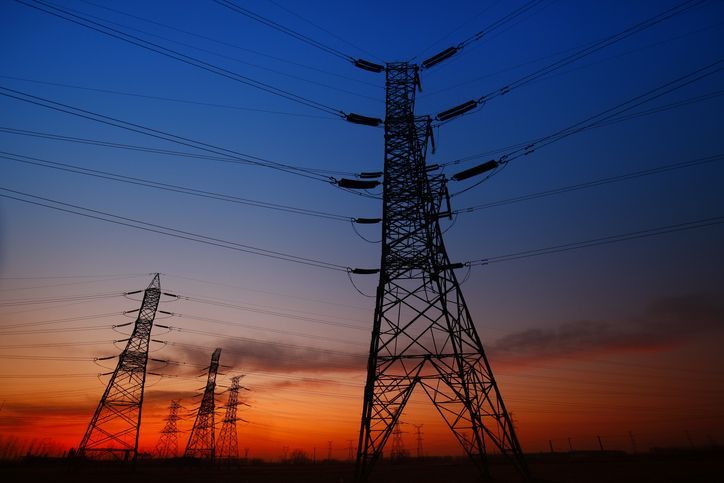
According to the power industry on July 22, the DC equipment market?including medium-voltage direct current (MVDC) and low-voltage direct current (LVDC) systems?is expected to grow alongside the expansion of distribution networks. For renewables such as solar and wind power, DC-based distribution is more efficient due to DC generation. However, there are still no examples of DC distribution networks worldwide. Korea has already commercialized high-voltage direct current (HVDC) systems, while MVDC and LVDC for distribution are currently in the demonstration phase.
Although Korea Electric Power Corporation's (KEPCO) first long-term distribution plan does not yet include "DC conversion," it is expected that future plans will incorporate DC conversion strategies. As a result, domestic power equipment and cable companies are accelerating technology development and commercialization in preparation for the expansion of MVDC and LVDC-based distribution networks.
Because DC distribution is considered a core element of next-generation power infrastructure?requiring energy efficiency and safety?the industry believes that if related standards are established and demand expands, Korean companies could secure a leading position in the global market.
First, in the power equipment sector, the global LVDC market is projected to grow at an average annual rate of 9.4%, reaching $3.16 billion (about 4.3 trillion won) by 2030. A representative from a power equipment company explained, "With the increase in renewable energy, DC loads are also rising, which is driving the need for DC distribution to ensure efficient power supply."
HD Hyundai Electric has completed the development of low-voltage (LV) converters and is working on medium-voltage (MV) converters through national research projects. The company has also secured a lineup of ultra-fast circuit breakers that can quickly interrupt DC fault currents. With essential technology for DC systems, HD Hyundai Electric is well-positioned to respond to future microgrid and DC demand.
LS Electric is aiming to take the lead in DC-specialized products with its "DC Factory" solution. The company has established a "DC Factory" at its Cheonan site, installing photovoltaic (PV) and energy storage system (ESS) facilities to create a "DC microgrid." A control room has been set up and is being operated for real-time monitoring of the LVDC system. Depending on the level of system stabilization, the company plans to expand to remote monitoring as well. Construction of DC conversion equipment is scheduled for completion this month, with installation and commissioning of the DC conversion system set to begin in October this year.

The cable industry is also raising its level of response. It is generally considered that securing the most advanced HVDC technology makes it easier to address MVDC and LVDC requirements. LS Cable & System, which developed Korea's first HVDC cable, has participated in virtually all domestic projects, including Bukdangjin-Godeok Phases 1 and 2 and Jeju Phases 2 and 3. The company is also participating in the "K-DC Alliance," led by KEPCO, to develop and standardize MVDC technology.
A representative from LS Cable & System stated, "We plan to gradually commercialize and develop DC transmission and distribution technologies in line with KEPCO's future investment roadmap. We are strengthening our technological capabilities and supply system for cables and solutions necessary for building DC power networks."
Taihan Cable & Solution sees the clear establishment of domestic product standards for MVDC and LVDC as a turning point for the market. Although the existing power grid is based on alternating current (AC), the company anticipates that standards will be established as DC demand increases and has begun responding accordingly. A representative from Taihan Cable & Solution said, "We possess differentiated technology, such as developing Korea's first 500kV current-type cross-linked polyethylene (XLPE) cable in the HVDC cable sector. If demand for MVDC and LVDC cables increases and related infrastructure investment accelerates in Korea, we plan to leverage our accumulated HVDC cable expertise to rapidly develop products and target the market."
© The Asia Business Daily(www.asiae.co.kr). All rights reserved.



















