Publishers Protest: "Scrapping the Policy Without Proper Verification"
An amendment that defines the legal status of the AI Digital Textbook (AIDT) as “educational material” rather than a “textbook” is expected to be addressed at the National Assembly’s plenary session on the 23rd. Publishers of AI textbooks have strongly protested, claiming that the government is attempting to scrap the policy without proper verification.
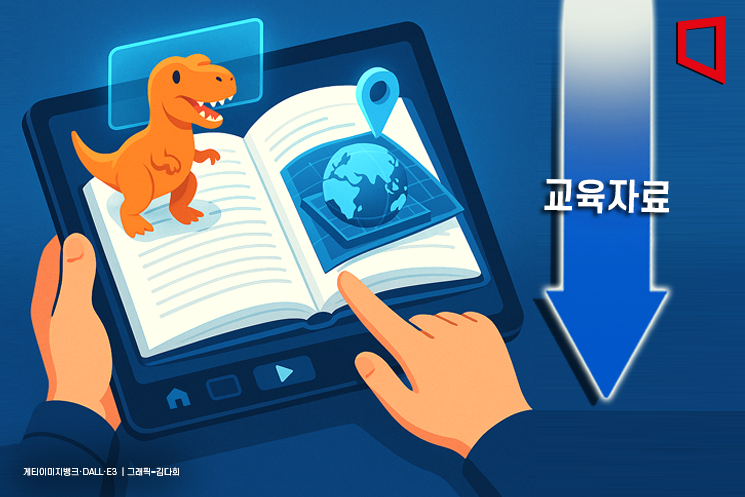
On the 22nd, the Legislation and Judiciary Committee of the National Assembly will hold a general meeting in the afternoon to deliberate on the “Partial Amendment to the Elementary and Secondary Education Act.”
The amendment specifies the definition of instructional books in the law itself, rather than in the enforcement decree, and states that digital formats such as AI textbooks fall under “educational materials” rather than “textbooks.” In particular, it includes a provision that allows digital educational materials to be used as supplementary tools in the curriculum, but restricts the Minister of Education and others from effectively controlling them.
The bill is expected to be brought to the plenary session of the National Assembly on the 23rd after passing through the Legislation and Judiciary Committee. If it passes the plenary session, the AI textbooks introduced by the government in the first semester of this year for third and fourth grade elementary school English and math, as well as first-year middle and high school English, math, and information subjects, will be effectively abolished just four months after their implementation.

On the 21st, AI textbook publishers held a mass rally in front of the National Assembly, criticizing the move as “an abdication of policy responsibility and a waste of taxpayer money” to deprive a national strategic project that has concentrated 1.2 trillion won in government funds and over 800 billion won in private investment. They pointed out that even when AI textbooks were classified as “textbooks,” the adoption rate was only 32 percent, and they expect this rate to drop even further if they are reclassified as “educational materials.” This is because textbooks are mandatory for schools to adopt, whereas educational materials can be used at the discretion of each school, subject to approval by the school management committee.
The publishers also noted that “AI textbooks only began to be used in earnest in May, so the actual period of use has been less than two months.” Park Jeong-gwa, CEO of Chunjae Textbook, said in a phone interview, “The period of use is too short to link AI textbooks to issues such as digital device addiction. In fact, there are survey results showing that AI textbooks have had positive effects on classroom engagement and student confidence. Therefore, rather than drawing a hasty conclusion, the pilot period should be extended by another year for proper verification and improvement.”
Hwang Geunsik, chairman of the Textbook Development Committee, also stated, “It is not too late to decide on the legal status of AI textbooks after their effectiveness has been verified. This is not an issue that needs to be urgently addressed within a month of the new government taking office.”
There is also criticism that the Ministry of Education is responding passively to the controversy over the status of AI textbooks. On June 11, the National Assembly’s Education Committee requested the Ministry of Education to “present a desirable alternative to AI textbooks,” but there has reportedly been no progress.
The application rate for AI textbooks to be used in the second semester has also not been tallied. The Ministry of Education closed applications for second-semester AI textbooks on June 30. The Ministry’s position was that, regardless of the legal status of AI textbooks, schools wishing to use them could apply voluntarily. However, the Seoul Metropolitan Office of Education did not accept any applications for second-semester AI textbooks, stating that it would discuss the matter with the Ministry of Education only after the status of AI textbooks is clarified. A Ministry of Education official said, “Although the application period for second-semester AI textbooks has ended, the statistics will be released at a later date.”
© The Asia Business Daily(www.asiae.co.kr). All rights reserved.


















