Amazon and Meta Expected to Actively Utilize Stablecoins
Naver and Kakao Well-Positioned to Use Won- and Dollar-Based Stablecoins
On July 18 (local time), U.S. President Trump signed the 'GENIUS Act,' which brings dollar-based stablecoins into the regulatory framework. As 80% of the trading volume of dollar stablecoins such as USDC and USDT already takes place outside the United States, there are growing voices that stablecoins will accelerate dollarization?the phenomenon where the U.S. dollar replaces local currencies?worldwide.
On July 21, Hana Securities analyzed in its report, "After the GENIUS Act, Watch for Big Tech's Moves," that global companies with direct customer touchpoints, such as Amazon and Meta, are likely to actively utilize stablecoins.
Amazon and Meta Expected to Actively Utilize Stablecoins
The main direction for stablecoins is to use on-chain technology, meaning that all transactions, data, and operations are recorded on the blockchain network, bypassing traditional financial and payment networks. As a result, the number of stakeholders?such as banks, credit card companies, and payment processors?is reduced, leading to savings in both time and transaction fees. Additionally, since stablecoins do not require going through national currency exchange systems, foreign exchange risk is eliminated. Although direct issuance of stablecoins is expected to face challenges, such as requiring unanimous approval from a certification review committee, there is little reason for large global tech companies with significant overseas revenue and large sales volumes not to utilize them.
In Amazon's case, the company is reportedly preparing to issue its own stablecoin, tentatively called "Amazon Coin." The system is being designed to allow customers to make payments not only with credit cards and cash, but also with Amazon Coin. By eliminating the 2-3% transaction fees typically paid to credit card companies, Amazon could save billions of dollars annually. The savings could be used for customer retention strategies, such as offering additional rewards programs that provide discounts or accumulate points for customers based on their purchase amounts.
Meta previously attempted to develop its own stablecoin, "Libra," in 2019, but was forced to halt the project due to regulatory obstacles. With more than 3.4 billion daily active users (DAU) across platforms such as WhatsApp, Instagram, and Facebook, the potential impact of stablecoin adoption is enormous. Meta already pays out revenue from Instagram and YouTube in dollars. If these payments were made in stablecoins, users outside the United States would inevitably become accustomed to them. Lee Junho, an analyst at Hana Securities, commented, "If big tech companies begin to integrate stablecoins into their global services, exposure will increase in every country," adding, "Given that these companies already operate as main services, it is a trend that cannot be completely avoided."
Naver and Kakao Well-Positioned to Use Won- and Dollar-Based Stablecoins
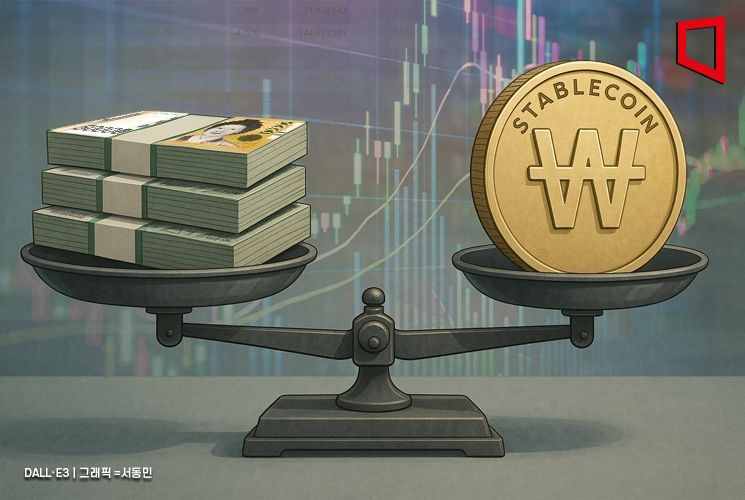
In Korea, following the proposal of the Digital Asset Basic Act in June, discussions on won-based stablecoins have become active. However, with the proposal of the Digital Asset Innovation Act delayed to August or September, momentum has slowed somewhat. Although the direction for won-based stablecoins has not yet been concretely defined, the most likely scenario is that banks, securities firms (regulated entities), platform companies, and coin exchanges will operate them in a consortium, each taking on different roles.
Naver and Kakao have competitive advantages in that they are used by the entire population, have established online commerce ecosystems, and already provide payments services. If they expand to offline markets, they could reduce transaction fees across the financial sector, including PG (payment gateways) and VAN (value-added networks). They could also secure foreign exchange fee income depending on regulatory changes. If Naver and Kakao build the necessary infrastructure for stablecoins, they could utilize them regardless of the reference asset, whether it is the won, the dollar, or another currency.
Analyst Lee Junho stated, "If we exclude the possibility of direct issuance by Naver and Kakao, their infrastructure nonetheless provides a strong advantage for all stablecoins used domestically," adding, "They could pursue self-built solutions, join domestic or international consortiums, or collaborate with issuers such as Tether (USDT), Circle (USDC), or even Coinbase." In the long term, if global big tech companies increase the use of dollar stablecoins in B2C services, leading to overall demand growth, Naver and Kakao are likely to benefit the most from the domestic use of dollar stablecoins.
© The Asia Business Daily(www.asiae.co.kr). All rights reserved.

















