Japanese media reported on July 21 that the ruling party in Japan is certain to fail to maintain a majority in the House of Councillors (upper house) election held on July 20.
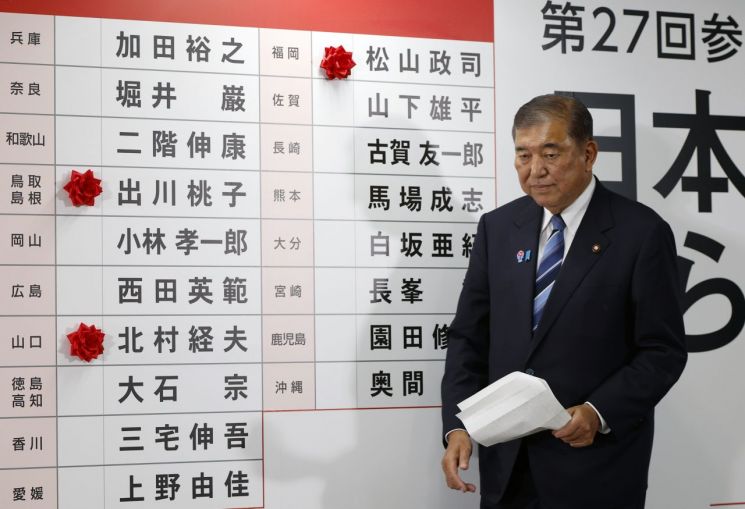
NHK projected that the ruling Liberal Democratic Party (LDP) and its coalition partner Komeito would win between 46 and 49 seats, falling short of the 50 seats required to maintain a majority in this election. Kyodo News and the Asahi Shimbun also reported that it appears certain the ruling coalition will not retain its majority.
NHK reported that this is the first time since its founding in 1955 that an LDP-led administration has failed to maintain a majority in both the House of Representatives (lower house) and the House of Councillors (upper house). In 2009, when the LDP handed over power to the Democratic Party, it had first suffered a crushing defeat in the 2007 House of Councillors election, and then lost a majority in the House of Representatives to the Democratic Party in the 2009 election.
Kyodo News noted that "criticism over high prices was strong," and predicted that with the ruling coalition now a minority in both the lower and upper houses, calls for Prime Minister Shigeru Ishiba to take responsibility are likely to emerge within the LDP.
As of 4:30 a.m. on this day, the LDP and Komeito had secured 46 out of the 125 seats up for grabs in this election, including both constituency and proportional representation seats. The LDP won 38 seats, while Komeito secured 8 seats. Of the 66 ruling party members who were up for election, this represents a decrease of about 20 seats.
The opposition parties' results were as follows: the Constitutional Democratic Party, the largest opposition party, won 21 seats; the Japan Innovation Party, the second largest opposition, won 6 seats; the Democratic Party for the People, the third largest opposition, secured 16 seats; and the right-wing opposition party Sanseito won 13 seats.
When the results of this election are combined with the seats not up for election, the ruling coalition holds 121 seats and the opposition 122 seats. A majority requires 125 seats.
The House of Councillors election is held every three years to elect half of its 248 members, or 124 seats. In this election, a total of 125 members were elected, including 75 from constituencies (with one vacancy in the Tokyo constituency) and 50 from proportional representation.
© The Asia Business Daily(www.asiae.co.kr). All rights reserved.

















