With the end of the monsoon season, the North Pacific high-pressure system is expected to cover South Korea, resulting in continued heat.
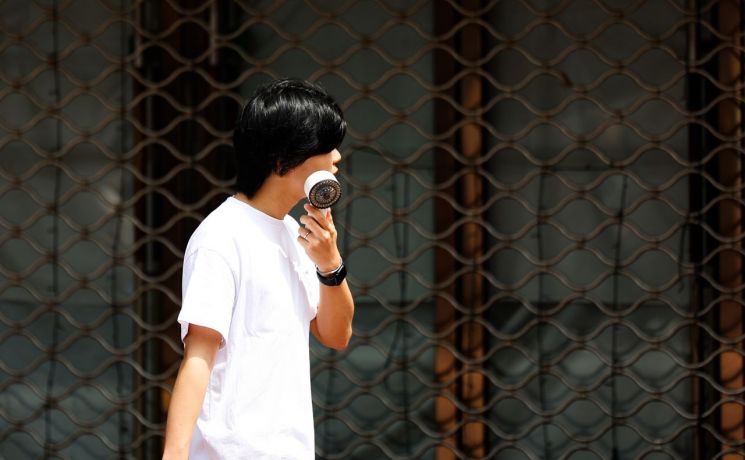
In most regions, the midday apparent temperature is expected to rise to around 33 degrees Celsius. In areas where heat wave advisories have already been issued?southern Gyeonggi, the east coast of Gangwon, Chungnam, Honam, Gyeongbuk (Daegu), Gyeongnam (Changwon, Gimhae), and parts of Jeju?the apparent temperature is expected to exceed 35 degrees Celsius.
The apparent temperature is calculated by reflecting both air temperature and humidity. When humidity is at 55%, the apparent temperature is equal to the air temperature. If humidity increases by 10%, the apparent temperature rises by about 1 degree Celsius.
On July 21, the temperature is expected to range from a low of 21 to 27 degrees Celsius in the morning to a high of 29 to 34 degrees Celsius during the day.
Due to hot and humid southwesterly or westerly winds, temperatures are expected to remain high even at night. As a result, some regions are likely to experience tropical nights, where nighttime temperatures remain above 25 degrees Celsius.
By major cities, the expected minimum and maximum temperatures are as follows: Seoul 26 and 31 degrees, Incheon 25 and 30 degrees, Daejeon 24 and 32 degrees, Gwangju 26 and 34 degrees, Daegu 24 and 33 degrees, Ulsan 24 and 32 degrees, and Busan 26 and 31 degrees Celsius.
© The Asia Business Daily(www.asiae.co.kr). All rights reserved.

















