Implying Opening of Agricultural and Livestock Markets Without Consultation With Main Ministry
"Countermeasures Must Be Prepared Through Listening to Voices in the Field"
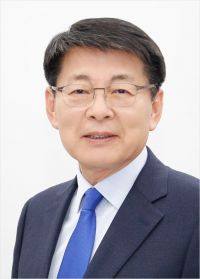 Seosamsuk, member of the Democratic Party of Korea.
During the Korea-US tariff negotiations, the head of trade negotiations at the Ministry of Trade, Industry and Energy suggested expanding the opening of the agricultural and livestock market without any discussion with the Ministry of Agriculture, Food and Rural Affairs, causing controversy to spread. This came after US President Trump announced on August 1 that a 25% reciprocal tariff would be imposed on Korean products, and on July 14, Trade Negotiator Yeo Han-koo stated in a briefing, "We now need to make strategic decisions regarding agricultural products."
On July 18, Seo Samsuk, a member of the Democratic Party of Korea (Yeongam, Muan, and Shinan in South Jeolla Province), issued a press release stating, "It is incomprehensible that working-level trade negotiations are taking place without prior consultation with the Ministry of Agriculture, Food and Rural Affairs (hereafter referred to as the Ministry of Agriculture), which is the main ministry in charge of agriculture and livestock. Major agricultural and livestock organizations are also issuing statements in opposition." He added, "This is in contrast to the precedent set during the 2012-2014 free trade agreement negotiations with China, when the government held a total of 182 sessions, including 131 forums and briefings, 36 expert meetings, and 15 site visits by ministers and vice ministers."
He continued, "Even during the 2011 Korea-US Free Trade Agreement (FTA) negotiations, provisions for the gradual opening of beef, rice, and fruit markets were passed through parliamentary ratification. I question under what authority the head of trade negotiations announced such a major issue as the opening of the agricultural market. The government must clarify whether this was its official directive, Yeo's personal judgment, or the result of discussions with someone else."
Regarding the import of beef aged 30 months or older, Seo stated, "According to the Act on the Prevention of Livestock Infectious Diseases, beef aged 30 months or older from countries where mad cow disease has occurred within the past five years is classified as a prohibited import item. If this is allowed in the tariff negotiations with the US, it could create difficulties in trade negotiations with other countries, including the EU."
Seo also pointed out, "As of December last year, only 232.8 billion won, or 23% of the 1 trillion won raised, had been accumulated in the Free Trade Agreement Implementation Support Fund, which was established to support farmers affected by FTAs." He questioned, "Before deciding on the agricultural and livestock tariff negotiation card, did the Ministry of Trade, Industry and Energy consider withdrawing the increase in electricity rates for agricultural use and guaranteeing import prices for fertilizers and pesticides?"
Seo further emphasized, "The current situation in which agricultural and livestock products are being discussed as a card in tariff negotiations with the US only deepens the sense of despair among farmers and livestock producers who are already suffering from flood damage caused by abnormal weather. The Office of Trade Negotiations must urgently listen to the opinions of those in the agricultural and livestock sectors and prepare countermeasures for trade negotiations, as President Lee Jaemyung stated in his press conference one month after taking office: 'Given the particular importance of agriculture, I will personally address agricultural and farmer issues.'"
Meanwhile, on July 15, members of the Democratic Party of Korea on the National Assembly's Agriculture, Food, Rural Affairs, Oceans and Fisheries Committee held a press conference, declaring that agriculture, rural communities, and farmers must not become scapegoats in the Korea-US trade negotiations.
© The Asia Business Daily(www.asiae.co.kr). All rights reserved.
![Clutching a Stolen Dior Bag, Saying "I Hate Being Poor but Real"... The Grotesque Con of a "Human Knockoff" [Slate]](https://cwcontent.asiae.co.kr/asiaresize/183/2026021902243444107_1771435474.jpg)















