KDCA Urges Caution Over Consumption of Contaminated Water and Food
Report Suspected Group Outbreaks to Public Health Centers
As heavy rainfall continues nationwide and the heavy rain crisis alert level has been raised to "serious," health authorities have requested that local governments take measures to respond to the potential spread of infectious diseases caused by weather-related disasters.
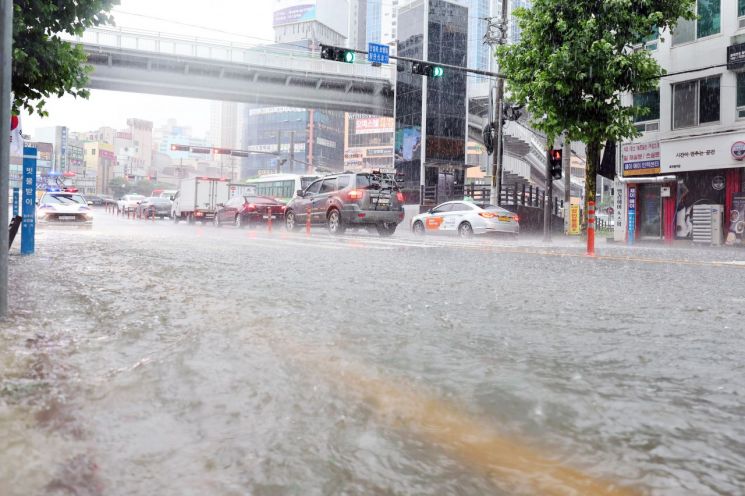 On the morning of the 17th, when a heavy rain warning was issued, the road near Baegun Square in Namgu, Gwangju, was flooded. Photo by Yonhap News
According to the Korea Disease Control and Prevention Agency (KDCA) on July 19, areas affected by weather-related disasters are at increased risk of waterborne and foodborne infectious diseases due to the consumption of contaminated water or food; mosquito-borne diseases due to environments conducive to mosquito breeding; and contact dermatitis and ophthalmic infections due to direct exposure to contaminated water.
Residents are therefore urged to consume only safe water and food, to strictly follow hygiene practices such as handwashing, and to minimize skin exposure by wearing waterproof gloves (rubber gloves) during flood recovery work in inundated areas. They are also advised to thoroughly wash themselves after completing such tasks.
In particular, in areas affected by flooding, waterborne and foodborne infectious diseases such as salmonella infections, hepatitis A, bacterial dysentery, and typhoid fever can become prevalent due to the consumption of contaminated water caused by sewer overflows. According to the KDCA, there were 34 cases of typhoid fever reported last year and 21 cases (provisional) as of last month this year. For bacterial dysentery, there were 41 cases last year and 34 cases as of last month this year.
To prevent waterborne and foodborne infectious diseases, hands should be washed with soap for at least 30 seconds before and after cooking and before eating. Only packaged bottled water, boiled water, or thoroughly cooked food should be consumed. In addition, people who have symptoms such as diarrhea or vomiting, or those with wounds on their hands, should not participate in food preparation, including washing ingredients. Any food that has come into contact with contaminated water or has not been refrigerated for at least four hours should be discarded.
Since mosquitoes can breed easily in puddles formed after rainfall, there is also a need to be cautious about mosquito-borne diseases such as malaria and Japanese encephalitis.
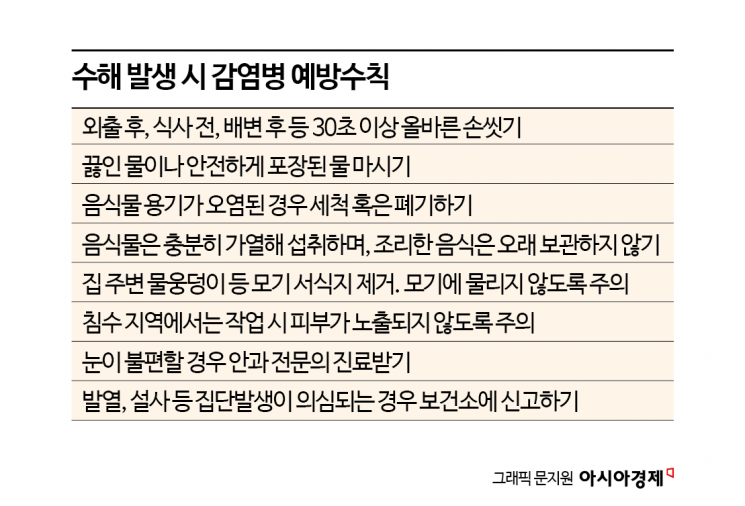
In areas contaminated by flooding, the risk of leptospirosis, ophthalmic infections, and contact skin diseases also increases. Leptospirosis is transmitted through water or soil contaminated with the urine of infected rodents or livestock. In particular, after heavy rainfall or flooding, exposure to contaminated water can lead to infection through wounds. The disease is characterized by sudden fever, headache, chills, muscle pain, and conjunctival redness, and if left untreated, can result in severe complications or death. There were 70 cases of leptospirosis last year and 13 cases as of last month this year.
Epidemic keratoconjunctivitis and other ophthalmic infections, which mainly occur from summer to early autumn, have been decreasing every week since the 23rd week (June 1-7). However, as humidity rises due to heavy rain or the monsoon season, the survival rate of causative viruses such as adenovirus increases, so caution is necessary.
Because leptospirosis and contact skin diseases can occur, it is important to prevent skin exposure when working on flood recovery in inundated areas. In addition, those residing in temporary shelters for disaster victims should follow preventive measures such as handwashing and regular ventilation to prevent outbreaks of respiratory infections.
The KDCA stated that, through the "summer emergency quarantine system," it is maintaining a 24-hour emergency response system in cooperation with public health centers in cities, provinces, and districts nationwide, to ensure prompt reporting and epidemiological investigation in the event of group outbreaks.
Im Seungkwan, Commissioner of the KDCA, emphasized, "To prevent infectious diseases during flood disasters, it is crucial to consume safe water and food and to observe personal hygiene practices such as handwashing." He added, "If there is a group outbreak of waterborne or foodborne infectious diseases accompanied by symptoms such as fever or diarrhea, it should be promptly reported to the public health center."
© The Asia Business Daily(www.asiae.co.kr). All rights reserved.


















