Pungam 311.5 mm, Gokseong and Damyang Around 280 mm
Potential to Break July Daily Rainfall Record
Rain Clouds Moved Further South Than Expected... Monsoon Period to Be Reanalyzed
Up to 400 mm by the 19th... Forecasts of 80 mm Per Hour
On July 17, more than 300 mm of torrential rain fell in Gwangju in a single day. As of 5:00 p.m. that day, the accumulated precipitation in Pungam, Seo-gu, Gwangju reached 311.5 mm, surpassing the average rainfall for the entire month of July (294.2 mm) from 1991 to 2020 in just one day. In various parts of Jeonnam, such as Okhwa in Gokseong (288.5 mm), Damyang (280 mm), and Naju (279.5 mm), heavy rainfall of around 200 mm was also recorded.
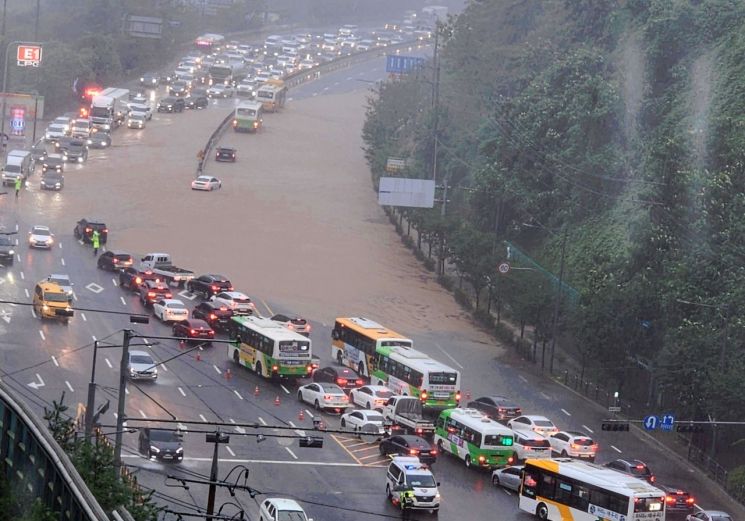 On the afternoon of the 17th, when a heavy rain advisory was in effect, a road in Hakdong, Donggu, Gwangju was submerged in muddy water, causing traffic congestion. Photo by Yonhap News Agency
The rainfall in Gwangju on this day is also expected to break the record for the highest daily rainfall in July. As of 5:00 p.m., the accumulated precipitation at the main observation point in Gwangju was 301.5 mm, far exceeding the previous second-highest record of 196 mm in 2009. If the rain continues until midnight, there is a possibility that it could surpass the all-time record of 335.6 mm set in 1989.
The Gwangju Regional Meteorological Administration initially forecasted about 100 to 200 mm of rain for Gwangju and Jeonnam, but explained that the rain clouds moved further south than expected, resulting in extreme heavy rainfall. Accordingly, the agency stated that the start date of the rainy season in the southern region, which had been tentatively announced as ending on July 1, may be reanalyzed.
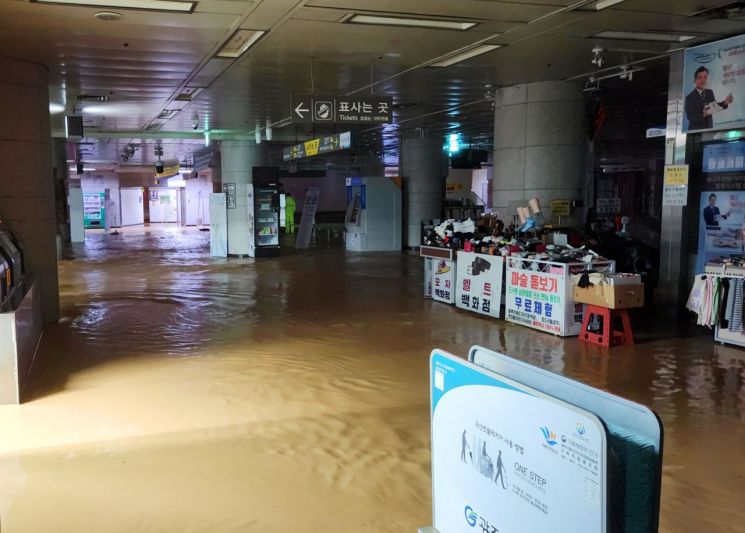 On the afternoon of the 17th, when a heavy rain advisory was in effect, Sangmu Station in Maruk-dong, Seo-gu, Gwangju was submerged in rainwater. Photo by Yonhap News
Rainfall of 200 to 300 mm is forecast to continue through July 19, with some areas expected to receive more than 400 mm. In particular, heavy rain of up to 80 mm per hour could fall overnight. The Gwangju Meteorological Administration urged residents to exercise special caution against safety accidents, warning that a large amount of rain in a short period could cause river levels to rise rapidly.
© The Asia Business Daily(www.asiae.co.kr). All rights reserved.


















