Economic Activity Sees Modest Growth in 5 out of 12 Districts
High Tariffs and Policy Uncertainty
Outlook Shifts from Neutral to Slightly Pessimistic
The United States central bank, the Federal Reserve (Fed), stated in its July Beige Book released on the 16th (local time) that the U.S. economy has seen slight improvement, but businesses continue to take a cautious approach to hiring and investment. Amid high tariffs and policy uncertainty, the Fed forecasted the future U.S. economy as "neutral to slightly pessimistic."
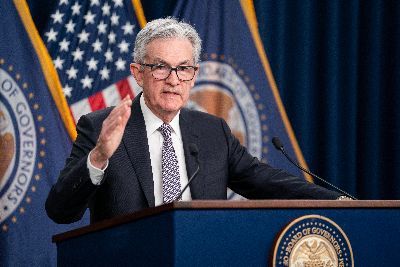
According to the July Beige Book released by the Fed, among the 12 districts, five reported slight to moderate growth, five showed little change, and two experienced moderate declines. The Fed explained that this represents some improvement compared to the previous report, in which nearly half of the districts had reported at least minimal declines in economic activity.
However, in this report, the Fed assessed the U.S. economic outlook as "neutral to slightly pessimistic." The Fed explained, "High uncertainty persists, which continues to cause businesses to remain cautious."
The "Beige Book" is an economic assessment report published by the Fed eight times a year and is used as a reference for the Federal Open Market Committee (FOMC) when deciding the benchmark interest rate. Ahead of the regular FOMC meeting scheduled for the end of this month, the White House is strongly urging the Fed to cut rates, citing the economic slowdown. However, most market forecasts expect the current interest rate to be maintained. Within the Fed, there is a view that the high tariffs introduced by President Donald Trump could trigger a significant rise in inflation in the future, which calls for a cautious approach.
In fact, so far, signs of price increases due to tariffs have appeared only in some industries, but many economists believe that price pressures could intensify in the coming months.
This Beige Book also reflected such concerns. The Fed noted, "Respondents from a wide range of industries expect cost pressures to remain high over the next several months, which could lead to a faster rise in consumer prices starting in late summer." Prices are a key variable in the Fed's interest rate decisions. This suggests that the Fed is likely to maintain a cautious stance on lowering the benchmark interest rate for the time being.
The Fed also reported that all 12 regional Federal Reserve Banks are experiencing increased supply costs due to tariffs, with the impact being particularly pronounced in the raw materials sector. Many companies have tried to pass these increased costs on to consumers, but some are holding off on price hikes for now, even at the expense of profitability, because consumers are reacting very sensitively to price increases.
In addition, as the trade war drags on, companies are also postponing personnel decisions such as hiring. Various policies of the Trump administration are having a negative impact on business management and employment. The Fed explained, "Many companies are holding off on major decisions such as expanding hiring or restructuring, and this is likely to continue until uncertainties related to trade and policy are resolved."
© The Asia Business Daily(www.asiae.co.kr). All rights reserved.
![Clutching a Stolen Dior Bag, Saying "I Hate Being Poor but Real"... The Grotesque Con of a "Human Knockoff" [Slate]](https://cwcontent.asiae.co.kr/asiaresize/183/2026021902243444107_1771435474.jpg)
















