Representative Wilson's Amendment Approved by Armed Services Committee
Amid discussions about the possibility of a reduction in U.S. Forces Korea (USFK) under the Donald Trump administration, the U.S. House of Representatives has passed the first stage of the National Defense Authorization Act (NDAA) for fiscal year 2026, which includes provisions to maintain the current size of USFK.
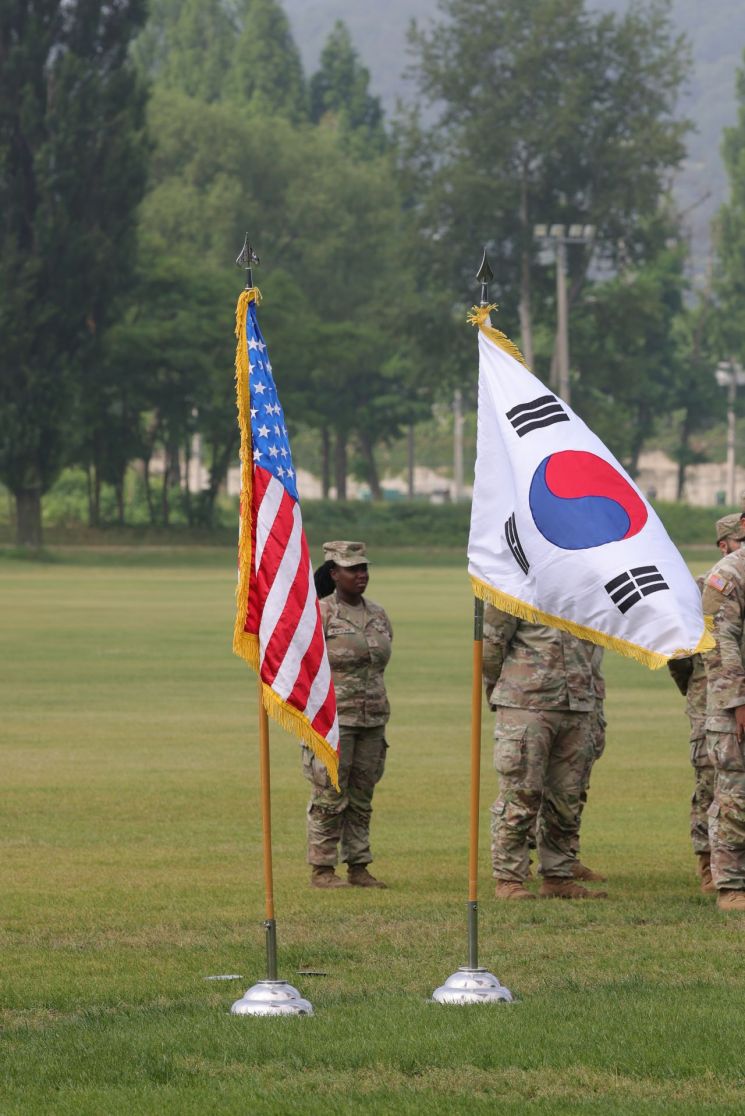
On July 15 (local time), the House Armed Services Committee held a full committee meeting and began reviewing the NDAA. The committee approved by voice vote an amendment proposed by Representative Joe Wilson, which centers on maintaining the stationing of approximately 28,500 U.S. troops in South Korea.
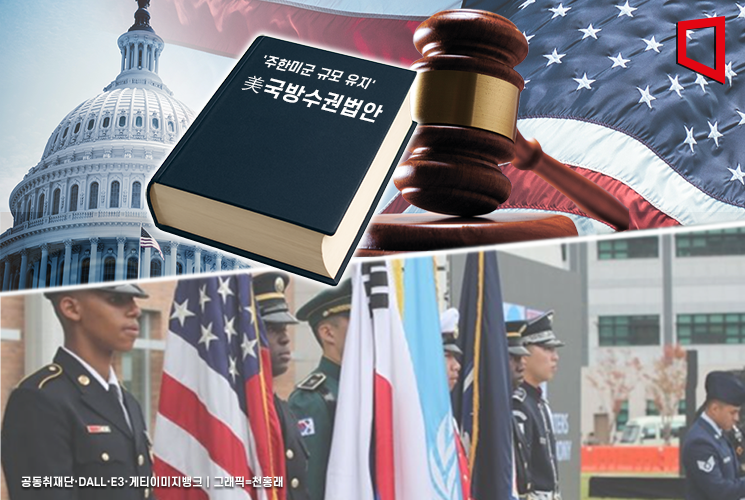
Representative Wilson's amendment explicitly states that it is the sense of Congress that the Secretary of Defense should continue efforts to strengthen U.S. security alliances and partnerships in the Indo-Pacific region. The amendment specifies that such efforts include maintaining the presence of approximately 28,500 U.S. troops stationed in South Korea, enhancing mutual defense-based cooperation, reaffirming the commitment to provide extended deterrence by utilizing all U.S. defensive capabilities, and strengthening the alliance with South Korea.
This language is identical to that of the current fiscal year 2025 NDAA, which was passed by Congress in December last year. The initial draft of the fiscal year 2026 NDAA, which House Armed Services Committee Chair Mike Rogers shared with the committee last week, did not include provisions on maintaining the current size of USFK. However, Representative Wilson's amendment addressed this omission, and the amendment ultimately passed the committee, which has primary jurisdiction over defense matters.
The NDAA is an annual bill that authorizes the Department of Defense's budget and policies. During the first Trump administration, from fiscal years 2019 to 2021, Congress specified the size of USFK in the NDAA and explicitly prohibited the use of NDAA funds for reducing USFK.
However, starting with the fiscal year 2022 NDAA, Congress removed the provision prohibiting the use of funds for reducing USFK and instead expressed support for the stationing of USFK by specifying the current troop level. While this is not legally binding, it has been regarded as a congressional recommendation to maintain the current size of USFK.
Previously, the Senate Armed Services Committee passed its version of the fiscal year 2026 NDAA on July 11, which includes a new provision prohibiting any reduction in the U.S. military posture on the Korean Peninsula or transfer of wartime operational control of the Combined Forces Command unless the Secretary of Defense certifies to Congress that such actions are in the national interest. The Senate bill also directs the Chairman of the Joint Chiefs of Staff, the Commander of U.S. Indo-Pacific Command, and the Commander of USFK to conduct independent assessments of the risks associated with reducing USFK or transferring operational control.
With the Trump administration's defense strategy and global U.S. troop repositioning plan expected as early as the end of next month, there is growing attention on how the NDAA's provisions regarding the size of USFK will ultimately be finalized. In particular, there is interest in whether the final language will include mechanisms to serve as a congressional check against any unilateral reduction of USFK, which has been suggested as a possibility under the Trump administration.
As with other U.S. legislation, the NDAA must be passed separately by both the Senate and the House. If there are differences between the two versions, a conference committee will reconcile the bills into a single version, which must then be reapproved by both chambers before being signed into law by the President.
© The Asia Business Daily(www.asiae.co.kr). All rights reserved.


















