No Direct Macroprudential Policy Tools or Micro-supervisory Authority
Weakened Speed and Effectiveness of Policy Responses...
Need for Medium- to Long-term Strengthening
"Unlike major countries, the Bank of Korea does not have direct macroprudential policy tools or micro-supervisory authority. If there are disagreements with the government during the policy coordination process regarding the intensity or direction of policies, there is concern that the speed and effectiveness of policy responses may be undermined."
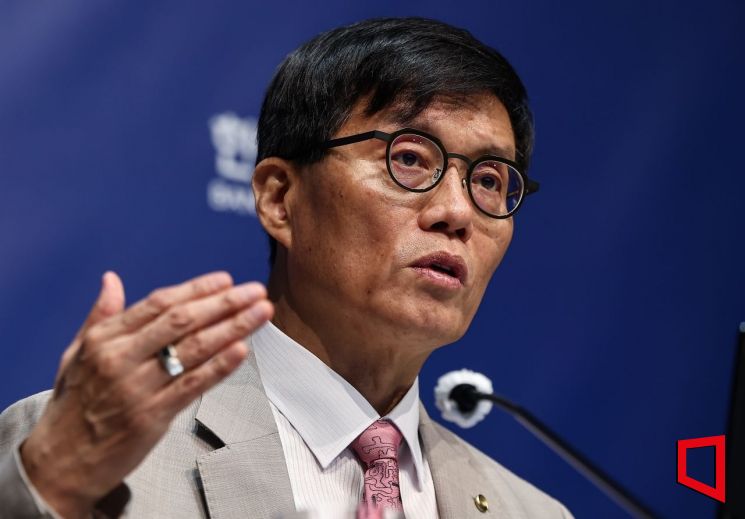
Lack of Direct Macroprudential Policy Tools and Micro-supervisory Authority... Weakened Speed and Effectiveness of Policy Responses
Lee Changyong, Governor of the Bank of Korea, once again emphasized the need to supplement legal and institutional frameworks to strengthen the Bank's macroprudential policy tools. On July 16, during a keynote speech at a conference co-hosted by the Asian Development Bank (ADB) and the Journal of International Money and Finance (JIMF) at the Bank of Korea in Jung-gu, Seoul, under the theme "Fiscal and Monetary Policy for Inclusive Growth in Developing and Emerging Economies," Governor Lee made these remarks.
He stated, "In Korea, the Ministry of Economy and Finance, the Bank of Korea, the Financial Services Commission, and the Financial Supervisory Service?four institutions?meet regularly every week to share information on economic and financial conditions. These communication channels serve as a foundation for each institution to independently operate its own policies while effectively coordinating policy where necessary," highlighting the importance of policy coordination between the central bank and the government. However, he argued that, in the medium to long term, improvements are needed to further strengthen the macroprudential role of the central bank.
In his keynote speech on "The Bank of Korea's Monetary Policy Operations and Lessons Learned After the Pandemic," Governor Lee discussed the experience of responding to deepening financial imbalances in August of the previous year?a period of monetary policy transition?by combining monetary policy with macroprudential measures. At that time, expectations for a policy shift by the US Federal Reserve were spreading, leading to a sharp, preemptive decline in domestic market interest rates. As financial conditions eased, housing prices in Seoul surged at an annual rate of up to 20%. Household loans increased by nearly 10 trillion won per month during this period.
Governor Lee said, "In such a situation, there were concerns that if the Bank of Korea shifted its monetary policy stance, it could further fuel rising real estate prices and expand financial imbalances." He continued, "Therefore, we first proposed to the government to strengthen macroprudential policies and decided it would be desirable to adjust monetary policy only after confirming the effects of these measures." He explained that Korea's household debt-to-GDP ratio is already high at about 90%, enough to constrain consumption, and that real estate accounts for a larger share of household and financial institution assets compared to other major countries. He added, "The concentration of credit in the low-productivity real estate sector can weaken growth potential, so it was necessary to mitigate this appropriately," explaining the background for the decision to keep the policy rate unchanged in August of last year.
Governor Lee especially noted, "Unlike major advanced economies, the Bank of Korea does not independently possess macroprudential policy tools to directly address financial imbalances, so we proposed to the government to strengthen related regulations through policy consultations." He added that the government responded by expanding the scope and tightening the intensity of the DSR (Debt Service Ratio) regulations. "Thanks to the Bank of Korea's decision to keep the rate unchanged in August and the government's strengthened macroprudential policies, the upward trend in Seoul housing prices and household loan growth began to slow from September," he said, emphasizing, "It is necessary to maintain a strong macroprudential policy stance during periods of monetary easing."
Previously, at a press briefing following the monetary policy decision meeting on July 10, Governor Lee stated, "The fact that household debt has not decreased for over 20 years and the emergence of real estate project financing (PF) issues are due to the lack of strong implementation of macroprudential policies." He stressed, "A governance structure must be established so that the Bank of Korea can raise its voice and implement policies strongly without political influence." The Bank of Korea has also recently conveyed to the National Planning Commission the need for macroprudential policy tools for the central bank.
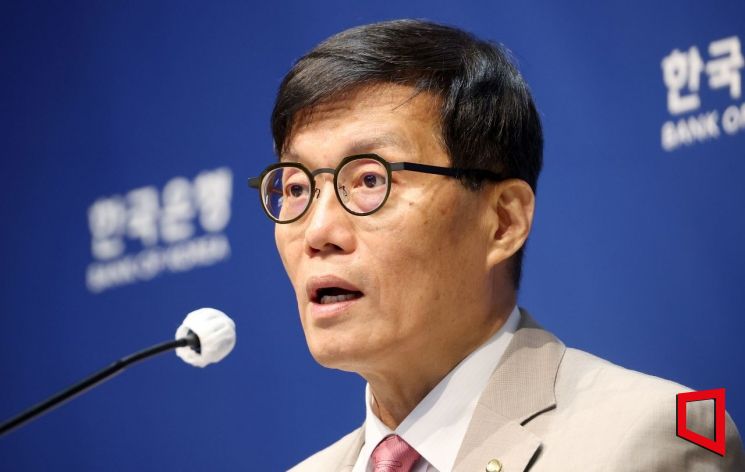
Interest Rate Hike Phase: Inflation vs. Financial and FX Market Instability..."Rate Hikes, Short-term Liquidity Supply"
Meanwhile, on this day, Governor Lee also discussed his experience of separately addressing high inflation and financial/foreign exchange market instability during the interest rate hike phase in the second half of 2022, as well as responding to heightened domestic and external uncertainty and increased exchange rate volatility during the rate cut phase in January of this year.
In the second half of 2022, the Bank of Korea was rapidly and significantly raising interest rates as inflation surged. However, financial instability and a sharp rise in the exchange rate occurred simultaneously. In the financial markets, defaults on local government development projects triggered instability in the real estate project financing (PF) market. In the foreign exchange market, as the Fed tightened its policy stance more aggressively than expected, the won-dollar exchange rate rose steeply.
Governor Lee said, "In a situation where the conflict between the policy objectives of price stability and financial stability was intensifying, the Bank of Korea judged that a swift and effective separate response was needed through a combination of domestic and external policy tools." He explained, "We continued to raise interest rates to suppress inflationary pressures, while simultaneously supplying short-term liquidity to reduce excessive risk premiums in the market." He added, "To this end, we implemented measures such as repurchase agreement (RP) purchases, expanding the range of eligible collateral for loans, and broadening the scope of securities for open market operations." The government also operated the Bond Market Stabilization Fund and corporate bond/commercial paper purchase programs, which helped the market stabilize quickly.
To control the speed of the won-dollar exchange rate rise, in October 2022, a 'big step' (raising the policy rate by 0.5 percentage points) was taken in conjunction with foreign exchange market interventions. Governor Lee pointed out, "Korea's foreign exchange derivatives market is small and short-term trading accounts for a large share, so a rapid rise in the exchange rate can trigger margin calls on hedging trades, structurally amplifying upward pressure on the exchange rate." He explained, "Therefore, rather than targeting a specific exchange rate level, we intervened to control the pace of the rise, allowing market participants to adjust their expectations in a stable manner."
Interest Rate Cut Phase: Downward Economic Pressure vs. Exchange Rate Volatility..."Rate Freeze, Targeted Lending Response"
During the rate cut phase in January, the imposition of martial law led to domestic political instability and heightened external uncertainty, resulting in both increased downward pressure on the economy and greater exchange rate volatility. Governor Lee explained that, at the time, "We responded by combining interest rate and lending policies."
He said, "Given the increased downside risks to growth, there was a greater need for an additional policy rate cut, but at the same time, with exchange rate volatility rising sharply, we also had to consider the risk that further rate cuts could accelerate the rise in the exchange rate." He recalled, "A rapid short-term spike in the exchange rate could negatively impact price and financial stability, and also undermine overseas confidence in Korea's political and economic fundamentals, raising concerns about a potential downgrade of Korea's credit rating."
At that time, the Bank of Korea kept the policy rate unchanged and addressed downward economic pressure by expanding the limit of the Bank Intermediated Lending Support Facility by 5 trillion won. This facility is a partial lending support program targeting small and medium-sized enterprises and the self-employed. Governor Lee noted, "While the impact on interest rate differentials and exchange rate volatility was not significant, the support effect for self-employed individuals struggling due to weakened consumer sentiment was relatively substantial." He emphasized, "This case demonstrates that, when domestic and external economic shocks occur simultaneously, using lending policy as a supplementary tool to interest rate policy can be an effective policy combination."
Meanwhile, at this ADB-BOK-JIMF conference held on July 16-17, a total of 11 research papers will be presented, including studies on ways to enhance the effectiveness of public policy for inclusive growth and papers on monetary and fiscal policy in emerging economies. Following Governor Lee's keynote speech on July 16, Sayuri Shirai, a professor at Keio University, will deliver a virtual keynote speech on "Macroeconomic Policy Coordination for Climate Action in Asian Developing and Emerging Economies" on July 17.
In each session, studies will be presented such as Professor Gajisalau Din's paper on the critical role of tailored public spending in education and health for low-income groups in achieving inclusive growth; research by Professor Joao Hales on policy design to reduce gender inequality; and a study by World Bank Senior Economist Amet Adarov emphasizing the importance of the 'quality level' of public investment. Other papers to be introduced include research confirming that the lower the level of household debt, the greater the stimulative effect of government spending, and a study showing that households face different inflation rates depending on income level, meaning that monetary policy can have heterogeneous distributional effects.
© The Asia Business Daily(www.asiae.co.kr). All rights reserved.


















