Additional Directors Appointed in Breach of Agreement
Supreme Court: "Voting Rights Must Be Exercised in Accordance with the Agreement"
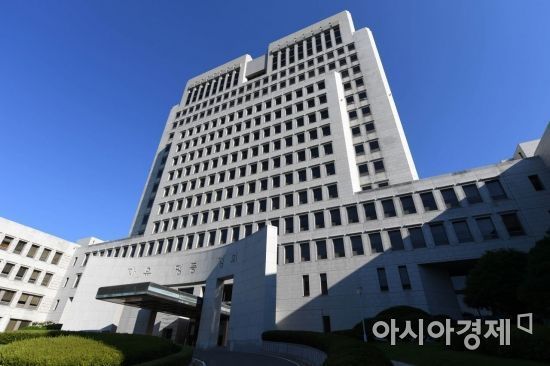
The Supreme Court has, for the first time, established the legal principle that a party may exercise contractual rights if the other party violates an agreement regarding the exercise of voting rights between shareholders.
Through this ruling, the Supreme Court declared that voting rights restriction agreements are contractually valid between the parties involved. At the same time, the Court presented a remedy by stating that, although a shareholders' meeting resolution established in violation of such an agreement does not directly alter the company's collective legal order, the aggrieved party may exercise contractual rights against the violator.
On the 15th, the Supreme Court's Third Division (Presiding Justice Lee Heungku) announced that it had dismissed the final appeal in a 'company-related lawsuit' filed by Mr. A against B Limited Company, stating, "If a voting rights restriction agreement is violated, the aggrieved party may exercise contractual rights against the violator." The Supreme Court stated, "A voting rights restriction agreement concluded between shareholders is, in principle, valid between the parties to the contract," but added, "However, the effect of such an agreement cannot influence the company's collective legal order."
Plaintiff Mr. A and Defendant B Limited Company entered into a joint venture agreement in October 2016 to establish Company C. According to the agreement, the issued shares were to be divided as 45% for the plaintiff and 55% for the defendant. The core provision concerned the composition of the board of directors. Both parties agreed that the board would consist of four directors, with each party nominating two directors. However, in August 2018, the defendant, having obtained court approval, convened an extraordinary shareholders' meeting and appointed three additional directors. As a result, the number of directors nominated by the defendant increased to five, deviating from the original agreement.
Plaintiff Mr. A regarded this as a breach of the agreement and filed a lawsuit. He demanded that a vote be cast in favor of dismissing three out of the five directors nominated by the defendant. He also requested an indirect compulsory order (a judicial measure to induce compliance with obligations), imposing a penalty of 10 million won per day for non-compliance.
The court of first instance partially upheld the plaintiff's claim. The court ordered the defendant, as a non-substitutable obligation (an obligation that must be performed personally), to exercise voting rights in favor of dismissing three out of the five directors nominated by the defendant at the shareholders' meeting. Regarding the indirect compulsory order, the court reduced the daily penalty from the plaintiff's requested 10 million won to 1 million won. The defendant appealed, but the appellate court dismissed the appeal. The appellate court rejected the defendant's argument that the plaintiff had agreed to the additional appointment of inside directors at the extraordinary shareholders' meeting.
The Supreme Court affirmed the appellate court's decision and dismissed the defendant's final appeal. Through this ruling, the Supreme Court clarified the legal effect of voting rights agreements between shareholders. The Court held that "as long as such agreements do not violate the law, promises regarding the exercise of voting rights made between shareholders are valid between the parties." However, the Court drew a clear line, stating, "The effect of such promises does not influence the company's internal organizational order." The Supreme Court ruled in favor of the plaintiff, stating, "The party who breaches such a promise may be held liable for breach of contract." Regarding the indirect compulsory order, the Court also ruled that "the appellate court's decision to impose a daily penalty of 1 million won is appropriate."
© The Asia Business Daily(www.asiae.co.kr). All rights reserved.

















