"Transition to Sodium Batteries Is Inevitable"
Korean Companies Consider Phased Adoption Amid China's Rapid Expansion
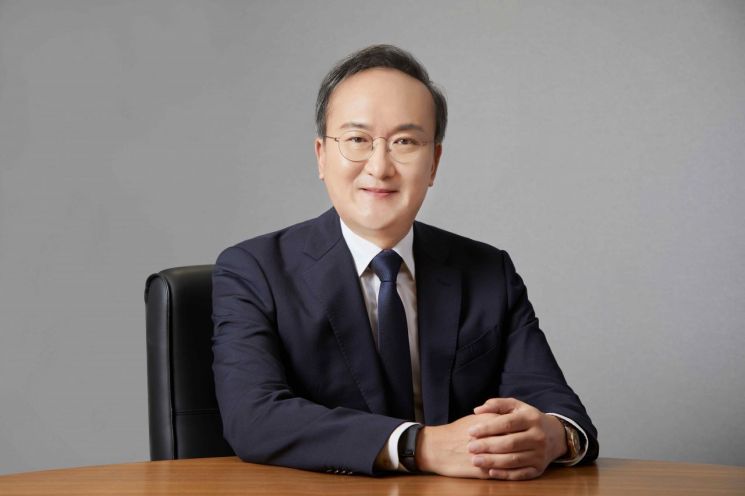
Seokhee Lee, President and CEO of SK On, has emphasized the need to transition to sodium batteries. As Chinese companies have recently turned their attention to SIBs (sodium-ion batteries) following LFP (lithium iron phosphate) batteries, which are popular for mass-market applications, Lee stated that it is necessary to consider the phased introduction of SIBs, taking into account customer demands and the maturity of the technology.
According to industry sources on July 15, Lee recently said in an informal meeting with industry officials, "If we do not switch to SIBs, it will be difficult to withstand pressure from China." He also expressed the view that, in the process of transitioning to SIBs, it is important to comprehensively consider not only customer requirements and technological maturity, but also supply chain stability.
SIBs are considered next-generation technology that can address the limitations of lithium resources in terms of price and supply, as well as the issue of reduced performance at low temperatures. CATL, the world’s largest battery manufacturer based in China, has announced plans to begin mass production of SIBs by the end of this year, taking a leading position. While global competition for technological leadership has already begun, only a few Korean companies have entered the field so far.
According to market research firm SNE Research, the global SIB market is expected to grow to as much as $14.2 billion (approximately 19.6414 trillion won) by 2035. SIBs, which use sodium as their main raw material, have the disadvantage of lower energy density, but their strengths include more abundant reserves compared to lithium and higher thermal stability. SIBs are evaluated to maintain over 90% of their capacity even in extreme environments below minus 20 degrees Celsius and can withstand temperatures up to 320 degrees Celsius. For these reasons, SIBs are emerging as a complementary product to low-cost LFP batteries.
Global battery companies have begun research and development (R&D) of SIBs. In particular, China is overwhelmingly dominant in this sector. Of the 99 global SIB companies, 83.7% are Chinese. CATL has completed SIB development and announced that it will begin full-scale mass production by the end of this year. The actions of Chinese companies are interpreted as simultaneously targeting the alleviation of cost burdens caused by unstable lithium supply and price surges, securing supply chain stability, and preempting technological leadership.
The Korean battery industry has been slower to respond. LG Energy Solution has begun developing second-generation SIBs targeting the electric vehicle market, with the goal of commercializing them before 2030. SK On has also expressed its intention to launch SIBs. Jonha Lee, Executive Vice President of SK On, emphasized the need to launch SIB products at the "InterBattery 2024" event early last year, stating, "If demand for low-cost batteries increases, SIBs, like LFPs, will play a certain role in the future." An SK On representative explained, "Various next-generation materials, including sodium, are currently being actively discussed from a technological perspective," adding, "At present, instead of proceeding with full-scale early adoption, we are reviewing the possibility of a phased introduction."
Among materials companies, Ecopro and Energy11 are taking a leading role. The two companies won the sodium battery project from the Ministry of Trade, Industry and Energy last year and are expected to deliver results by the end of this year. An industry official said, "We are currently conducting sample tests for companies in Saudi Arabia, India, and the United States, and results are expected as early as within this year."
SIBs are also evaluated to have lower conversion costs, as they can use existing cathode material production facilities for ternary batteries such as NCM (nickel, cobalt, manganese) without modification. Dongwook Lee, Director at Ecopro BM, said, "One of the major advantages is that we can use our existing mass production lines as they are," adding, "Once the SIB market opens up, we are ready to begin mass production at any time."
© The Asia Business Daily(www.asiae.co.kr). All rights reserved.

















