Some Say "Impact Will Fall Short of Expectations"
Competitors Like Maersk Operate in Seoul
Only About 50 Employees May Relocate
Although an analysis has suggested that relocating HMM’s headquarters to Busan would generate an economic ripple effect exceeding 15 trillion won, on July 15, some experts expressed skepticism, arguing that the actual impact may fall short of expectations. They pointed out that if the sales, strategy, and finance departments leave Seoul, it would be difficult for the company to maintain its competitiveness. In addition, some believe that, excluding major departments, the number of staff who could realistically be relocated would be around 50.
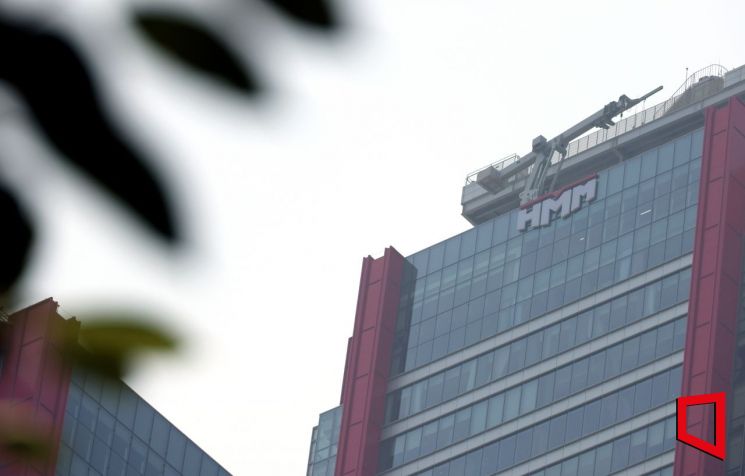
A report titled “Economic Impact and Attraction Strategy for Relocating HMM Headquarters,” commissioned by the Busan Chamber of Commerce and Industry and prepared by experts, estimated that moving HMM to Busan would result in a production inducement effect of 11.2 trillion won and an added value inducement effect of 4.4 trillion won over the next five years, totaling 15.6 trillion won. The report also projected an employment inducement effect of 21,300 jobs. The Busan Chamber of Commerce stated that the research was conducted by members of a policy advisory group appointed last year, but did not disclose the specific research entity.
The report evaluated HMM’s average annual sales over the past four years at 12.9 trillion won and operating profit at 5.3 trillion won, highlighting its significant economic impact. However, regardless of these results, HMM’s headquarters staff numbers about 800, raising doubts as to whether relocating them to Busan would truly generate effects in the trillion-won range. According to HMM’s business report, there are 1,058 land-based employees and 766 sea-based employees. Considering Busan’s population of 3.26 million, even if all headquarters staff and their families relocate, the impact on the local economy and employment would likely be limited.
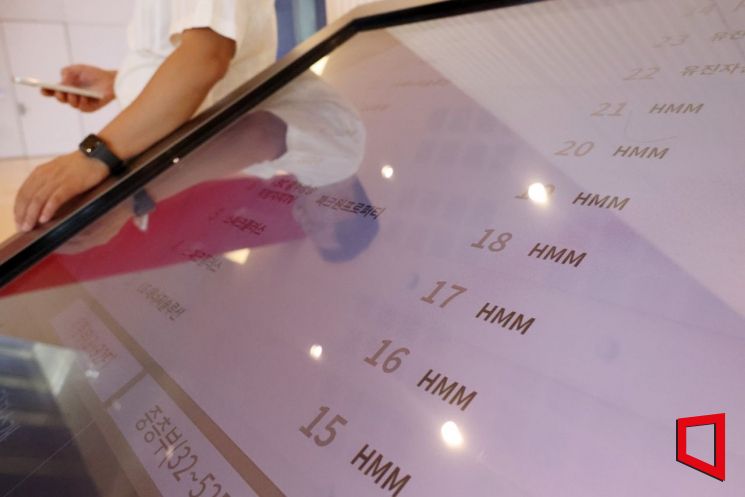
There are also doubts regarding the economic effect of constructing a new headquarters building. The report assumed that HMM would build a 50-story intelligent building in Busan, projecting a production inducement effect of 1.3 trillion won and an added value inducement effect of 517.9 billion won, totaling more than 1.8 trillion won in economic ripple effects. However, an industry insider noted, “HMM currently occupies nine floors in Park One Tower in Yeouido, Seoul. Even if you include the roughly 2,000 sea-based and subsidiary employees in Busan, a 50-story headquarters seems unrealistic.”
There are also concerns that relocating to Busan could cause HMM to fall behind in global competition. A maritime logistics professor, who requested anonymity, stated, “Even Maersk and MSC conduct business in Seoul, where there are many shippers, so moving HMM to Busan would undermine its competitiveness. Far from creating new jobs, if a large number of employees leave and it becomes harder to attract new talent, this could damage the national shipping company.” Junsoo Chun, a distinguished professor at Sogang University’s School of Business, said, “While ship-related personnel could generate synergy in Busan, it is appropriate for departments such as sales, finance, and strategy to remain in Seoul.” If only non-sales, non-strategy, and non-finance personnel are relocated, the economic and employment ripple effects would likely be even smaller. For example, after SM Line moved its headquarters to Busan in 2018, the number of employees working in Busan is reportedly around 50.
There is also a warning that proceeding with the relocation to Busan without first resolving the HMM sale issue would be a “reckless move.” The sale of the 57.9% stake in HMM held by KDB Korea Development Bank and Korea Ocean Business Corporation has been stalled for several years. Yongshik Hwang, a professor at Sejong University’s School of Business Administration, said, “It is uncertain whether companies interested in acquiring HMM would support the relocation. The order should be for KDB to decide whether or not to proceed with the sale, and only then discuss the relocation.”
© The Asia Business Daily(www.asiae.co.kr). All rights reserved.
![Clutching a Stolen Dior Bag, Saying "I Hate Being Poor but Real"... The Grotesque Con of a "Human Knockoff" [Slate]](https://cwcontent.asiae.co.kr/asiaresize/183/2026021902243444107_1771435474.jpg)

















