Local Authorities Suspected of Downplaying and Covering Up Incident
Case Escalated Amid Controversy...
"Provincial-Level Investigation to Be Conducted"
Recently, a mass lead poisoning incident affecting over 200 children occurred at Hespeixin Kindergarten in Tianshui City, Gansu Province, in northwestern China. Allegations have emerged that local authorities are attempting to downplay and cover up the incident.
According to reports from the South China Morning Post (SCMP) in Hong Kong and Taiwan's Central News Agency (CNA) on July 14, Chinese authorities stated that the incident was caused by the use of inedible art paint during meal preparation. Eight individuals, including the kindergarten director, have been arrested.
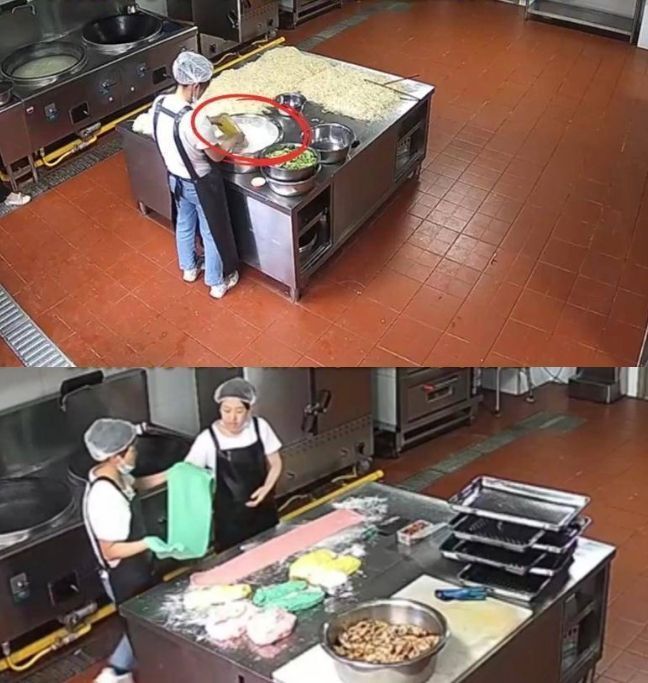 According to the joint investigation team in Tianshui City, it was found that they added art paint to the three-colored jujube rice cake and corn sausage roll. Pengpai News
However, parents of affected children and local citizens are protesting, claiming that the city is trying to minimize and conceal the incident, and expressing distrust in the announced investigation results. Parents reported that blood lead level tests conducted at hospitals in Tianshui showed concentrations far below the standard threshold. However, tests performed in Xi'an, the capital of neighboring Shaanxi Province, revealed abnormally high levels.
Liu Qifang, whose daughter attends the kindergarten, told the southern Guangdong media outlet Nanfengchuang that her daughter's blood lead level was 5.416 micrograms (?g) per liter in the test conducted in Tianshui, which is far below the standard. However, the test in Xi'an showed a level of 232 ?g/L, which is 40 times higher.
It was confirmed that the blood lead levels of many children tested at Xi'an Central Hospital ranged from 200 to 500 ?g/L. Chinese authorities state that the normal blood lead level for children is 100 ?g/L or less, while the U.S. Centers for Disease Control and Prevention considers levels above 50 ?g/L to indicate lead poisoning. Lead poisoning can cause irreversible damage to the brain and central nervous system and, in children, can result in reduced cognitive ability, attention deficits, and stunted growth.
SCMP reported that "most of the affected children are receiving treatment in Xi'an," and that "some parents have transferred their children to hospitals in Beijing and Shanghai for more accurate diagnosis and treatment."
As news spread that there had been a mass lead poisoning incident in Tianshui City 19 years ago, suspicions have arisen that this latest case may also be due to pollutants from local factories. Chinese media outlets such as Zhejiang Online reported that in 2006, more than 200 residents in Wujiahe Village, Tianshui City, were poisoned by lead. At the time, two local chemical factories were identified as sources of contamination, but tests conducted at medical institutions designated by the local government reportedly showed normal results.
As the controversy grew, Gansu provincial authorities announced on July 12 that the case would be elevated to the provincial level and that a team would be formed to conduct an investigation. The investigation team includes relevant provincial government departments such as the Discipline Inspection Commission, Department of Education, Public Security Department, Department of Ecology and Environment, and Health Commission. Experts from the Ministry of Ecology and Environment and the National Health Commission will also be dispatched by the central government. In addition, the State Council Food Safety Commission Office will send a task force to oversee and supervise the investigation.
© The Asia Business Daily(www.asiae.co.kr). All rights reserved.

















