National Folk Museum of Korea Publishes "Folklore Studies"
Includes 12 Articles on Gatjip, 19th-Century Cookbooks, and More
As Korea's traditional 'gat' hat gains global attention through broadcasts and K-pop performances, the National Folk Museum of Korea has published a research volume on the 'gatjip', the storage box used to hold and preserve the gat.
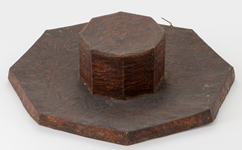 Gatjip in the Collection of the National Folk Museum of Korea. National Folk Museum of Korea
The 56th issue of the National Folk Museum of Korea's journal "Folklore Studies" features 12 articles, including studies on the gatjip and 19th-century cookbooks.
Heo Jeongin's paper, "A Study on Korean Gatjip," closely examines the materials, makers, and decorative patterns of gatjip boxes from the Joseon Dynasty, drawing on examples in the museum's collection. Gatjip were used as precious gifts in the royal court and as wedding items among commoners, deeply rooted in both daily life and ceremonial practices. However, after the short-hair ordinance and the introduction of Western-style clothing, they came to be regarded as "old-fashioned objects." This research offers a multidimensional look at traditional Korean life through the lens of the gatjip, a subject that has received little academic attention until now.
Park Chaerin's article, "An Analysis of 'Gyujung Sehwa,' a 19th-century Cookbook from Honam," is the first comprehensive analysis of 'Gyujung Sehwa,' previously only presumed to be a regional cookbook from Honam. The author deciphers the original text, covering 44 items (23 types of alcoholic beverages, 5 types of sweets, 13 side dishes, and 3 types of kimchi), and compares its recipes with those found in other previously discovered cookbooks to trace lines of culinary transmission and regional characteristics. Through this, the study demonstrates that 'Gyujung Sehwa' is indeed a cookbook compiled in the Honam region during the 19th century.
In addition, ten other research articles cover a wide range of topics, including shamanistic rituals, martial arts, lion dances, Seonang prayer sites, the faith of Lady Hwang, the origins of the Korean plow, and community-driven archives. Two special articles commemorate the 100th anniversary of the birth of renowned folklorist Jang Jugeun, offering insights into his scholarly world and philosophy. In total, 12 articles are included in this issue.
"Folklore Studies" has been the flagship academic journal of the National Folk Museum of Korea since 1995, serving as a platform for domestic and international researchers to study, share, and expand the horizons of folk culture and folklore studies. The 56th issue is freely accessible in full text on the museum's website and through the Korea Citation Index.
© The Asia Business Daily(www.asiae.co.kr). All rights reserved.
















