Adjusting Response Measures While Leaving Open the Possibility of Tariff Implementation After August 1
Preparing a Substantive Negotiation Plan Through Domestic Consultations... Additional U.S. Visits Under Consideration
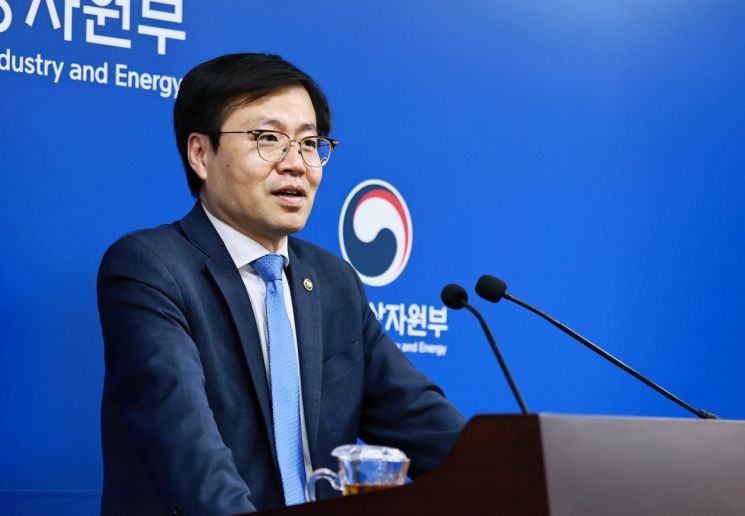
The Korean government has launched an all-out response in its tariff negotiations with the United States, preparing for even the worst-case scenario. Although the deadline for the tariff suspension was extended to August 1 during the early July talks in the U.S., no one can guarantee the outcome, so the government is adjusting its response strategy with a focus on maximizing pragmatic national interests. The plan is to attempt to enter the "landing zone" (a range where agreement is possible) through domestic consultations and additional visits to the U.S. during the remaining 20 days.
Yeo Han-koo, head of trade negotiations at the Ministry of Trade, Industry and Energy, told reporters on the morning of July 14, "No one can predict what will happen after August 1," adding, "We are making every effort for the best-case scenario, but we are also keeping the worst-case scenario in mind."
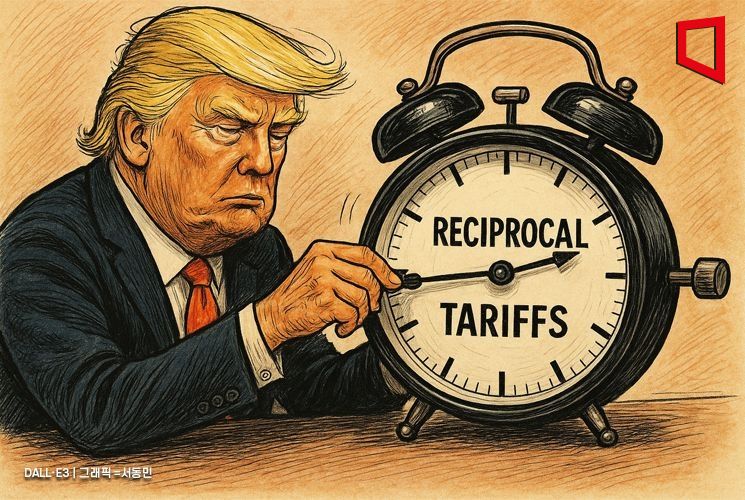
The Korean government succeeded in extending the suspension of the 25% reciprocal tariffs, originally set to expire on July 8, until August 1 through negotiations in the U.S. held from July 4 to July 10. However, the government believes that there are still many challenges remaining before a substantive agreement can be reached.
Yeo emphasized, "The real game begins now," and stated, "Reciprocal tariffs, 25% on automobiles, and 50% on steel are all unreasonable measures. Our position is clear that these should either be abolished or significantly reduced."
He particularly noted, "With the second Trump administration seeking to restructure the trade order to address structural trade deficits, negotiations between countries are evolving into a 'complex equation' where each negotiation affects the others." He explained, "Japan, the European Union (EU), and Mexico are also facing unpredictable situations where tariff rates rise just before negotiations."
"Negotiations Remain Uncertain Until the End... No Room for Complacency Even After a Deal"
Yeo stressed that the negotiation outcomes could fluctuate depending on political and economic variables within the United States. He said, "We cannot predict the situation on August 1. All variables, including the stock market, inflation, and political schedules, have an impact." He added, "Negotiations may continue even after tariffs take effect, and even after negotiations are concluded, new tariff issues may arise."
Currently, Korea has proposed the "Korea-U.S. Manufacturing Renaissance Partnership" to the U.S. side to balance the trade account. The plan is to simultaneously enhance the manufacturing competitiveness of both countries by expanding investment, purchases, and cooperation in key industries such as semiconductors, batteries, and shipbuilding. Yeo explained, "This strategy is an attempt to turn a zero-sum negotiation structure into a 'positive-sum' one."
However, there is still a gap between the "immediate results" demanded by the U.S. and Korea's "mid- to long-term manufacturing investment." When asked whether the effects of manufacturing cooperation could become visible within the four years of the Trump administration, Yeo responded, "Cooperation linked to the U.S.'s artificial intelligence (AI) and advanced technology innovation can have short-term effects," and added, "From the perspective of Korean companies, the U.S. market presents significant opportunities."
Agricultural Products, LNG... The Challenge of Finding a 'Balance Point' for Sensitive Items
Among the sensitive issues raised by the U.S. during these negotiations are agricultural products and imports of liquefied natural gas (LNG). Yeo stated, "There was a request from the U.S. regarding the Alaska LNG project, but it is still difficult to make a legally binding decision," and drew a line by saying, "We need to make a decision that takes into account economic feasibility, energy security, and geopolitical risks."
Regarding agricultural products, he said, "We will protect the sensitive items that must be protected, but for the rest, we need to make strategic decisions within the overall negotiation framework," suggesting that a flexible approach may be possible.
As for the upcoming negotiation schedule, Yeo said, "This week, we will focus on completing consultations with relevant ministries and the National Assembly and refining our negotiation proposal domestically. Once a proposal that can reach the landing zone is ready, we will return to the U.S. for further negotiations."
He particularly noted that the next visit to the U.S. is likely to mark the beginning of a phase of substantive "deal-making," rather than just coordination. Yeo forecasted, "We are reviewing a government-wide package that includes not only trade but also security and diplomatic channels," and added, "The negotiations will unfold urgently in a complex structure, with technical consultations and high-level talks taking place in parallel."
© The Asia Business Daily(www.asiae.co.kr). All rights reserved.


















