June CPI and PPI Data to Be Released This Week
Core CPI Expected to Rise 2.9%, Widening the Increase
Key Focus: Will Tariff Effects Intensify This Summer?
Upcoming FOMC Meeting to Influence Future Rate Path
This week, a series of price and consumer data will be released that could help gauge the impact of President Donald Trump's tariff policies on the economy. The key point of interest is whether the previously limited effects of tariffs have begun to be fully reflected in prices since the summer. In particular, if the June Consumer Price Index (CPI) comes in higher than market expectations, uncertainty regarding the timing of a potential interest rate cut, expected in September, could increase further.
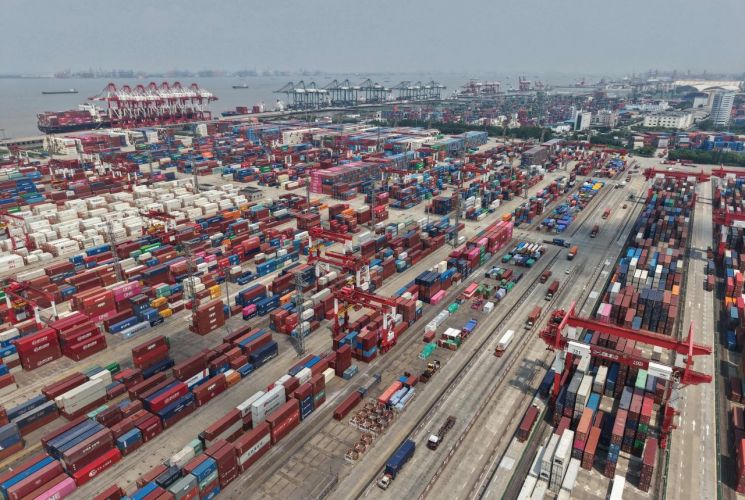
According to the U.S. Department of Labor on the 13th (local time), the June CPI will be announced on the 15th.
According to market forecasts compiled by Bloomberg, last month's core CPI is expected to have risen by 2.9% year-on-year. This marks an acceleration compared to the 2.8% increase in May. On a monthly basis, the figure is projected to jump from 0.1% in May to 0.3% in June, representing the largest increase in five months since January (0.4%) this year.
The core CPI, which excludes the more volatile food and energy sectors, is closely watched by both monetary authorities and Wall Street as it reflects the underlying trend of inflation.
The overall CPI is expected to have risen by 0.3% from the previous month and by 2.6% year-on-year. This suggests that the pace of inflation has accelerated compared to May (0.1%, 2.4%).
The market is paying close attention to this CPI release because it marks the point when the effects of tariffs are expected to be fully reflected in prices. Until now, companies have absorbed tariff costs by securing inventories in advance, but as these inventories are depleted over the summer, it is highly likely that the additional tariff costs will be passed on to consumer prices. Jerome Powell, Chair of the Federal Reserve, and other monetary authorities have consistently warned about the possibility of higher prices during the summer months.
Nicole Cervi, an economist at Wells Fargo, predicted, "The June CPI will be a turning point when the effective tariff rate increases begin to have a greater impact on overall inflation." Bank of America (BoA) analyzed, "Due to the impact of tariffs, prices are rising broadly, and price increases are continuing in the services sector, including hotels, airlines, and healthcare."
With the Federal Open Market Committee (FOMC) set to meet on July 29-30, the release of these inflation indicators is drawing even more market attention. According to the CME FedWatch Tool, there is a 94.8% probability that the Fed will keep the interest rate unchanged at the current annual rate of 4.25-4.5% at the July FOMC. For September, the probability of a rate cut of at least 0.25 percentage points is estimated at 60.4%, while the probability of no change has also increased from 28.7% a month ago to 39.6%.
However, if the CPI growth rate comes in lower than market expectations, it could strengthen the voices within the Fed advocating for an early rate cut. The Fed has been holding off on rate cuts and taking a wait-and-see approach due to concerns about tariff-driven inflation.
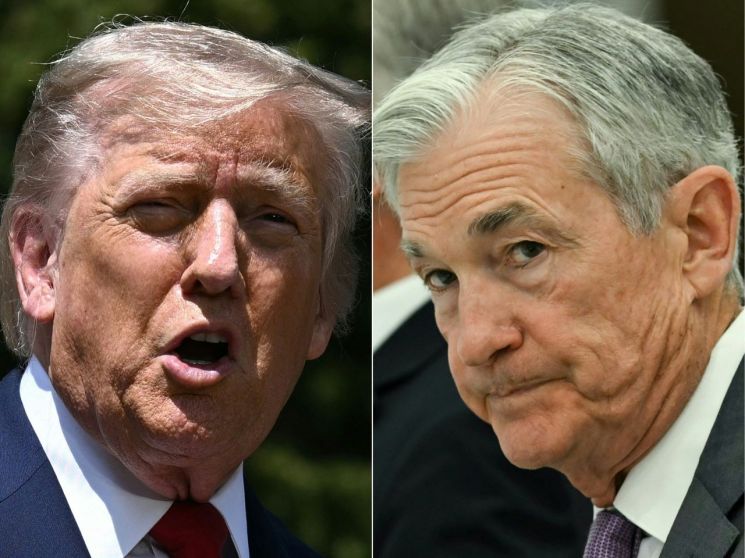
On the 16th, the Producer Price Index (PPI), which measures wholesale prices, will be released. The June PPI is expected to have risen by 0.3% from the previous month, indicating a more pronounced inflation trend compared to May (0.1%). The core PPI is also expected to have increased from 0.1% in May to 0.2% in June. The PPI serves as a leading indicator that is reflected in consumer prices with a time lag, playing an important role in forecasting future CPI trends.
In addition, on the 17th, retail sales data?which provide insight into consumer trends and account for about two-thirds of the U.S. economy?will be released. The market expects June retail sales to have increased by 0.2% from the previous month. In May, retail sales had fallen by 0.9%, raising concerns about a slowdown in consumption, but there is speculation that a recovery may have occurred in June.
Furthermore, the earnings season kicking off this week is also expected to provide important clues about the impact of tariffs. On the 15th, major financial firms such as JPMorgan Chase, Citigroup, and Wells Fargo will announce their second-quarter results. According to market research firm FactSet, the net profit of S&P 500 companies for the second quarter is expected to increase by 4.6% year-on-year, which is below both the recent five-year average (9.1%) and the ten-year average (6.9%).
Additionally, on the 16th, the Federal Reserve's Beige Book, which reports on economic conditions, will be released. Speeches are also scheduled by Federal Reserve officials, including Susan Collins, President of the Federal Reserve Bank of Boston, Lisa Cook, Federal Reserve Governor, and Christopher Waller, Federal Reserve Governor. Their remarks, along with the inflation data, are expected to provide further clues regarding the future path of interest rates.
© The Asia Business Daily(www.asiae.co.kr). All rights reserved.
![Clutching a Stolen Dior Bag, Saying "I Hate Being Poor but Real"... The Grotesque Con of a "Human Knockoff" [Slate]](https://cwcontent.asiae.co.kr/asiaresize/183/2026021902243444107_1771435474.jpg)












