"Demonstrates Outstanding Aspects of Mountain Buddhist Culture on the Korean Peninsula"
World Heritage Bid Linked to North Korea's Efforts to Attract Foreign Currency
Mt. Kumgang, which displays different kinds of beauty in each season, has been designated as a UNESCO World Heritage Site.
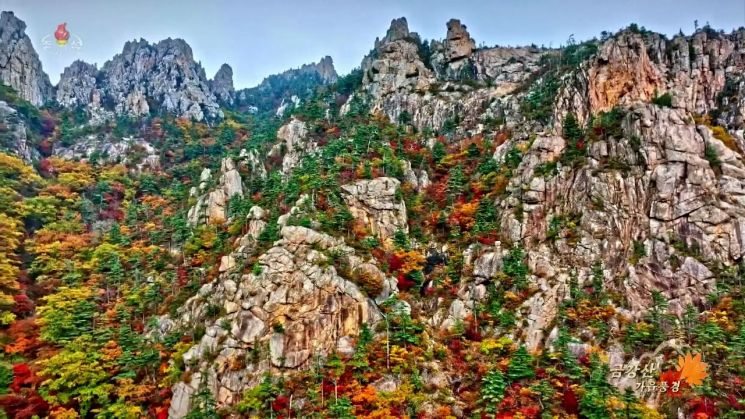
On July 13 (local time), the UNESCO World Heritage Committee, at a meeting held at the UNESCO headquarters in Paris, France, inscribed Mt. Kumgang, which was nominated by North Korea, onto the World Heritage List. The official name is "Mt. Kumgang - Diamond Mountain from the Sea." It was registered as a "mixed heritage" site, encompassing not only the natural scenery such as Birobong Peak (1,638 meters above sea level), Naekumgang, and Oekumgang, but also Buddhist temples and relics including Pyohunsa, Jeongyangsa, Singyesa, Bodeokam, and Buljiam.
Mt. Kumgang, along with Mt. Baekdu, has been regarded as one of the representative mountains of the Korean Peninsula. Centered around Birobong Peak, its numerous peaks, bizarre rock formations, waterfalls, and ponds are harmoniously spread across the northern part of the Taebaek mountain range, covering Hoeyang County, Tongchon County, and Goseong County in Gangwon Province.
The World Heritage Committee evaluated the site as "a complex cultural landscape where unique topography and scenery are intertwined with the long history of spiritual beliefs on the Korean Peninsula," and stated that "it demonstrates the outstanding aspects of mountain Buddhist culture on the Korean Peninsula from the 5th century to the present day."
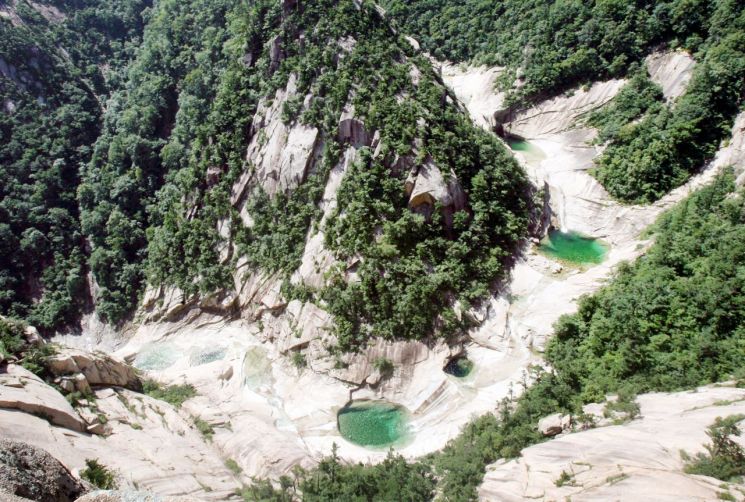
North Korea submitted its application for Mt. Kumgang's inscription in 2021, but the process was delayed by the spread of COVID-19, and it was only after four years that the goal was achieved. With this, North Korea now possesses three World Heritage sites, following the "Complex of Koguryo Tombs" (2004) and the "Historic Monuments and Sites in Kaesong" (2013).
The push for Mt. Kumgang's World Heritage designation is related to North Korea's efforts to attract foreign currency. To draw in overseas tourists, the country is refurbishing hiking trails and access facilities. Development is also underway at tourist destinations such as the Wonsan-Galma Coastal Tourist Area.
In this regard, the World Heritage Committee urged, "Assess the impact of the Mt. Kumgang tourism development plan on the site's outstanding universal value, and ensure that appropriate development prioritizes value protection." The committee also called for "providing visitor amenities, safety measures, and disaster preparedness at the level of international standards."
© The Asia Business Daily(www.asiae.co.kr). All rights reserved.


















