Bloomberg News Reports Citing Multiple Sources
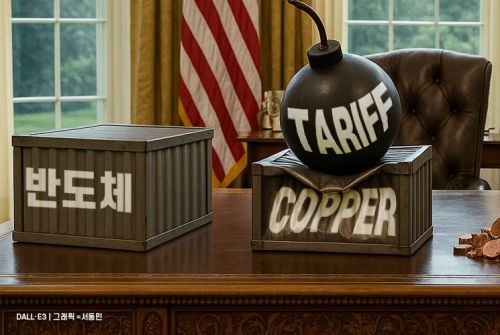
As U.S. President Donald Trump announced plans to impose a 50% tariff on copper imports, Bloomberg News reported that refined copper will be included in the list of tariffed items.
On July 12, Bloomberg News, citing multiple anonymous sources, reported this development. Refined copper is one of the most widely used metals in the world and is known to account for the largest share among copper products imported into the United States.
Bloomberg News predicted that if refined copper is included in the list of tariffed items, it will have a broad impact across key industries such as power grids, construction, automobile manufacturing, and consumer electronics.
The report also stated that semi-finished copper products, which are one stage before finished goods, will also be subject to the new tariffs.
Previously, President Trump announced plans to impose a 50% tariff on copper during a cabinet meeting on July 8. He later stated on his social networking service, Truth Social, that the decision was made following a "strong national security assessment" and that the measure would take effect on August 1. This action is based on Section 232 of the Trade Expansion Act.
President Trump considers copper an essential strategic material for national security and has expressed his intention to promote domestic production. He emphasized, "Copper is essential for semiconductors, aircraft, ships, ammunition, data centers, lithium-ion batteries, radar systems, and the hypersonic weapons we are currently producing in large quantities," adding, "It is the second most used material by the U.S. Department of Defense."
A White House official told the news outlet, "These measures have not yet been formalized, and should not be considered final until President Trump makes an official announcement."
However, there are concerns that the Trump administration's copper tariffs could increase inflationary pressures. U.S. public broadcaster CBS expressed concern over a surge in copper prices, which could lead to higher consumer prices and a chain reaction affecting products such as homes, refrigerators, automobiles, and air conditioners.
Ryan Young, senior economist at the nonprofit think tank Competitive Enterprise Institute, told CBS, "When business costs go up, they are passed on to consumers," predicting, "Ultimately, the prices of appliances, home repairs, and anything that contains copper will rise."
© The Asia Business Daily(www.asiae.co.kr). All rights reserved.

















