Secretary Baesant: "Trump's Tariff Policy Proves Effective"
Tariff Revenue Emerges as Fourth-Largest Source of U.S. Government Income
Government Bond Interest Burden Remains High... Focus on Benchmark Interest Rate
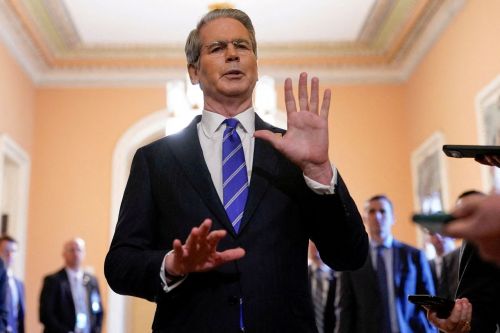 Scott Baesant, U.S. Secretary of the Treasury, is answering reporters' questions and providing explanations at the U.S. Capitol on the 27th of last month (local time). Photo by Reuters Yonhap News
As the Donald Trump administration pushes forward with a high-tariff policy targeting countries around the world, annual U.S. tariff revenue has surpassed $100 billion for the first time in history.
According to Bloomberg News on the 11th (local time), the U.S. Department of the Treasury announced that tariff revenue for June reached a total of $27.2 billion, a fourfold increase compared to the same period last year. As a result, tariff revenue for the current fiscal year (October 2024 to September 2025) has reached nearly $113 billion, up 13% from the previous year. This is the first time that tariff revenue has exceeded $100 billion on a fiscal year basis.
Previously, the Trump administration had expressed high expectations for tariff revenue. President Trump stated, "If we impose higher tariffs based on reciprocity starting August 1, a significant amount of money will come in." Secretary Baesant also predicted at a cabinet meeting on the 8th that this year's tariff revenue would exceed $300 billion.
Scott Baesant, Secretary of the Treasury, shared an article from U.S. economic media outlet CNBC on the social networking service X (formerly Twitter) introducing the latest tariff revenue figures, and argued that President Donald Trump's tariff policy is yielding results. He stated, "While President Trump is working hard to reclaim America's economic sovereignty, tariff revenue has reached a record high," adding, "There is no inflation either."
The Treasury Department added that, taking into account changes in welfare spending schedules, the actual deficit would have been around $70 billion. However, tariffs are now considered a major source of revenue for the federal government. The share of tariffs in federal tax revenue has more than doubled from about 2% to 5% in just four months. As a result, tariff revenue has become the fourth-largest source of income for the U.S. government, following withheld income tax, non-withheld income tax, and corporate tax.
However, CNBC pointed out that the U.S. interest burden on government bonds remains high. Net interest expenses for the month of June were $84 billion, which, while slightly lower than the previous month, remains the largest single expenditure item excluding social security spending. The annual cumulative net interest expense is projected to reach $749 billion, and total annual interest expenses are expected to reach $1.2 trillion.
President Donald Trump continues to pressure the Federal Reserve (Fed) to lower its benchmark interest rate in an effort to ease this interest burden. However, the market expects that a Fed rate cut will be difficult before September. Fed Chair Jerome Powell is also maintaining a cautious stance, citing concerns about inflation caused by tariffs. The current U.S. benchmark interest rate is 4.25-4.50%.
© The Asia Business Daily(www.asiae.co.kr). All rights reserved.

















