Promoting Hydrogen Vehicle Adoption Through Public-Private Cooperation
Strengthening Pohang's Status as a Leading Hydrogen City
Pohang City is implementing comprehensive policies to expand the adoption of hydrogen vehicles and improve charging infrastructure.
As rising hydrogen prices increase the burden on hydrogen vehicle users, the city is accelerating the spread of hydrogen vehicles by increasing subsidies and establishing a collaborative system between the public and private sectors.
The city has significantly expanded the scale of subsidy support to ease the financial burden on citizens seeking to purchase hydrogen vehicles.
For passenger hydrogen vehicles, an additional subsidy of 5 million KRW has been provided compared to previous levels, and for hydrogen buses, an additional 60 million KRW is being offered. This has lowered the entry barrier for citizens considering hydrogen vehicles as an alternative among eco-friendly cars.
A city official stated, "We have adjusted the subsidy scale to reflect the increasing burden on citizens due to rising hydrogen prices and other factors," adding, "We will continue to develop effective support measures to further accelerate the adoption of hydrogen vehicles."
To address the inconvenience of using charging stations, Pohang City is also speeding up improvements to charging infrastructure.
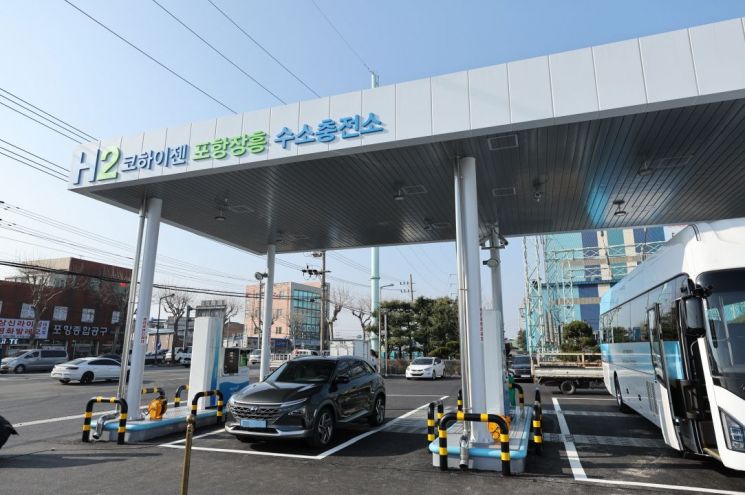
The city is holding regular meetings with the Pohang Jangheung Hydrogen Charging Station operator, Hyundai Motor Company, and the Chartered Bus Association to directly listen to hydrogen vehicle users and develop various improvement measures.
In particular, the city is discussing specific improvement plans such as extending charging station operating hours, reducing waiting times for charging, and strengthening response systems for charger malfunctions. As a result, the operating hours of charging stations have been extended to 8:00 p.m., aiming to minimize inconvenience for users.
Additionally, to address the inconvenience for users in the northern region, the city plans to build a liquefied hydrogen charging station within the Yeongilman Industrial Complex by 2026.
Along with this, the city plans to expand the use of hydrogen vehicles in public transportation through collaboration with transportation companies currently operating hydrogen buses.
A Pohang City official stated, "Based on public-private cooperation, we will further expand the supply of hydrogen vehicles and hydrogen buses, and strengthen our identity and status as a hydrogen city," adding, "We will continue to promote policies that improve charging infrastructure and are highly effective for citizens, taking the lead in revitalizing the local hydrogen economy."
© The Asia Business Daily(www.asiae.co.kr). All rights reserved.

















