Active Proliferation of Microorganisms Such as Total Coliforms During the Summer Season
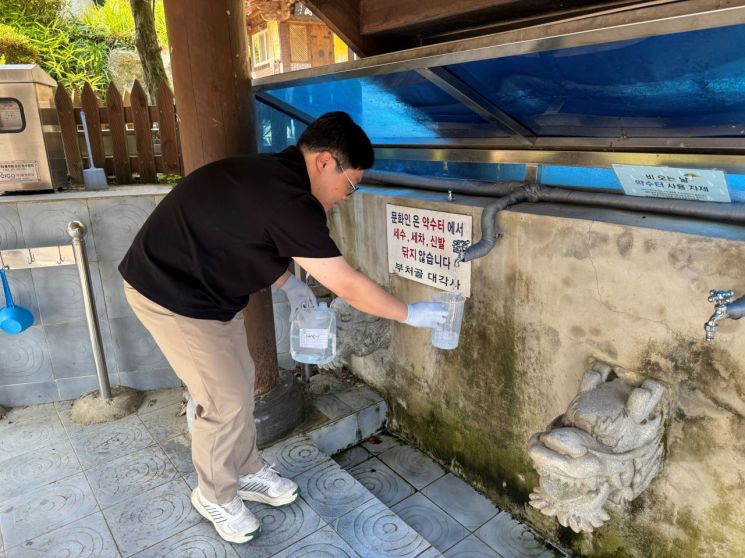 Water supply communal facility water quality inspection data photo. Provided by Gwangju Institute of Health and Environment
The Gwangju Institute of Health and Environment has issued a warning for the summer season, urging caution when using communal water supply facilities such as mineral springs during hiking or outdoor activities.
Communal water supply facilities refer to mineral springs, wells, or spring water sources that have been developed or have formed naturally to provide water to people. The city has designated and manages six such facilities as communal water supply sites: three mineral springs in Mudeungsan National Park (Cheongpung Rest Area, Sanjang Square, and the entrance to Jeungsimsa Temple), Daegaksa Mineral Spring in Nam-gu, Yongjin Mineral Spring in Gwangsan-gu, and Sanjeong Mineral Spring.
Although the Water Supply Management Act requires water quality inspections of communal water supply facilities to be conducted four times a year, the city of Gwangju conducts 12 inspections annually?including twice a month during the summer season (July to September)?to better protect the health of its citizens.
When using communal water supply facilities, users must check the water quality inspection certificate posted on the relevant drinking fountain's bulletin board. However, even if the facility has received a "suitable" result in the water quality inspection, it is advisable to refrain from drinking the water during the summer, as microorganisms such as total coliforms can proliferate easily and sudden changes in water quality may occur due to rainfall. It is safest to use the water only for washing hands or lightly rinsing off sweat.
In fact, during July to September last year, a total of six water quality inspections were conducted at each of the six communal water supply facilities in the region. Three mineral springs in Mudeungsan National Park were found to be unsuitable for drinking. Cheongpung Rest Area failed the inspection six times, Sanjang Square failed twice, and the entrance to Jeungsimsa Temple failed once. The failed items were identified as total coliforms and fecal coliforms.
Jung Hyuncheol, Director of the Gwangju Institute of Health and Environment, stated, "Communal water supply facilities are not disinfected with chlorine-based agents, so there is no residual disinfectant effect, making them easily susceptible to microbial contamination. Therefore, caution should be exercised when using them as drinking water in the summer." He added, "People should carry boiled water or bottled spring water that is safe to drink when hiking or engaging in outdoor activities."
© The Asia Business Daily(www.asiae.co.kr). All rights reserved.

















