Asset Gap Between Buffett and Huang Narrows to $2 Billion
Nvidia's Soaring Stock Could Lead to Overtaking
Surge of AI-Based Billionaires... Wealth Landscape Undergoing Transformation
As Nvidia's stock price continues its rapid ascent, CEO Jensen Huang (pictured) is closing in on Warren Buffett, the chairman of Berkshire Hathaway and renowned as the "Oracle of Omaha," in terms of net worth. Market observers predict that Nvidia's corporate value is likely to rise further, raising expectations that CEO Huang's net worth will soon surpass that of Buffett. As tech-based entrepreneurs, particularly in artificial intelligence (AI), increasingly join the ranks of billionaires, the global wealth landscape is being reshaped.
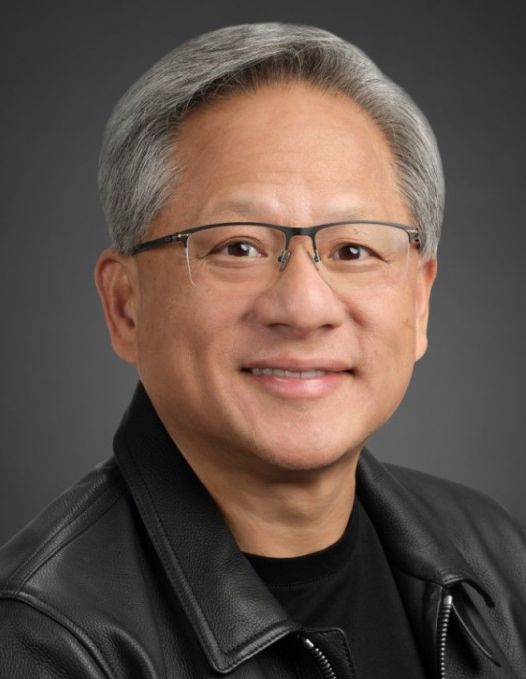
According to the Bloomberg Billionaires Index on July 10 (local time), 63-year-old CEO Huang's net worth stands at $142 billion, closely trailing Chairman Buffett's $144 billion.
Nvidia's graphics processing units (GPUs) are indispensable components for major AI developers. Thanks to surging AI demand, Nvidia has become the most valuable company in the world. CEO Huang currently owns approximately 3.5% of the company's shares. His wealth increased by $2.47 billion in a single day due to the recent surge in Nvidia's stock price. Given the ongoing AI boom and stock performance, a reversal in their rankings is entirely possible. At this rate, it is expected that CEO Huang's net worth will overtake Buffett's.
U.S. business media outlet CNBC commented, "Jensen Huang now possesses a fortune comparable to that of Warren Buffett, who has long been among the world's billionaires," and added, "It may not be long before he surpasses the net worth of the 'Oracle of Omaha,' Buffett."
On Wall Street, the average target price for Nvidia is set at $175, with analysts seeing further upside potential. In a recent report, Ananda Baruah, an analyst at Loop Capital, projected that Nvidia's corporate value could rise as high as $6 trillion.
The shifts in the asset rankings between the two men are not simply a matter of who holds more wealth. They represent a fundamental change in how wealth is accumulated and illustrate the ongoing transformation of the global wealth landscape. While Buffett amassed his fortune through investment acumen and market insight, CEO Huang built his wealth by founding and managing a company that leads the AI industry ecosystem.
In reality, AI technology is fundamentally altering the distribution of wealth. Not only Nvidia, but also major tech companies such as Alphabet and Microsoft (MS), as well as founders of emerging AI startups like ScaleAI and CoreWeave, have recently joined the ranks of billionaires. Bloomberg reported that last year alone, approximately 600,000 AI-based billionaires emerged. Reuters, citing a UBS report, also analyzed that the assets of tech tycoons have tripled over the past decade, and that the total wealth of billionaires worldwide increased by 17% in the past year. The "wealth landscape" is shifting from traditional capital to an AI- and tech-centered paradigm.
Even a glance at the world's top 10 richest people (according to the Bloomberg Billionaires Index) reveals that seven out of the top ten are engaged in the tech industry. U.S. media outlet Forbes interpreted this as clear evidence that AI-focused tech companies and entrepreneurs are rapidly reshaping the global wealth hierarchy.
© The Asia Business Daily(www.asiae.co.kr). All rights reserved.

















