UNESCO World Heritage Committee to Decide on Inscription Tomorrow
High Probability as ICOMOS Recommends Listing
The Bangudae Petroglyphs of Bangucheon in Ulsan, which reflect the lives of prehistoric people, are on the verge of being inscribed as a UNESCO World Heritage Site.
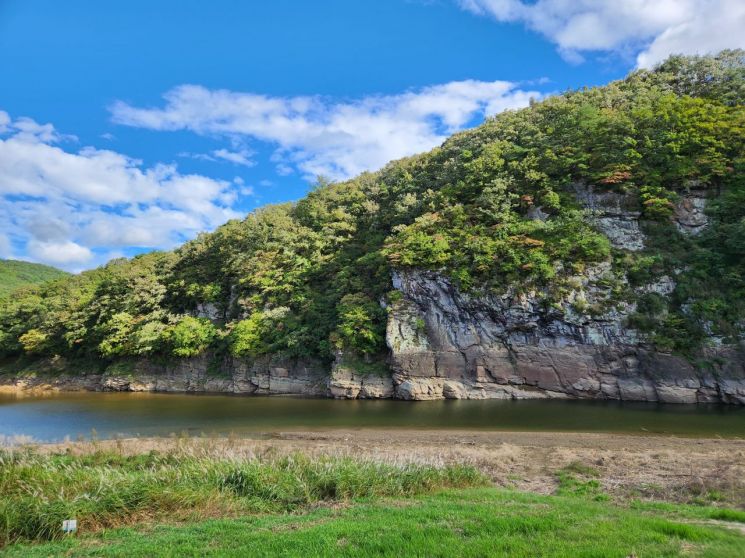
The 47th session of the UNESCO World Heritage Committee, currently underway in Paris, France, is expected to decide around July 12 whether to inscribe the site. World Heritage refers to properties recognized as having Outstanding Universal Value (OUV) that should be protected for all humanity, as defined by the 1972 World Heritage Convention. Heritage sites are classified as cultural heritage, natural heritage, or mixed heritage that possesses both characteristics. South Korea currently has fourteen cultural heritage sites and two natural heritage sites inscribed.
The likelihood of inscription is considered high. This is because the International Council on Monuments and Sites (ICOMOS), the advisory and evaluation body for World Heritage, issued a recommendation for inscription in May. ICOMOS investigates nominated sites and selects one of four recommendations?'inscription,' 'deferral,' 'referral,' or 'non-inscription'?to submit to the World Heritage Centre. In most cases, sites recommended for inscription are officially inscribed by the World Heritage Committee unless unexpected circumstances arise.
The petroglyphs of Bangucheon, which include the national treasures 'Bangudae Petroglyphs in Daegok-ri, Ulju' and 'Cheonjeon-ri Inscriptions and Petroglyphs in Ulju,' are regarded as the epitome of prehistoric culture on the Korean Peninsula. Petroglyphs refer to images carved or painted on rock surfaces or cave walls. It is believed that a variety of figures were engraved on these two petroglyph sites over a long period of time.
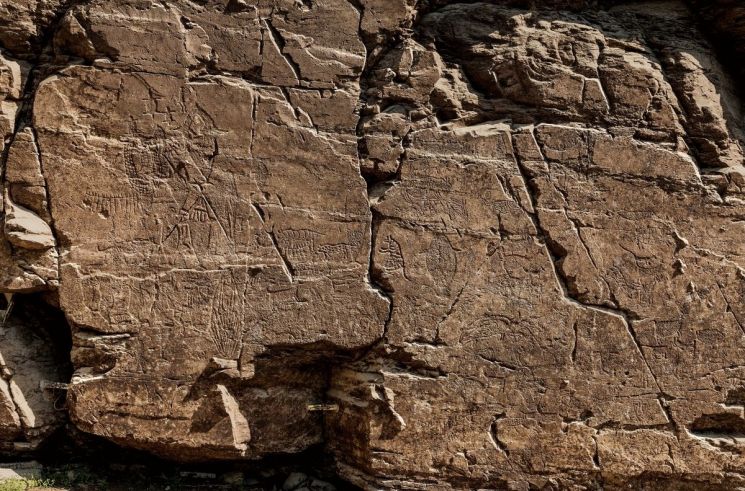
The Bangudae Petroglyphs in Daegok-ri, Ulju, discovered in 1971, are commonly referred to as the Bangudae Petroglyphs. They are located on the cliff of Bangucheon, a tributary of the upper Taehwa River. The rock surface, measuring approximately 4.5 meters in height and 8 meters in width, is densely covered with depictions of marine animals, terrestrial animals, and hunting scenes. According to a catalog published by the Ulsan Metropolitan City Bangudae Petroglyphs World Heritage Promotion Team, which analyzed three-dimensional (3D) scans and field measurements, a total of 312 images have been identified.
This petroglyph site is also well known for containing the oldest depictions of whale hunting. Images of harpooned whales, whales giving birth, and whales accompanied by calves have drawn significant attention from the global academic community.
ICOMOS also evaluated, "The realistic images and unique compositions, drawn with outstanding powers of observation, demonstrate the artistic sensibilities of people who lived on the Korean Peninsula," adding, "This masterpiece presents a rare theme?various whales and key stages of whale hunting?interpreted with the creativity of prehistoric people."
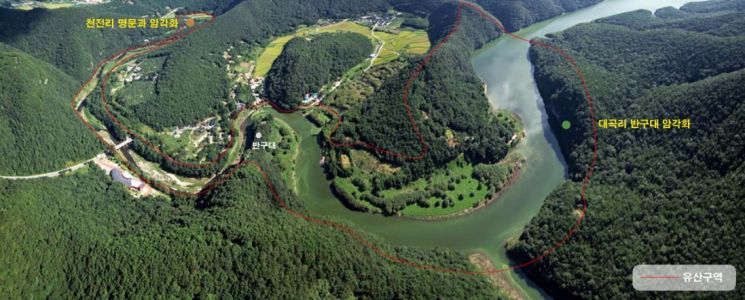
The Cheonjeon-ri Inscriptions and Petroglyphs are located about 2 kilometers from the Bangudae Petroglyphs in Daegok-ri. Their existence was made known in 1970, a year before the discovery of the Bangudae Petroglyphs. Over 620 figures, symbols, and inscriptions are engraved along the rock surface, which measures approximately 2.7 meters in height and 9.8 meters in width. Some of the inscriptions are believed to date back to the reign of King Beopheung of Silla, making them valuable resources for studying Silla society around the 6th century.
© The Asia Business Daily(www.asiae.co.kr). All rights reserved.
![Clutching a Stolen Dior Bag, Saying "I Hate Being Poor but Real"... The Grotesque Con of a "Human Knockoff" [Slate]](https://cwcontent.asiae.co.kr/asiaresize/183/2026021902243444107_1771435474.jpg)


















