Trade Uncertainties, Including U.S. Tariffs, Raise Concerns
Export Profitability Expected to Worsen in Seven Major Industries
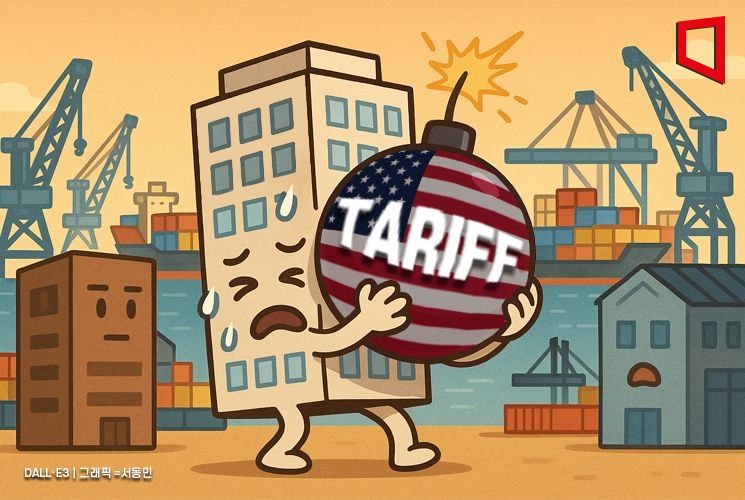
A recent survey found that trade uncertainties, including U.S. tariff policies, are a major factor that will determine the direction of South Korea's exports in the second half of the year. Nine out of ten companies in the top ten export industries?such as steel, automobiles, and semiconductors?expressed concern that they would not be able to withstand tariff increases of more than 15%.
The Korea Economic Research Institute announced on the 11th that it had commissioned Mono Research, a market research firm, to conduct a survey on export prospects for the second half of 2025, and these results were revealed. The survey targeted the top 1,000 companies by sales in the ten major export industries, with responses from 150 companies. The industries included steel, shipbuilding, petrochemicals, general machinery, automobiles, semiconductors, biohealth, electronic components (including displays), auto parts, and computers.
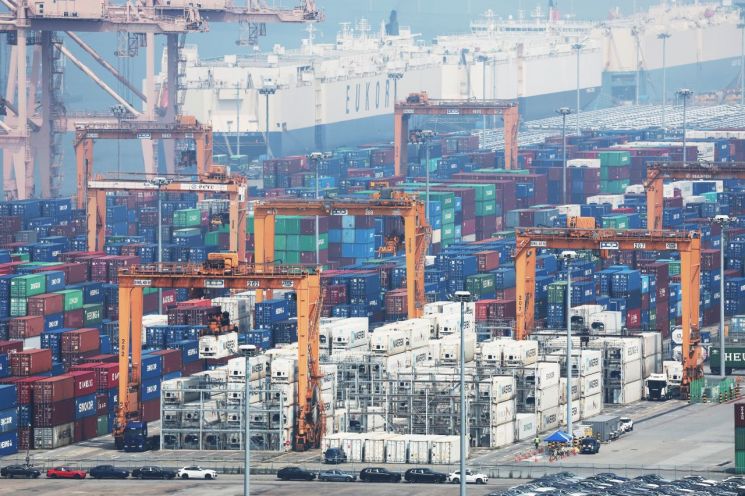
According to the survey, domestic exports in the second half of the year are expected to decrease by an average of 1.6% compared to the same period last year. Exports are expected to increase in four sectors, including electronic components (1.3%) and biohealth (1.6%), while exports are projected to decline in six sectors, including steel (down 5.0%) and shipbuilding (down 2.5%).
Companies that anticipated a decrease in exports cited the following factors: ▲increased trade uncertainties such as tariffs (45.6%) ▲economic downturns in major export markets (26.6%). On the other hand, companies expecting an increase in exports pointed to ▲market diversification to develop new sales channels (28.2%) ▲strengthening product competitiveness through new product development (25.0%) as the reasons.
More than half of export companies identified the Trump administration's tariff policies (53.3%) as the biggest risk. ▲Demand stagnation due to global low growth (14.0%) ▲intensifying U.S.-China trade conflicts (12.7%) followed.
Most notably, 92.0% of responding companies said they would find it difficult to withstand U.S. tariff increases exceeding 15%. The Korea Economic Research Institute expressed concern that if the U.S. 'reciprocal tariff of 25%' announced on July 7 (local time) is implemented as is, difficulties for export companies will intensify. As countermeasures to tariff hikes, companies cited ▲cost reduction (33.7%) ▲adjustment of export prices (33.2%) ▲expansion of overseas local production (14.7%).
Large companies are also expected to face greater difficulties. About half (47.3%) of large export companies responded that their export profitability in the second half of the year would be similar to that of the second half of last year. The percentage of companies expecting profitability to deteriorate was 38.7%, more than twice as high as those expecting improvement (14.0%). Export profitability refers to the level of profit a company earns from exports; the higher the profitability, the greater the profit.
By sector, in seven industries?including auto parts, automobiles, general machinery, petrochemicals, and steel?the proportion of respondents expecting profitability to worsen was higher than those expecting improvement. ▲Increased cost burden due to tariffs (44.8%) ▲lower prices due to intensified export competition (34.5%) ▲increased operating costs such as labor (13.8%) were cited as the main causes. The only sectors with a higher proportion of respondents expecting improved profitability were semiconductors and shipbuilding.
Companies said that ▲alleviating tariff burdens through trade agreements (37.0%) ▲expanding tax support such as corporate tax cuts and investment tax credits (18.7%) ▲support for discovering new export markets (12.6%) are needed.
Lee Sangho, head of the Economic and Industrial Division at the Korea Economic Research Institute, said, "As U.S. tariff policies and global low growth are expected to continue for the time being, short-term responses focused on cost reduction have their limits," and added, "Institutional support, such as trade agreements reflecting the comparative advantages of export companies and diversification of export destinations, is necessary."
© The Asia Business Daily(www.asiae.co.kr). All rights reserved.


















