Living in the Same Neighborhood, Working in the Same Places, Yet Always Excluded
Overseas Korean Visa Holders Repeatedly Omitted from Government Support
Gwangju Koryoin Say, "Just Disappointed" Once Again
Only the Program Name Changes... Exclusion Remains the Same, Critics Say
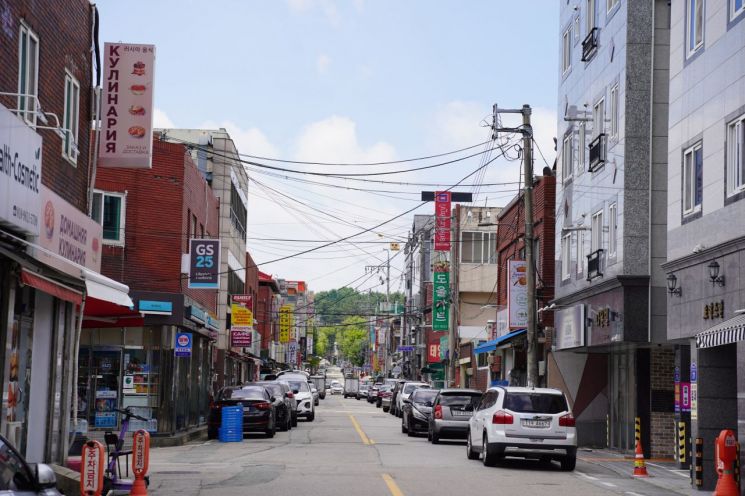 Morning of the 10th, a street view of the Gwangju Koryoin Village shopping district. In the Wolgok-dong area, where Russian signboards are concentrated, about 4,800 Koryoin residents live. Photo by Song Bohyun
"Only those who have obtained citizenship are eligible. They said Koryoin are not included."
Shin Joya, the head of Gwangju Koryoin Village, spoke briefly. This was right after she learned that residents without citizenship?specifically those with Overseas Korean visas and short-term foreign residents?were excluded from the government’s recently announced “Livelihood Recovery Consumption Coupon” policy. When asked about the mood in the village, she simply added, "People are just disappointed."
According to Gwangsan District officials on July 10, the eligibility for this consumption coupon is fundamentally based on “domestic nationals.” Exceptions are made for foreigners who are listed together with domestic nationals on the resident registration or for certain foreigners who are enrolled in health insurance (such as permanent residents, marriage immigrants, and recognized refugees). However, those with an Overseas Korean (F-4) visa are not included.
Approximately 4,800 residents live in the Koryoin Village in Wolgok-dong, Gwangsan District, Gwangju, and an estimated 3,700 of them are living in Korea on an Overseas Korean visa. As a result, the majority are excluded from this policy.
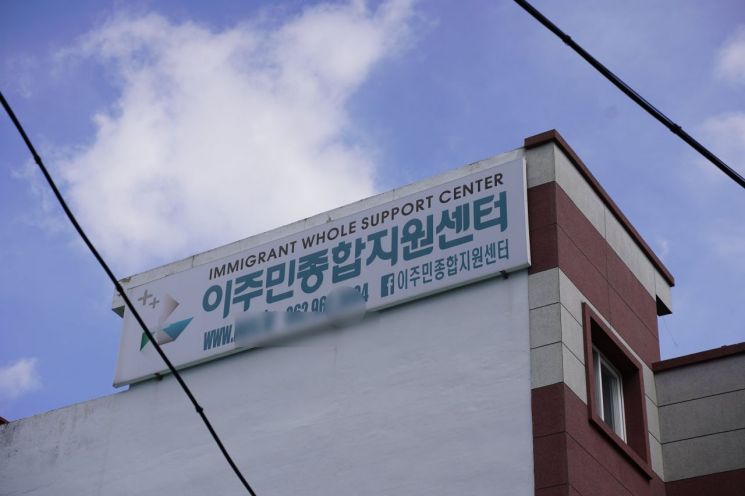 Exterior sign of Gwangju Migrant Comprehensive Support Center. Located in Wolgokdong, Gwangsan District, the center provides counseling, education, and living support services for migrants, including Koryoin. Photo by Song Bohyun
Jeon Deukhan, director of the Gwangju Migrant Support Center, pointed out, "Most Koryoin living in Gwangju work in local industries and pay taxes, but they are repeatedly excluded from policy benefits." He added, "Even though they live in the same area and form a community, being excluded from policies solely because they are 'not nationals' undermines the sustainability of the community."
He continued, "They were also excluded from disaster relief funds during COVID-19, and last year’s energy vouchers did not include them either. The names of the programs keep changing, but the way they are excluded remains the same. If they continue to be marginalized from welfare despite contributing just as much as nationals, this reveals a structural flaw in the policy design itself."
An official from Gwangsan District said, "Due to government policy, it is highly likely that Koryoin with Overseas Korean visas will not be included as eligible recipients." The official added, "However, there may be exceptional cases, so we will reconfirm the final eligibility once the government’s detailed guidelines are issued."
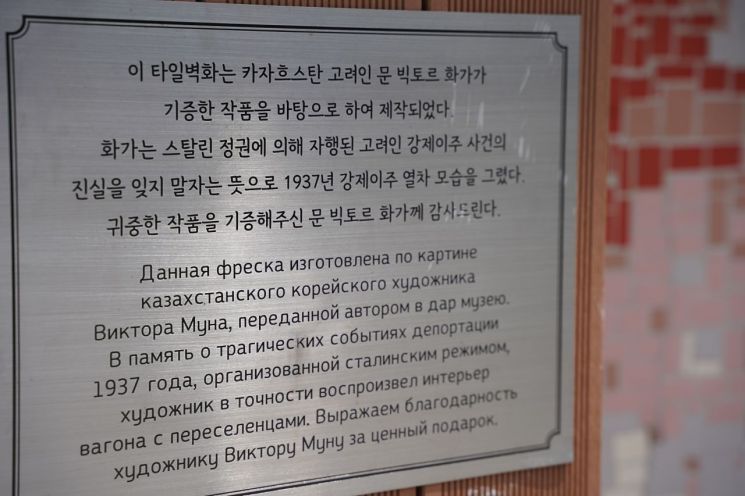 Tile mural guide created based on the work of Kazakhstani painter Moon Viktor to commemorate the forced relocation of Koreans. Photo by Song Bohyun
Meanwhile, the first round of applications for the Livelihood Recovery Consumption Coupon will be open from July 21 to September 12. The basic amount is 150,000 won; households just above the poverty line and single-parent families will receive 300,000 won, while recipients of the Basic Livelihood Security Program will receive 400,000 won. An additional 30,000 won will be provided in non-metropolitan areas, and 50,000 won in population-declining regions. The second round will distribute 100,000 won to the bottom 90% of income earners from September 22 to October 31. Coupons will be provided in the form of local currency, cards, or prepaid cards, and must be used by November 30.
© The Asia Business Daily(www.asiae.co.kr). All rights reserved.
![Clutching a Stolen Dior Bag, Saying "I Hate Being Poor but Real"... The Grotesque Con of a "Human Knockoff" [Slate]](https://cwcontent.asiae.co.kr/asiaresize/183/2026021902243444107_1771435474.jpg)


















