July Fiscal Trends: National Tax Revenue Up by 21.3 Trillion Won
Despite First Supplementary Budget, Tax Revenue Growth Narrows Deficit
Deficit Remains Fourth Largest on Record Despite Improvement
Deficit May Widen Further with Second Supplementary Budget
The managed fiscal balance, which reflects the government's financial operations, recorded a cumulative deficit of 54.2 trillion won as of May this year. This figure includes 3.2 trillion won in expenditures executed in May following the first supplementary budget. Fortunately, as national tax revenue increased, the deficit narrowed compared to the previous year and was less than initially expected. However, there are concerns that the deficit in the managed fiscal balance will widen if the second supplementary budget, totaling 31.8 trillion won, is added by the end of the year.

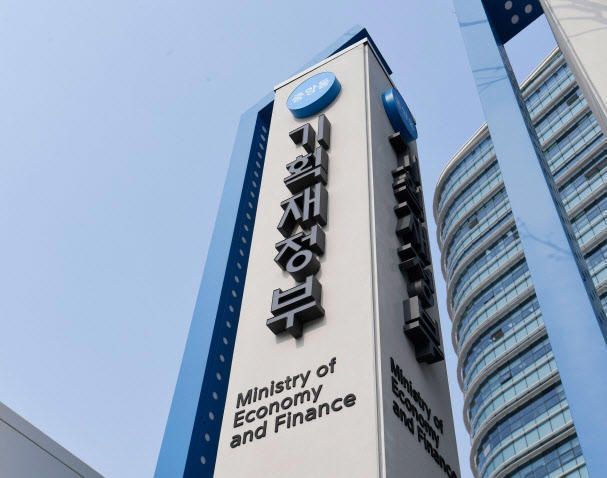
According to the "Monthly Fiscal Trends July Issue" released by the Ministry of Economy and Finance on July 10, total cumulative revenue as of May reached 279.8 trillion won, an increase of 21.6 trillion won compared to the same period last year.
National tax revenue amounted to 172.3 trillion won, up 21.3 trillion won from a year earlier. Corporate tax increased by 14.4 trillion won due to improved corporate performance and higher corporate interest income last year. Income tax rose by 6.2 trillion won as total earned income tax grew, driven by expanded bonus payments and an increase in the number of employees. Non-tax revenue also increased by 3.6 trillion won to reach 17.4 trillion won. However, fund revenue fell by 3.3 trillion won year-on-year to 90 trillion won. The tax revenue progress rate for January to May was 42.9%, slightly higher than last year’s 42.2%.
Total expenditure was 315.3 trillion won, an increase of 4.9 trillion won from the same period last year. The progress rate stood at 45.9%. Reflecting the execution of the first supplementary budget during the same period, the progress rate fell by 2.7 percentage points compared to the same period last year (48.6%).
The consolidated fiscal balance, calculated by subtracting total expenditure from total revenue, recorded a deficit of 35.5 trillion won. The managed fiscal balance, which excludes social security funds such as the National Pension from the consolidated fiscal balance, posted a deficit of 54.2 trillion won. Compared to the same period last year, these figures improved by 16.7 trillion won and 20.2 trillion won, respectively.
Despite the supplementary budget, the increase in national tax revenue led to an improvement in the managed fiscal balance compared to the previous month. However, as of the cumulative total for May, the managed fiscal deficit remains the fourth largest on record, following 77.9 trillion won in 2020, 74.4 trillion won in 2024, and 71.2 trillion won in 2022. These figures do not reflect the second supplementary budget, which was passed earlier this month, and the deficit could worsen further once the additional supplementary budget is implemented. The Ministry of Economy and Finance stated that the managed fiscal balance can fluctuate each month depending on revenue, expenditure, and government bond issuance.
Previously, with the passage of the first supplementary budget of 13.8 trillion won in the National Assembly plenary session, the amount of government bonds issued to fund the supplementary budget was increased by 9.5 trillion won. Initially, the Ministry of Economy and Finance projected a managed fiscal deficit of 73.9 trillion won for this year in the main budget, but after the first supplementary budget, the estimated deficit increased to 86.4 trillion won. However, the ministry does not expect the managed fiscal deficit to exceed 100 trillion won by the end of the year, even after including the second supplementary budget. During a briefing, Hwang Heejeong, Director of Fiscal Soundness at the Ministry of Economy and Finance, stated, "There is no fixed pattern in the (managed fiscal) balance. I believe that, through changes in revenue and expenditure, the balance will eventually align with our expectations."
As of the end of May, the outstanding central government debt stood at 1,217.8 trillion won. In June, the amount of government bonds issued was 23.8 trillion won, bringing the cumulative total for January to June to 123.8 trillion won, which accounts for 59.8% of the annual issuance limit. In June, foreign holdings of government bonds saw a net outflow of 500 billion won, influenced by large-scale maturities totaling 10.1 trillion won.
© The Asia Business Daily(www.asiae.co.kr). All rights reserved.


















