All Pending Korea-US Issues, Including Tariffs and Defense Costs, Likely to Be Negotiated as a Package...
Full Efforts to Achieve Mutually Beneficial Results
US Secretary of State Rubio Also Agrees...
Advisor Wi Meets with US Under Secretary of State and Working-Level Officials for Talks
Timing of Korea-US Summit Remains Unresolved...
Advisor Wi Emphasizes, "The Summit Is Not the Decisive Factor for Everything"
With National Security Advisor Wi Sunglak's four-day, two-night visit to the United States as the backdrop, South Korea and the United States have reached a consensus on holding an early summit and advancing discussions on a security and trade package. As the tariff negotiation deadline approaches on August 1, attention is focused on how the government will respond. Since the South Korean government has made a counterproposal to negotiate all Korea-US issues as a package, contrary to its previous stance, there is growing interest in whether it can achieve the most mutually beneficial outcome without being led by the United States. However, uncertainty is expected to persist, as the two sides have not managed to narrow down the timing of the summit.
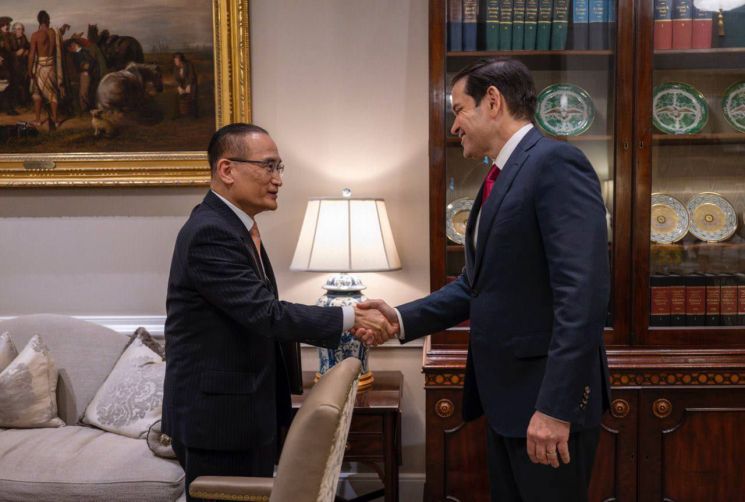
After returning from the United States late in the afternoon on July 9, Advisor Wi held a briefing at the Yongsan Presidential Office, where he stated that he had met with US Secretary of State and National Security Advisor Marco Rubio. Wi explained, "Even if there are differences of opinion, both sides agreed to work toward consensus in the broader context of advancing the alliance and building trust. We also agreed to advance discussions by considering a package that encompasses trade, procurement, and security issues." He added, "We proposed to hold a Korea-US summit as soon as possible to accelerate the process of reaching mutually beneficial agreements on all pending issues." According to Wi, Secretary Rubio expressed his agreement with these points. During his visit, Wi also met with US Under Secretary of State for Political Affairs Allison Hooker and working-level officials to discuss bilateral issues.
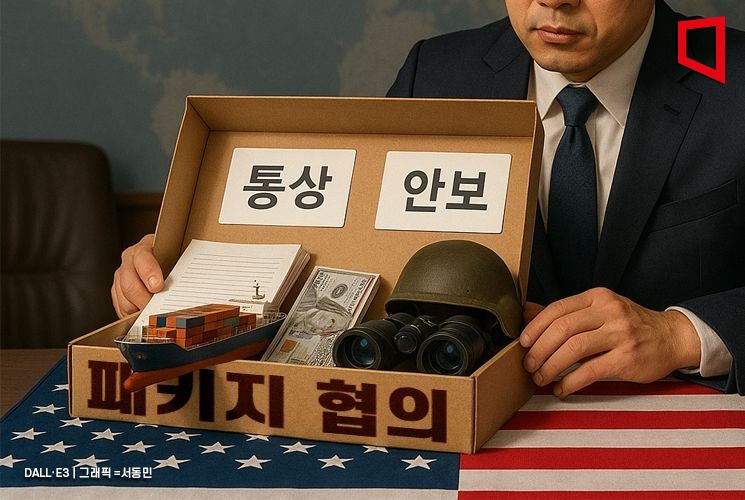
This means that the South Korean side recognized that the US has been focusing only on barriers and regulations affecting its own exports in the mutual tariff issue, and proposed that discussions should also take into account Korea's contributions, such as investments in the US, purchases of American goods, and the value of the alliance in terms of security. Secretary Rubio reportedly accepted this approach to some extent. The intention appears to be to put multiple issues on the negotiating table, exchanging concessions and gains to create a favorable outcome.
Advisor Wi explained, "If you look at President Trump's letter, it is entirely about tariffs and non-tariff barriers. However, there are many other areas, such as overall trade, investment, purchases of US goods, and defense cooperation. If we take a comprehensive view, we could negotiate differently, which is why we are moving in that direction." He continued, "I suggested that it would be appropriate to negotiate with the 'end state of the alliance' in mind, and that holding a summit quickly could accelerate the entire process." He added, "There is some consensus, but how much the US will actually reflect this remains to be seen through further discussions."
The issue of the Korea-US Special Measures Agreement (SMA) on defense cost-sharing, which President Trump appeared to target during a White House cabinet meeting on July 8 (local time), was not discussed during this visit. President Trump stated, "South Korea should bear the costs of its own military forces," and reiterated that South Korea has paid "very little" in military expenses to the US. He again mentioned his demand for $10 billion (about 13.7 trillion won), which is nine times the amount South Korea currently pays in defense cost-sharing.
Advisor Wi said that the SMA was not discussed, but acknowledged, "It is true that we are discussing increasing overall defense spending. Our contribution is already significant, and there is potential for it to increase." President Trump has demanded that NATO member countries increase their defense spending to 5% of GDP, and is making similar demands to allies, including South Korea. This suggests a strategy of partially accepting demands to increase total defense spending, while using it as leverage in mutual tariff negotiations. At the same time, it appears there is an intention to keep some distance from the SMA negotiations, as once a decision is made, it is difficult to reverse.
However, coordination of a Korea-US summit, one of the most pressing diplomatic issues for the Lee Jaemyung administration, has made little progress. The optimal scenario would be for the summit to take place in July, ahead of the August 1 tariff negotiation deadline, but uncertainty is increasing. Advisor Wi said, "There is consensus on holding the summit as soon as possible, but we are not definitively saying it will be before or after August 1. We will adjust according to how things progress." Given President Trump's preference for a 'top-down' approach, a Korea-US summit could serve as an effective means to overcome a critical juncture in the tariff negotiations, but it appears that the timing remains unresolved following this visit.
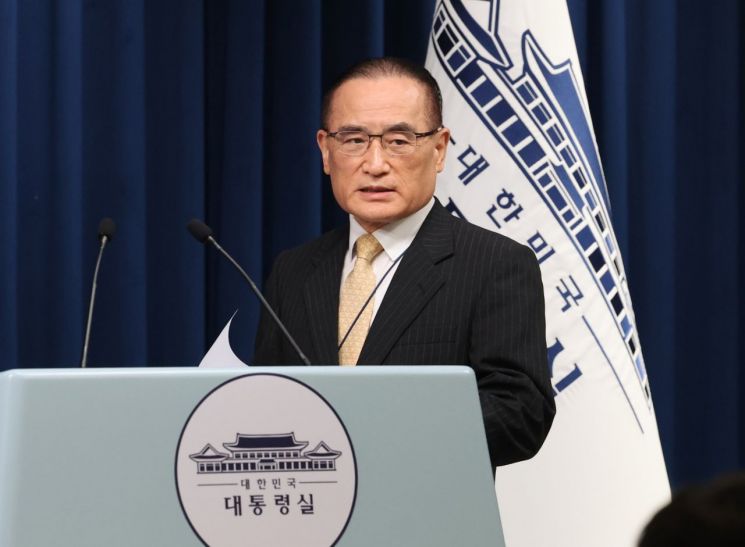
In response, Advisor Wi drew a line against speculation that the success of the summit and the tariff negotiations are directly linked. He said, "We have not yet reached the stage of setting a specific date for the summit," but added, "Whether or not the summit takes place is not the deciding factor for everything." This suggests that the schedule can be adjusted depending on the outcome of the package negotiations proposed this time. He further explained, "Consultations and summits are part of a continuous process," and added, "There are rarely decisive showdowns as people generally imagine."
© The Asia Business Daily(www.asiae.co.kr). All rights reserved.
![Clutching a Stolen Dior Bag, Saying "I Hate Being Poor but Real"... The Grotesque Con of a "Human Knockoff" [Slate]](https://cwcontent.asiae.co.kr/asiaresize/183/2026021902243444107_1771435474.jpg)


















