Special Prosecutor Emphasizes Evidence Destruction
Yoon Argues Arrest Warrant Is Unjust
Investigation Focuses on Uncovering
the Background and Reasons for Martial Law
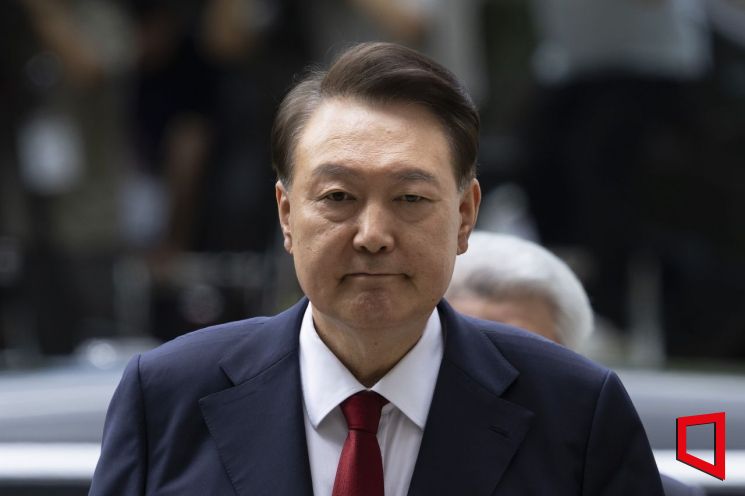 Former President Yoon Sukyeol is entering the Seoul Central District Court in Seocho-gu, Seoul, on the afternoon of the 9th to undergo a detention hearing (warrant review). The hearing will be presided over by Chief Judge Nam Sejin (Judicial Research and Training Institute Class 33), who is in charge of warrants.
 Former President Yoon Sukyeol was taken back into custody in the early hours of the 10th, just 123 days after his release. Having overcome the hurdle of securing the main suspect, the special prosecutor investigating the insurrection is now expected to focus its investigation on uncovering the full scope of the insurrection, as well as on foreign exchange charges that the prosecution had not previously addressed. After being re-detained at the Seoul Detention Center, former President Yoon submitted a statement of non-attendance for the insurrection trial scheduled for the morning of the 10th and did not appear in court.
The reason for issuing the arrest warrant, as stated by Judge Nam Sejin, who is in charge of warrants at the Seoul Central District Court, was, as the special prosecutor's team emphasized, "concerns over the destruction of evidence." The special prosecutor's team has argued that if former President Yoon, who is the ultimate decision-maker and person responsible for the insurrection and obstruction of arrest, were to remain free, he could influence the statements of other individuals involved in the case. The team claimed that this could ultimately lead to the destruction of evidence and obstruction of the investigation. In fact, this point was described over 16 pages in the arrest warrant application. Former President Yoon and his legal team strongly refuted these claims during the detention hearing, calling the special prosecutor's arguments "speculation," but ultimately failed to persuade the court.
The most important investigative thread that the prosecution, which previously indicted former President Yoon for insurrection, did not pursue is the suspicion that former President Yoon induced provocations by North Korea. This is also a new aspect included in the special prosecutor act. In this regard, the special prosecutor's team reportedly submitted a separate opinion to the court during the detention hearing, in addition to the arrest warrant. This document is said to include allegations related to foreign exchange crimes, specifically questioning whether former President Yoon sent drones into North Korea to provoke a response from the North in order to justify the imposition of martial law.
However, legal experts point out that there are many legal hurdles to applying the charge of foreign exchange crimes. According to the Criminal Act, the crime of foreign exchange collusion is defined as "anyone who conspires with a foreign country to wage war against the Republic of Korea, or who conspires with a foreigner to rebel against the Republic of Korea, shall be punished by death or life imprisonment." In other words, in order to convict someone of this crime, it must be proven that there was premeditated collusion with a foreign country.
Simply flying drones to induce provocations from the North and giving improper orders to the military might be grounds for charges such as abuse of authority, but it would be difficult to extend those actions to a charge of foreign exchange crimes.
When the Democratic Party first claimed that former President Yoon might declare martial law, not only the People Power Party but also many others criticized it as being out of touch with reality. Some even called it "delusional." However, this has now become a reality. The special prosecutor's team that arrested former President Yoon is expected to investigate the detailed process by which former President Yoon moved toward declaring martial law by questioning various related individuals.
Some within the special prosecutor's team reportedly believe that if the inducement of North Korean provocations is proven, it could also be seen as part of a series of actions aimed at declaring martial law. The key to this investigation is expected to be the contents of the notebook belonging to former intelligence chief Noh Sangwon and the testimony of former Defense Minister Kim Yonghyun. It is highly likely that these individuals shared crucial information with former President Yoon regarding the progression from foreign exchange suspicions to insurrection through the declaration of martial law.
While in custody, former President Yoon is also expected to be summoned for questioning not only by the special prosecutor for the insurrection case, but also by the special prosecutors investigating Kim Keonhee and the death of Private Chae. The Kim Keonhee special prosecutor is investigating allegations that former President Yoon and his wife unlawfully intervened in the nomination process for the last general election. A recorded conversation has already been released in which former President Yoon, speaking with political broker Myung Taegyun, is effectively heard giving instructions to the nomination review chairperson during the general election.
The special prosecutor investigating the death of Private Chae is now fully investigating the so-called "VIP rage theory," which alleges that former President Yoon was enraged over the investigation of a Marine division commander. The Chae special prosecutor's team plans to summon former secretary Kim Taehyo for questioning on the 11th.
For former President Yoon, who is appearing at the Seoul Central District Court every week to stand trial on insurrection charges, the situation can be described as a true "dead end," as he must contend with three separate investigations: the special prosecutor for the insurrection, the Kim Keonhee special prosecutor, and the Chae special prosecutor, all while preparing for his trial.
© The Asia Business Daily(www.asiae.co.kr). All rights reserved.

















