On July 9, the Korea Forest Service announced that it had completed the control of 2.61 million pine trees at risk of pine wilt disease infection during the first half of this year.
According to monitoring results from the National Institute of Forest Science, pine wilt disease damage has been increasing recently due to the effects of climate change and abnormal high temperatures. The expansion of habitats and extended activity periods for pine wilt disease vectors such as the pine sawyer beetle, combined with the increasingly vulnerable growing conditions for pine species, have been identified as the main factors behind the spread of the disease.
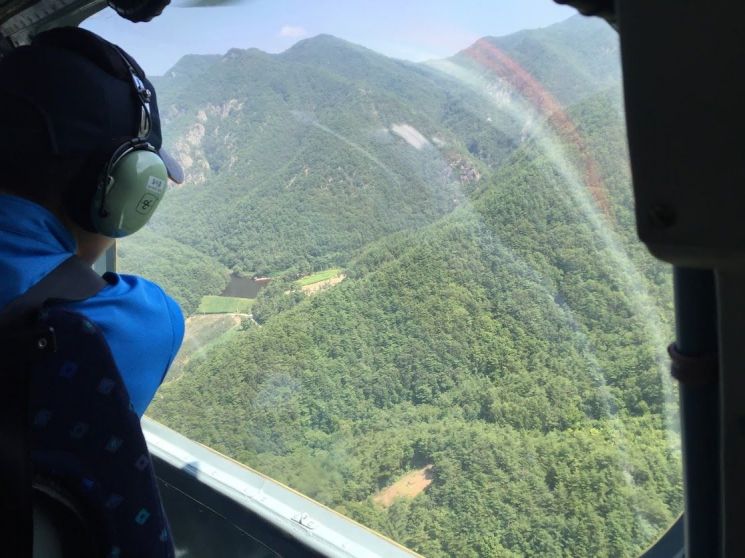 A Forest Service official is boarding a helicopter to conduct aerial surveillance of pine wilt disease-infected trees. Photo by Forest Service
In fact, regional data shows that the number of cities, counties, and districts where infected trees were found increased by 12 compared to the previous year. The number of areas classified as severely or extremely affected rose from 7 last year to 10 this year, and in these areas, a total of 910,000 infected trees accounted for 65% of all cases nationwide.
Whereas damage had previously been concentrated in the Yeongnam region?including Pohang, Ulsan, and Andong?and in areas already classified as severely affected, since spring of last year, there has been a clear trend of the damage becoming more clustered and large-scale in other regions as well.
In particular, projections by the Forest Science Institute based on climate change scenarios indicate that the risk of pine wilt disease outbreaks will continue to rise. This underscores the growing importance of disease control measures to contain the spread.
In response to these developments, the Korea Forest Service has improved its previous method of surveying infected trees, which relied on applications from local governments. This year, it selected high-risk areas for pine wilt disease and conducted proactive surveys using helicopters. Additionally, the control period, which previously ended in March or April each year, was extended through May, thereby increasing the number of at-risk trees treated.
The agency is also strengthening consulting on control strategies to enhance the disease management capabilities of local governments and is working to establish stable conditions for disease control through consultations with financial authorities.
Fundamental measures to minimize pine wilt disease damage are also being pursued. Notable examples include establishing a survey system that automatically identifies suspected infected trees by integrating helicopters, drones, LiDAR, and artificial intelligence (AI), as well as focusing on conversion control measures that replace pine trees with broad-leaved species.
Currently, conversion control is mainly implemented in areas where damage is recurring or clustered, or in key regions to prevent further spread. Any forest owner affected by pine wilt disease may apply for species conversion at the local government office with jurisdiction over the forest's location.
Lee Yongkwon, Director of Forest Disaster Management at the Korea Forest Service, stated, "Protecting pine forests distributed throughout the country is essential to safeguarding the nation's forest ecosystem," and called for "the interest and active cooperation of relevant agencies and local residents to help halt the spread of pine wilt disease."
© The Asia Business Daily(www.asiae.co.kr). All rights reserved.

















