Stagnation Deepens with AI Expansion and Self-Employment Slump
40% of Seoul's 3,605 Print Shops Located Here
Over 500 Shops Closed in 20 Years
Unmanned Shops and Price Wars Add Pressure
Government Push for Electronic Documents Accelerates Decline
Urgent Need for Content and Workforce Innovation
On July 15, I visited the printing alley in Chungmuro, Jung-gu, Seoul. Although the doors of about ten printing shops were open, the owners were only staring at their monitors. Some shops had banners advertising 'For Lease,' and around 2 p.m., I saw an owner closing up for the day. Kim Youngsik (60), an employee at one of the print shops, said, "I come to work, but there are many days when I don't even get to run the press once," adding, "Around here, the main topic is not about orders, but about when redevelopment will happen."
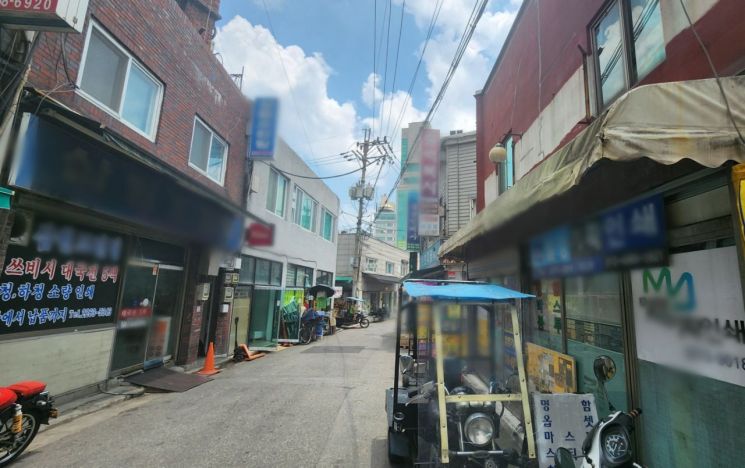
The decline of Chungmuro's printing alley, known as the 'number one district for the printing industry,' is deepening. This is due to several factors: the shift to digital, which has reduced demand for paper; the recent spread of artificial intelligence (AI); and the ongoing slump in the self-employed sector.
According to the Ministry of the Interior and Safety, there are 1,562 registered print shops in Jung-gu, Seoul. This means that 40% of all print shops in Seoul (3,605 in total) are concentrated in this area. However, over the past 20 years, 506 print shops have closed, and among them, 76 shops (15%) have shut down since 2020. Demand for paper has also been steadily declining. Last year, domestic production of printing paper was 2.26 million tons, a 30.2% decrease compared to 3.24 million tons in 2013. As of May this year, the figure stands at 850,000 tons, and it is likely to decrease further.
Shop owners in Chungmuro's printing alley all agree that "the spread of AI is making things even harder." They have traditionally operated as 'full-service' businesses, handling everything from producing promotional materials like flyers, booklets, and brochures to planning, design, and editing. However, in recent years, more customers have been using AI-based design tools to handle everything up to the final printing stage themselves, significantly reducing the frequency with which they visit print shops.
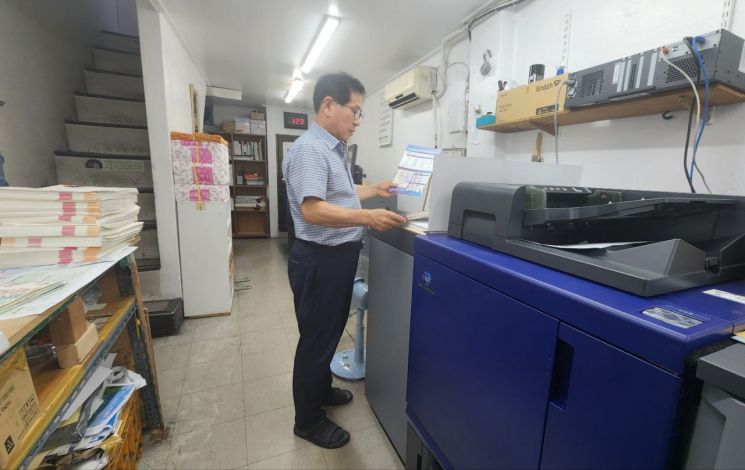 Lee Haewook, who runs a printing shop in the Chungmuro printing alley in Seoul, is inspecting printed materials. Photo by Byeon Seonjin
Lee Haewook (66), who has run a print shop for 35 years, said, "In the past, when a hospital ordered 50 types of art therapy cards, I would work with designers for five to six months, but now AI can create them in an instant, so those kinds of jobs have almost disappeared. We used to have three layout designers, but now only one remains."
The spread of unmanned print shops, especially around university areas and near subway stations, is also contributing to the decline of traditional print shops. As of July, the number one company in the unmanned print shop sector operates 281 locations, and this number is increasing. A print shop insider said, "Even in the late 2010s, there was a lot of demand for small print jobs depending on university schedules, such as the start of the semester or exam periods. But now, with the increase in unmanned print shops, demand has virtually disappeared."
Prices for raw materials such as paper and ink have continued to rise due to inflation, but printing fees have remained stagnant. As print jobs have declined, print shops have been forced into price wars just to survive. Son Deokho (69), a printing industry veteran with 40 years of experience, said, "These days, there are more days when I don't have any work at all," and added, "Many people are just waiting for redevelopment so they can close up and leave."
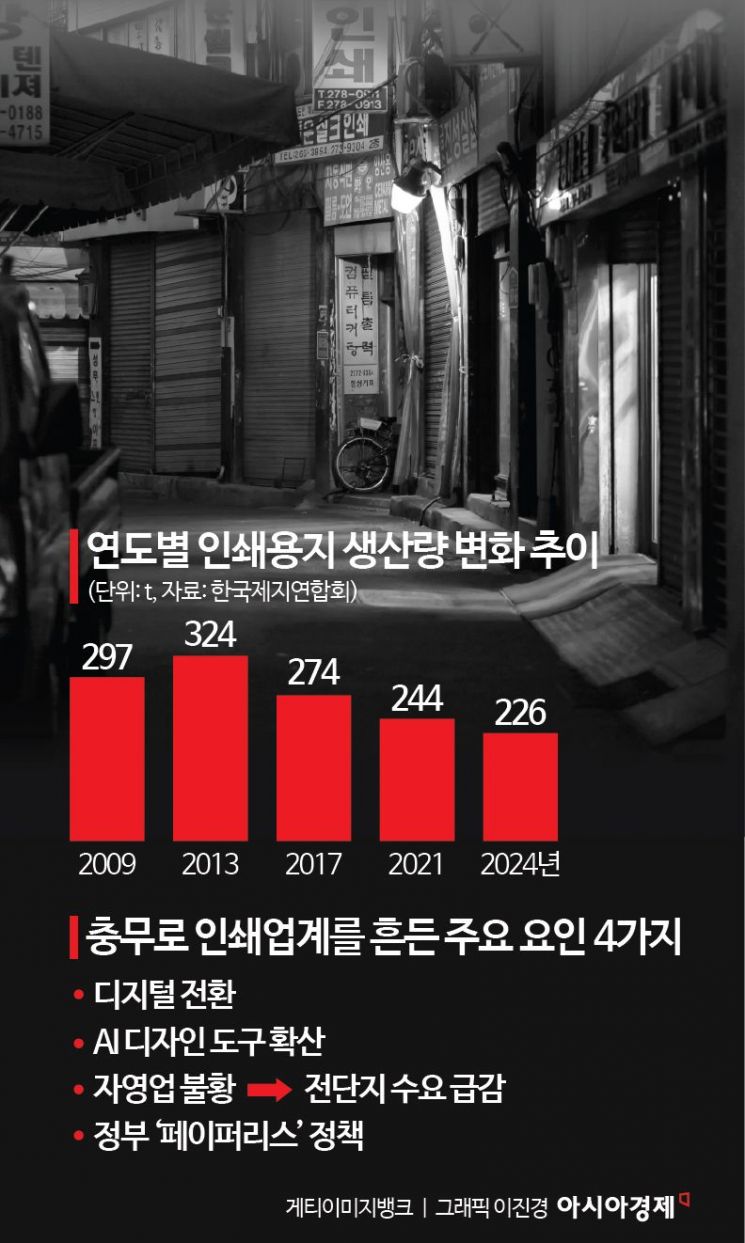
Looking ahead, the difficulties for print shops are expected to persist as even legal documents will soon be allowed to be submitted electronically. In May, five presidential decrees specifying that original documents can be submitted as electronic documents were passed in a Cabinet meeting. Kim, a print shop employee (59), said, "Ten years ago, public institutions used to commission us to produce all kinds of promotional materials like leaflets, and our printers never stopped running. But now, with the government pushing for 'paperless administration,' we are gradually losing our place."
Jo Garam, a researcher at the Korean Society of Printing Science and Technology, said, "With demand for commercial print materials declining and competition intensifying, print shops are facing structural limitations. To respond to new demand, such as customized small-batch printing, it is necessary to develop new content, retrain personnel, and improve production environments."
© The Asia Business Daily(www.asiae.co.kr). All rights reserved.



















