"Streamlined Security Screening Procedures... Expected to Reduce Wait Times"
Some Passengers May Still Be Required to Remove Shoes
In the future, passengers will no longer have to remove their shoes during security screening at airports in the United States.
On July 8 (local time), the U.S. Department of Homeland Security announced in a press release that it will implement a new policy allowing passengers traveling through U.S. airports to keep their shoes on while undergoing security checks at Transportation Security Administration (TSA) checkpoints.
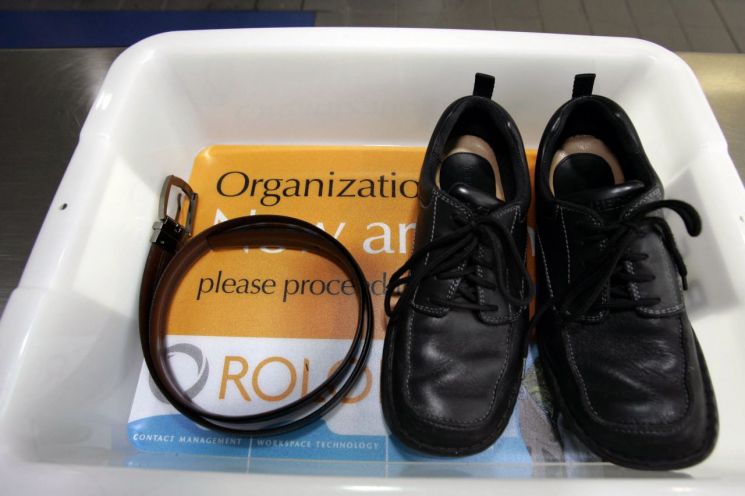
At a press conference that day, Secretary of Homeland Security Kristi Noem stated that the new policy would take effect immediately across the United States. Secretary Noem explained that the pilot program confirmed that the TSA has the necessary equipment to ensure the safety of airports and aircraft while allowing passengers to wear their shoes.
Secretary Noem said, "As always, security is our highest priority," adding, "Thanks to cutting-edge technological advancements and multiple layers of security measures, we are confident that we can implement this change while maintaining the highest security standards."
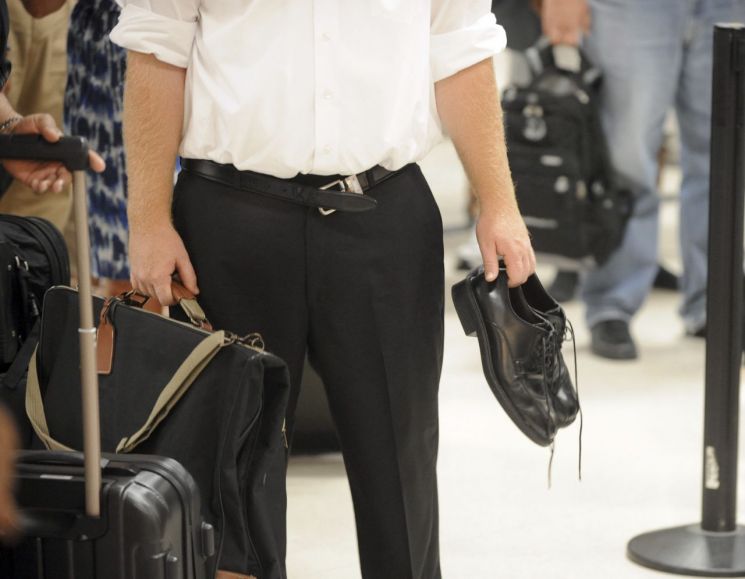
The Department of Homeland Security expects the new policy to increase convenience for travelers and streamline security screening procedures, which will reduce wait times. However, Secretary Noem added that if the TSA determines that additional screening is necessary, some passengers may still be asked to remove their shoes.
According to the Associated Press, since August 2006, the TSA has required airline passengers to remove their shoes at security checkpoints. This policy was introduced after the incident involving Richard Reid, a British national known as the "shoe bomber," who in December 2001 attempted to ignite explosives hidden in the heel of his shoe with a match on a flight from Paris, France to Miami, United States, but was subdued by passengers and crew.
Even before the implementation of this new policy, the United States allowed passengers to keep their shoes, belts, and light jackets on, and to leave laptops in their bags while passing through security checkpoints, through the paid security screening expedited program known as "TSA PreCheck."
© The Asia Business Daily(www.asiae.co.kr). All rights reserved.
![Clutching a Stolen Dior Bag, Saying "I Hate Being Poor but Real"... The Grotesque Con of a "Human Knockoff" [Slate]](https://cwcontent.asiae.co.kr/asiaresize/183/2026021902243444107_1771435474.jpg)

















