Joint Forum at the National Assembly
on Securing Economic Viability of Renewable Energy
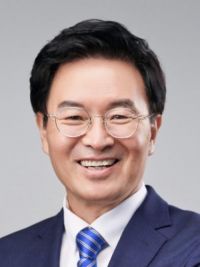 Jinwook Jung, member of the Democratic Party of Korea.
As offshore wind power has emerged as a core component of the Energy Highway policy under the Lee Jaemyung administration, there are calls emphasizing that, in order to achieve the goal of expanding offshore wind capacity to 14.3GW by 2030, it is crucial to secure economic feasibility by lowering the levelized cost of electricity (LCOE) and to reduce the burden on the public.
According to IRENA (International Renewable Energy Agency) and other sources, as renewable energy expands globally, the LCOE for solar and wind power has significantly decreased. However, the LCOE for offshore wind in South Korea is analyzed to be more than twice as high as that of leading countries such as those in Europe and China.
Jinwook Jung, a member of the Democratic Party of Korea (representing Gwangju Dongnam-gap), held a forum at the National Assembly on the morning of July 9, in cooperation with the Future Energy Policy Institute and the Korea Wind Energy Industry Association, to discuss ways to secure the economic viability of offshore wind power and reduce the public burden.
At the forum, Dongkyu Lee, a professor at the University of Seoul, suggested in his keynote presentation that "in order to lower the high LCOE of offshore wind power, policy measures should be implemented to induce a reduction in CAPEX (capital expenditure), which accounts for more than 50% of the total investment in offshore wind."
Professor Lee proposed that for 10MW turbines, which are currently at the R&D stage for domestic companies, usage should be encouraged primarily in the public sector. For large turbines exceeding 10MW, which inevitably rely on overseas suppliers, he suggested supporting strategic alliances with domestic companies to expand domestic production capacity and promote technology transfer.
Kwangjun Choi, Director of the Renewable Energy Deployment Division at the Ministry of Trade, Industry and Energy, who participated as a panelist, stated, "Expanding the offshore wind market is a key task in the growth of renewable energy." He added, "It is necessary to differentiate the bid evaluation criteria between the public and private sectors, and to increase the weight of LCOE reduction factors in private sector evaluations."
Jinwook Jung emphasized, "With the establishment of the new Ministry of Climate and Energy and the impending implementation of the Energy Highway policy, the private sector currently accounts for most of the activity, and it seems that a significant amount of foreign capital is involved. I am concerned that domestic investment in offshore wind may have been somewhat delayed. In any case, I believe that Korean offshore wind power will become a large-scale renewable energy source with a generation capacity surpassing that of solar power in the future."
Jinwook Jung further stated, "Since the Energy Highway will not be easy to implement in practice, it will be important to design a market-friendly LCOE in order to create new growth engines in response to change." He added, "It is an urgent task to improve the fixed-price contract competitive bidding system so that it can promote fair price competition and technological advancement."
© The Asia Business Daily(www.asiae.co.kr). All rights reserved.
















