The ruling party has set a firm deadline to complete legislation related to prosecution reform, a key policy initiative of the Lee Jaemyung administration, before this year’s Chuseok holiday (October 6), and has launched an accelerated push to achieve this goal.
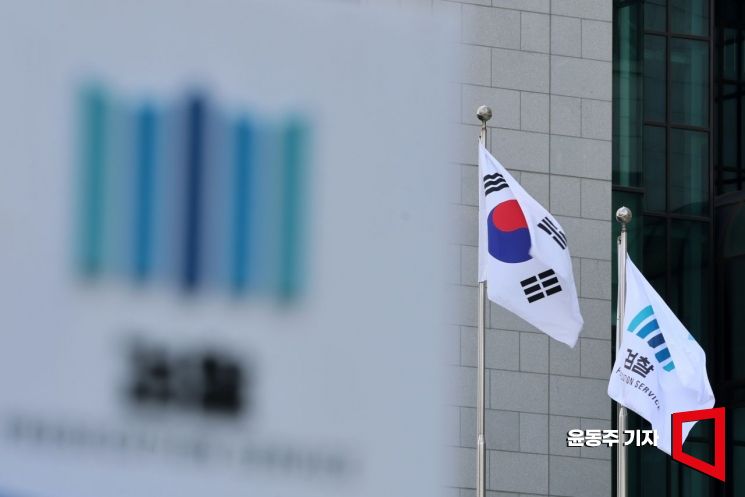
The National Assembly’s Legislation and Judiciary Committee, controlled by the Democratic Party, will hold a public hearing on the “Four Prosecution Reform Bills” on the afternoon of July 9.
The Four Prosecution Reform Bills consist of the following: the Abolition of the Prosecution Service Act, the Establishment of the Public Prosecution Office Act, the Establishment of the Serious Crimes Investigation Agency Act, and the National Investigation Commission Act. The core of these bills is to limit the duties of prosecutors to indictment and maintenance of prosecution, and to abolish both the Supreme Prosecutors' Office and local prosecutors' offices. Investigation authority will be transferred to the Serious Crimes Investigation Agency and the police, while a separate National Investigation Commission will be established to oversee and supervise these investigative bodies.
At the public hearing, which is being promoted by hardline members of the Democratic Party, testimony will be given by Kim Yewon, attorney at the Disability Rights Law Center; Kim Pilseong, attorney at Garosu Law Firm; Kim Jongmin, attorney at MK Partners Law Firm; and Hwang Moonkyu, professor of police administration at Joongbu University. They are expected to present perspectives from various sectors on the abolition of the Prosecution Service, the separation of investigation and prosecution, and potential areas for improvement.
The Legislation and Judiciary Committee plans to immediately refer the Four Prosecution Reform Bills to the Bill Review Subcommittee for deliberation following the public hearing.
Within the party, a “Political Prosecution Fabricated Indictment Task Force (TF)” was established on July 7, and a separate TF dedicated to advancing the Four Prosecution Reform Bills will also be formed.
Party leadership contenders such as Park Chandae and Jung Cheongrae have been making strong statements on a daily basis, responding to the Democratic Party’s core supporters who favor prosecution reform.
The Presidential National Policy Planning Committee’s Government Organization Reform TF is also moving quickly on plans to restructure the Prosecution Service, focusing on the separation of investigation and prosecution, and is coordinating closely with the ruling party. The committee is continuing consultations, including holding meetings with Democratic Party lawmakers who sponsored the Four Prosecution Reform Bills.
The separation of investigation and prosecution is a core pledge of President Lee Jaemyung’s prosecution reform agenda. Last month, during the process of receiving a business report from the prosecution, the National Policy Planning Committee twice returned the report, warning that the prosecution’s willingness to implement reform-related pledges was insufficient. The third report was postponed indefinitely, citing personnel circumstances.
Cho Seungrae, spokesperson for the National Policy Planning Committee, stated at a regular briefing held at the Changseong-dong Annex of the Seoul Government Complex on July 8, “The prosecution’s business report is not absolutely necessary for organizing national policy tasks.” Earlier that morning, in an appearance on the YouTube program “Kim Eo-jun’s News Factory,” Cho said, “When the separation of investigation and prosecution was pledged during the presidential election, it was not done with the prosecution’s approval, nor will the fulfillment of the pledge require the prosecution’s consent.” He added, “It does not matter if the prosecution does not submit a business report. The schedules of the prosecution and the National Policy Planning Committee are different. The committee will proceed according to its own timeline.”
This is interpreted as a strong stance against the prosecution, which is resisting the separation of investigation and prosecution, and signals an intention to push forward with the reorganization of the prosecution regardless of the business report.
© The Asia Business Daily(www.asiae.co.kr). All rights reserved.
![Clutching a Stolen Dior Bag, Saying "I Hate Being Poor but Real"... The Grotesque Con of a "Human Knockoff" [Slate]](https://cwcontent.asiae.co.kr/asiaresize/183/2026021902243444107_1771435474.jpg)
















