Commercialization Expected for Dual-Action Neuroprotective Agent
GNT Pharma, a bioventure company developing new drugs, announced on July 8 that its stroke treatment candidate "Nelonemdaz" has received approval from the Ministry of Food and Drug Safety for a multinational Phase 3 clinical trial (IND).
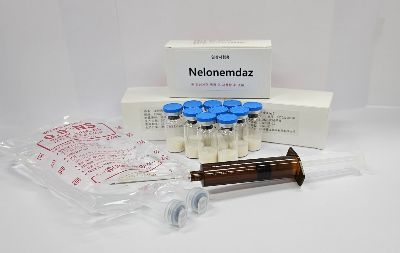
According to GNT Pharma, this Phase 3 clinical trial will target 378 patients with severe ischemic stroke who are eligible for thrombectomy within 12 hours of stroke onset. The plan is to administer the first intravenous dose within 60 minutes of the patient's arrival at the emergency room, with a total of 10 doses given over 5 days. Thrombectomy will be performed within 90 minutes of arrival. The primary endpoint is the patient's independence in daily living 12 weeks after treatment, to confirm the efficacy of Nelonemdaz compared to placebo.
The trial will also involve leading stroke experts worldwide, including Professor Lee Jinsoo of Ajou University Hospital as the principal investigator, Professor Raul Nogueira of the University of Pittsburgh, Professor David Liebeskind of UCLA, Professor Henry Ma of Monash University in Australia, and Professor Bijoy Menon of the University of Calgary in Canada. The study will be conducted at more than 20 hospitals both in Korea and abroad.
Previously, GNT Pharma confirmed the safety and significant disability improvement effect of Nelonemdaz in Phase 2 and 3 clinical trials involving 704 stroke patients in Korea. In particular, when the drug was administered within 60 minutes of arrival at the emergency room, the improvement in disability was 4.3 times greater than the placebo group (p=0.003), and even when administered within 70 minutes, the improvement was 2.22 times greater (p=0.043). The results of the Phase 2 and 3 studies were published in the international journal "Journal of Stroke" on May 31.
Professor Lee Jinsoo, the principal investigator, stated, "This multinational Phase 3 clinical trial is newly designed based on the efficacy of Nelonemdaz confirmed in previous trials, so it is currently the closest to success among all neuroprotective treatments worldwide," adding, "We will do our utmost to ensure clinical success by establishing rapid in-hospital processes in collaboration with participating institutions."
Stroke is a leading cause of death and disability worldwide, resulting in an annual socio-economic burden of approximately 1,300 trillion won. Currently, vascular recanalization treatments such as thrombolytics or thrombectomy are performed, but more than 60% of patients still die or suffer severe disability because these treatments cannot prevent subsequent neuronal cell death.
Nelonemdaz is the world's first dual-action neuroprotective agent, developed with support from Gyeonggi Province and the Ministry of Science and ICT. It blocks acute neuronal cell death through selective inhibition of the NR2B NMDA receptor and suppresses delayed cell death through strong antioxidant effects. This has drawn attention as a new treatment paradigm that can overcome the limitations of existing recanalization therapies.
Gwak Byungjoo, CEO of GNT Pharma, said, "Nelonemdaz is an innovative therapy that can dramatically reduce disability and mortality in patients when used in combination with existing vascular recanalization treatments," adding, "We expect Nelonemdaz to enter the global market through this global Phase 3 trial conducted with the world's top experts."
© The Asia Business Daily(www.asiae.co.kr). All rights reserved.
![Clutching a Stolen Dior Bag, Saying "I Hate Being Poor but Real"... The Grotesque Con of a "Human Knockoff" [Slate]](https://cwcontent.asiae.co.kr/asiaresize/183/2026021902243444107_1771435474.jpg)
















