All-out Efforts for Recovery and Restoration of Daily Life in Sancheong County
In March, a large-scale wildfire broke out in the Sicheon-myeon area of Sancheong County. The blaze burned thousands of hectares of forest and tragically claimed the lives of four people. However, more than 100 days after the wildfire, hope still remains in Sancheong, and the process of recovery has already begun, with people working hard to restore the area.
In light of this, our publication looks back on the wildfire and explores the hopeful steps Sancheong County is taking toward restoring daily life and building a brighter future.
On the urgent afternoon of March 21, at 3:26 p.m., a wildfire ignited in the area of San 39, Sincheon-ri, Sicheon-myeon, Sancheong County.
Fueled by dry weather and strong winds, the fire spread rapidly, prompting the activation of Wildfire Level 3 (Severe) at 6:40 p.m. that day. On the same day, the fire spread to 11 villages across three townships, forcing the emergency evacuation of 742 people from 522 households.
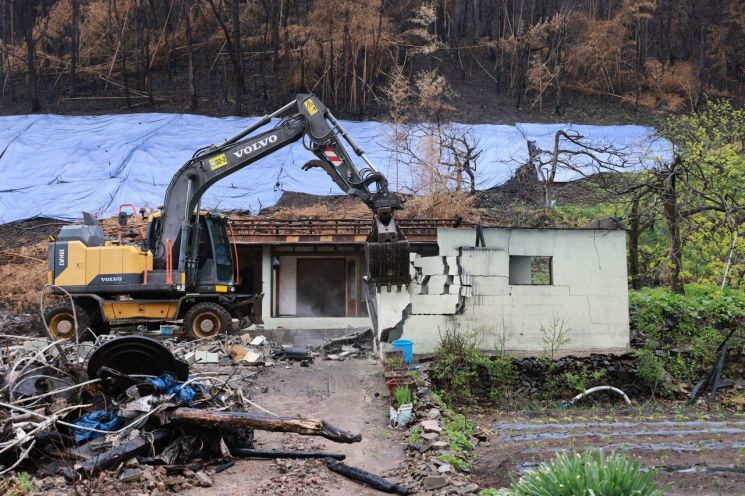
Immediately after the wildfire broke out, various government ministries, the Korea Forest Service, Gyeongnam Province, and Sancheong County established an on-site command center and simultaneously carried out firefighting, evacuation, rescue, and relief operations, striving to maintain order amid the chaos.
However, the fire completely or partially destroyed a total of 92 buildings, including homes, warehouses, religious facilities, and agricultural structures. The disaster resulted in 14 casualties: four deaths, five people with serious injuries, and five with minor injuries. Additionally, 2,403 hectares of forest, forest facilities, and forest products were damaged.
Spring of hope remains intact=After the wildfire, Sancheong County immediately began emergency restoration. On March 22, the area was designated a special disaster zone, and the government allocated a total of 31.3 billion KRW for recovery, launching an all-government response.
First, the Gyeongnam Joint Support Center was established, and an integrated all-government support system was implemented to provide comprehensive services, including funeral, medical, and psychological support, temporary housing assignment, restoration of communication and electricity, and financial and legal counseling.
All 92 affected homes and warehouses have now been demolished, and the design and permitting procedures for residential restoration have proceeded swiftly.
Displaced residents received support for accommodation and meal expenses while living in temporary housing. For 32 households whose homes were destroyed or who were tenants, a disaster relief payment of 3 million KRW per household was provided from county funds. In addition, emergency disaster relief funds of 300,000 KRW per person (from provincial funds) were distributed to wildfire victims in Sicheon-myeon, Samjang-myeon, and Danseong-myeon.
At the same time, damage assessments and restoration plans for agricultural, forestry, and livestock facilities, agricultural machinery, and crops were carried out, along with a variety of livelihood support measures for wildfire victims.
Comprehensive administrative services directly related to daily life were provided, such as reissuing driver's licenses, waiving resident registration card fees, compensating for lost dentures, and reducing water and sewage charges. Free rental of agricultural machinery, special loans from the Agricultural and Fishing Village Promotion Fund, and agricultural disaster relief funds were also implemented to help restore livelihoods.
Rapid restoration accelerates return to normalcy=Currently, Sancheong County is supporting 15 displaced households in temporary housing facilities after the return of those who had evacuated. The county plans to continue providing relief and temporary housing support until residential restoration is complete, ensuring that the evacuees experience no inconvenience.
Additionally, through the Community Chest of Korea and the Korean Red Cross, a total of 5.352 billion KRW raised through donations will be distributed sequentially after consultation procedures. For forest and forest facility restoration, emergency logging, reforestation, and landslide prevention projects are ongoing.
Of the 8.7 billion KRW allocated for private facility restoration, 3.89 billion KRW has been provided for forest crops, 620 million KRW for livestock and inland fisheries, and 130 million KRW for crops, totaling 6.37 billion KRW in support to date.
In particular, for housing restoration, 80 million to 96 million KRW has already been paid to 18 households. For 16 households wishing to build new homes, individual architects have been assigned to support design and construction, and with the first groundbreaking on June 24, the goal is to complete move-in before Chuseok in October.
To further expedite the return of affected residents to their homes, dedicated public officials have been assigned to provide ongoing consultation, and a one-on-one matching system between displaced residents and architects is in place to offer close support throughout the design, construction, and completion phases.
Moreover, to ease the financial burden of housing restoration, 50% of architectural design and supervision fees are being waived, and 1 million KRW per project is being discounted from civil engineering design fees.
In addition, all cadastral survey fees are being waived, and various administrative and financial support measures are being implemented, such as housing and urban fund loans for home purchase and new construction (up to 136 million KRW at a fixed annual rate of 1.5%), and acquisition tax exemptions for the area of the original house.
Wildfire prevention requires attention and participation=Ultimately, wildfire response must be centered on prevention. It is essential to establish daily wildfire management systems, such as creating fire-resistant forests, expanding drone surveillance, strengthening community disaster prevention groups, and increasing village patrols.
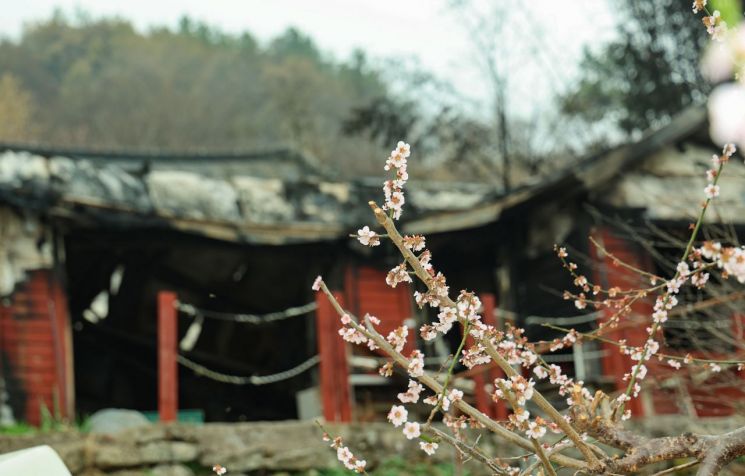
Policy support and active community participation are also needed to prevent the recurrence of disasters. Sancheong County has prepared a proposal for the government to address issues revealed by this wildfire. Key points include the deployment of firefighting helicopters and the construction of additional wildfire response centers.
County Governor Lee Seunghwa stated, "In Sancheong County, which is home to Jirisan, Korea's first national park, and vast forests, it is essential to station firefighting helicopters during wildfire-prone periods to ensure a swift response. Additionally, to enable rapid initial response to wildfires, a wildfire response center must be established in the southern region, as there is currently only one in the north, to reduce dispatch times." He added, "Prevention is the best way to fight wildfires, so we all need to pay attention and participate."
He continued, "Although county residents are experiencing difficulties due to this wildfire, hope remains and recovery has already begun. We will do our utmost to restore the area and help residents return to their daily lives, making Sancheong County a place where everyone can be happy and hopeful."
© The Asia Business Daily(www.asiae.co.kr). All rights reserved.


















