ICIS: "South Korea Is the Largest Supplier of Benzene, Toluene, and Mixed Xylene to the U.S."
U.S. Lacks Structural Production in These Sectors
Global refining and chemical industry research firm ICIS stated on July 7, "South Korea is the largest supplier of benzene, toluene, and mixed xylene to the United States," adding, "For paraxylene, South Korea is the second-largest supplier after Mexico."
ICIS further explained, "These products are basic chemicals produced as byproducts during refining or naphtha cracking processes, so companies do not expand refining facilities or equipment specifically to manufacture them." ICIS pointed out, "U.S. importers will either have to find cheaper alternative suppliers, bear the tariff costs, or reduce production."
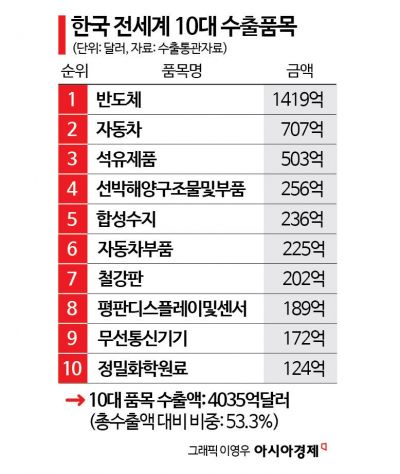
In fact, precision chemical raw materials have ranked among South Korea's top ten global export categories for three consecutive years from 2022 to 2024. Although the ranking dropped two places to tenth from eighth previously, it still represents a significant proportion. According to the Korea Chemical Industry Council, exports of ethylene, a basic raw material, reached 1.85 million tons in 2024, a 2.2-fold increase compared to 848,000 tons in 2020. Exports of benzene and xylene also increased by 1.4 times each during the same period. Among all countries, the United States is the second-largest single-country importer of South Korea's petrochemical products.
ICIS also noted, "Benzene is a precision chemical raw material used in the production of intermediates such as cumene and styrene," adding, "Cumene is subsequently used in the manufacture of phenol and acetone." In the case of paraxylene, it is one of the two main raw materials for producing polyethylene terephthalate, which is a key component of textiles and beverage PET bottles.
Previously, President Trump asserted that the burden of U.S. reciprocal tariffs would fall on exporting countries rather than American consumers. However, it is observed that suppliers of essential goods may hold a negotiating advantage. Suppliers with such leverage can pass on the cost of tariffs to American consumers and companies by raising final consumer prices by the amount of the tariff.
There have been ongoing concerns that tariff costs could directly impact American consumers. According to an analysis by U.S. economic research firm Trade Partnership Worldwide, reported by the New York Times in April, annual tariff costs from U.S. goods imports are projected to increase by $714 billion (approximately 1,033 trillion won). This is also why the Federal Reserve has expressed concern about inflation resulting from tariffs. The New York Times pointed out, "Since companies and consumers bear most of the increased import costs, higher tariffs could cause significant economic damage."
© The Asia Business Daily(www.asiae.co.kr). All rights reserved.

















