Claimed Contamination from Ex-Boyfriend in Doping Case
Certain Substances Can Enter the Body Through Kissing and Similar Contact
A French female fencer who had been accused of violating anti-doping regulations has successfully cleared her name by arguing that "a kiss with her boyfriend led to inadvertent contamination." On July 7 (local time), international media outlets including ESPN reported that the Court of Arbitration for Sport had dismissed the World Anti-Doping Agency's appeal, which had sought a four-year competition ban for Thibus.
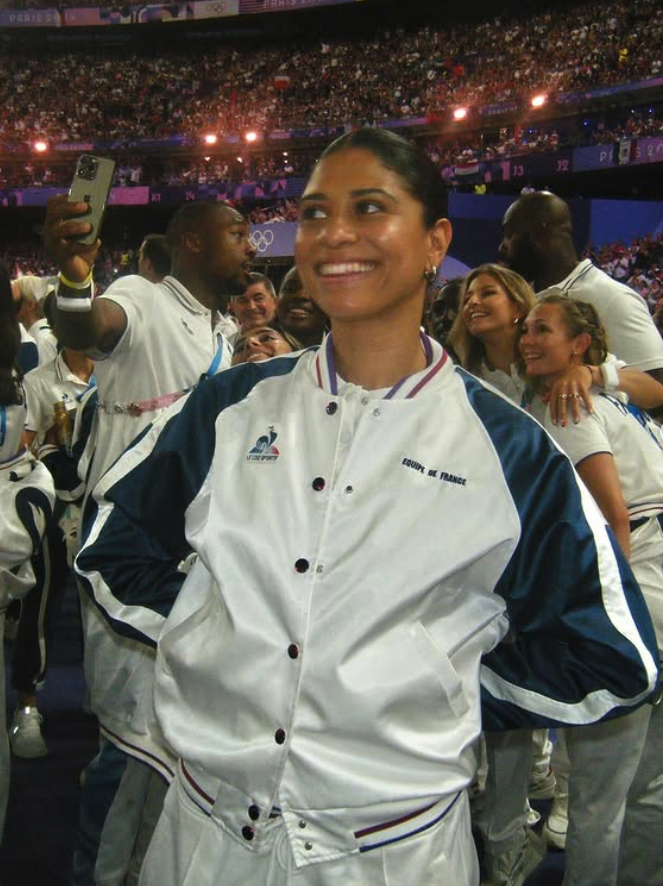
Previously, around January 2024, before the opening of the Paris Olympics, Thibus tested positive for 'ostarine,' a substance banned by the World Anti-Doping Agency for promoting muscle and bone growth. However, Thibus claimed before the International Fencing Federation's anti-doping tribunal that the substance entered her body through the exchange of bodily fluids, such as kissing her boyfriend, former U.S. fencer Race Imboden.
The International Fencing Federation's anti-doping tribunal accepted Thibus's claim. Following this ruling, Thibus sought to participate in the Paris Olympics, but the World Anti-Doping Agency objected to the decision and appealed to the Court of Arbitration for Sport, resulting in her disqualification. However, the Court of Arbitration for Sport found that it was scientifically plausible that repeated kissing with her boyfriend led to inadvertent contamination, and therefore dismissed the World Anti-Doping Agency's appeal.
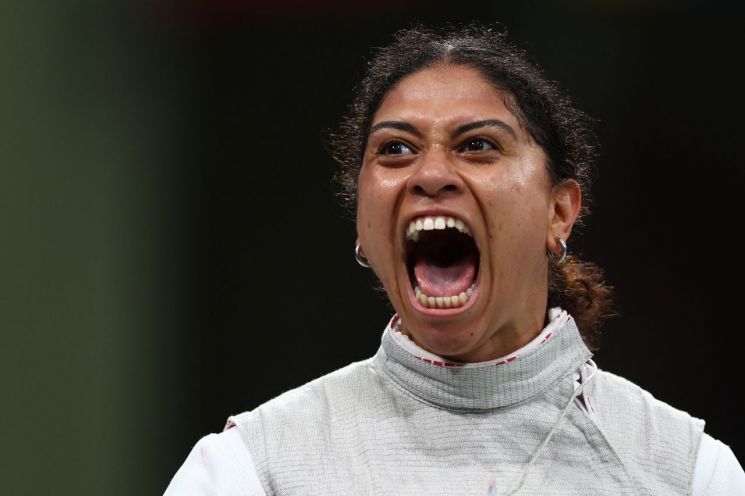
The Court of Arbitration for Sport stated, "It has been scientifically proven that the amount of ostarine consumed by Thibus's then-boyfriend could leave enough residue to contaminate another person through saliva during kissing," and explained, "Race Imboden, Thibus's former boyfriend, had taken ostarine, and there was cumulative contamination."
In a similar case, American Olympic gold medalist Gil Roberts was also ultimately found not guilty after testing positive in a doping test. In 2018, the Court of Arbitration for Sport recognized that Roberts, who won gold in the men's 1600m relay at the 2016 Rio de Janeiro Summer Olympics in Brazil, was not at fault. Roberts proved that a banned substance, which his girlfriend had taken for medical reasons, entered his body through kissing, and thus was able to maintain his honor as a gold medalist. In another case, former French tennis player Richard Gasquet tested positive for cocaine after kissing a woman he met at a club in 2009, leading to suspicions of doping and drug use.
© The Asia Business Daily(www.asiae.co.kr). All rights reserved.
![Clutching a Stolen Dior Bag, Saying "I Hate Being Poor but Real"... The Grotesque Con of a "Human Knockoff" [Slate]](https://cwcontent.asiae.co.kr/asiaresize/183/2026021902243444107_1771435474.jpg)












