The Gamjigeumni Daebanggwangbulhwaeomgyeong Created by a Buddhist Scribe
Handwritten with Gold Ink Made by Mixing Gold Powder with Animal Glue
Siwangdo: One of Only Two Surviving Complete Sets from Early Joseon
Hope Depicted: Even in Hell, Rebirth in Paradise is Possible
Buddhist sutra manuscripts from the late Goryeo period and a complete set of Siwangdo paintings from the early Joseon period have returned from Japan.
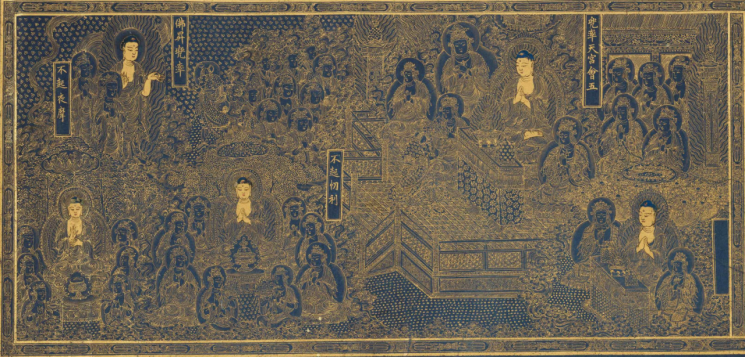
The Cultural Heritage Administration and the Overseas Korean Cultural Heritage Foundation will unveil, for the first time, the "Gamjigeumni Daebanggwangbulhwaeomgyeong Jubon Volume 22" and ten panels of "Siwangdo" (The Ten Kings) at the National Palace Museum of Korea on July 8. Choi Eungchun, Administrator of the Cultural Heritage Administration, stated, "These works demonstrate the excellence of Buddhist art from the Goryeo and early Joseon periods," adding, "Despite the passage of centuries, their preservation is excellent, and we plan to utilize them for various research and exhibitions."
The "Gamjigeumni Daebanggwangbulhwaeomgyeong Jubon Volume 22" is a handwritten Buddhist sutra manuscript created with gold ink made by mixing gold powder with animal glue on dark blue paper. It was produced in 1334, measuring 36.2 cm in height and 1,088.5 cm in width. An official from the Cultural Heritage Administration explained, "Last October, a Japanese owner expressed their intention to sell, which led to the first confirmation of its existence," adding, "Following thorough investigation and negotiation, it was brought into Korea this April."
The Daebanggwangbulhwaeomgyeong is the principal scripture of the Hwaeom School, encapsulating the core idea that Buddha and sentient beings are one. The recently repatriated artifact contains the 22nd volume of the main text, among the eighty volumes translated into Chinese by Shichananda during the Tang dynasty. It details the process of Vairocana Buddha, the principal Buddha of the Avatamsaka Sutra, ascending to the Tusita Heaven (the fourth heaven).
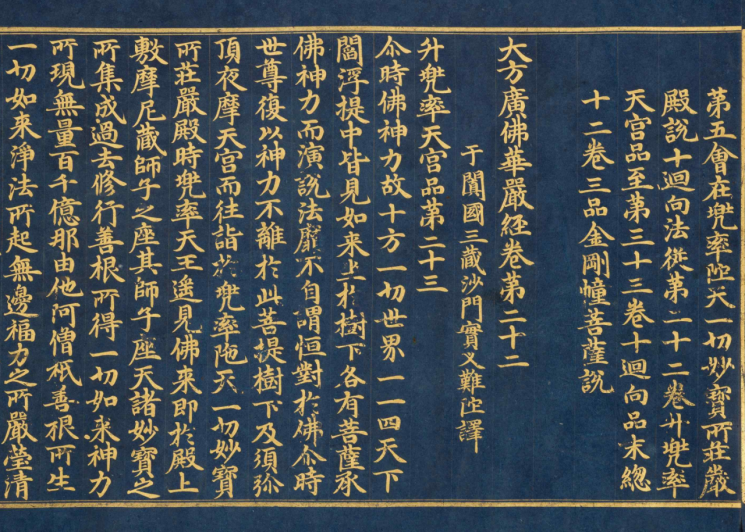 'The Sutra of the Great Vastness and the Illumination of the Buddha, Main Text Volume 22' Opening Passage
The cover is adorned with five lotus blossoms and vine patterns drawn in gold and silver ink, arranged with exquisite precision, showcasing the artistry of Goryeo Buddhist manuscripts. The illustration, composed of five scenes, also features teaching scenes centered on Vairocana Buddha, rendered with refined and skillful line drawing, revealing the high level of craftsmanship of professional Buddhist scribes.
The most notable aspect is the record inscribed in the votive text. It states that during the reign of King Chungnyeol of Goryeo, Jeong Dokmandala, who attained an official post in the Yuan dynasty, completed the transcription of eighty-one volumes of the Avatamsaka Sutra in 1334 (Yuantong 2nd year) in gratitude for the grace of his parents and the emperor. This content matches the votive text of the "Gamjigeumni Daebanggwangbulhwaeomgyeong Volume 15" housed at the Coreana Cosmetics Museum, confirming that they belong to the same Avatamsaka Sutra set.
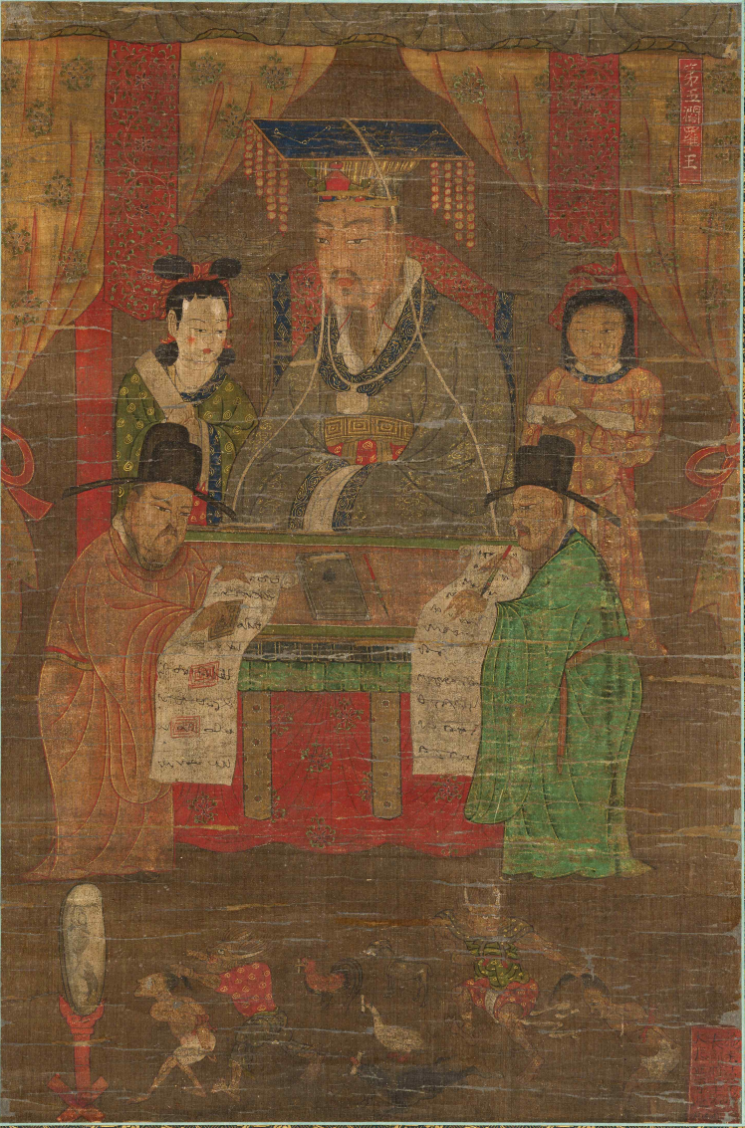
The Siwangdo paintings, also unveiled together, are representative Buddhist paintings of early Joseon. The Overseas Korean Cultural Heritage Foundation obtained information about their listing at a Japanese auction in August 2023 and succeeded in acquiring them, bringing them back to Korea in November last year. An official from the Cultural Heritage Administration added, "This is one of only two extant complete sets of early Joseon Siwangdo," and "it was previously introduced in the 'Yuhyeonjaeseon Hanguk Goseohwa Dorok' by Japanese collector Irie Takeo."
The Siwangdo, painted in color on silk, depicts the Ten Kings and hell in each panel. The upper part of each panel prominently features the solemn judgment scenes of the kings, while the lower part depicts, on a smaller scale, the harrowing scenes of the deceased being punished by the underworld officials.
The most striking king is King Yeomra. Unlike iconography known as Ilwolmun or Geumganggyeongchaek, the crown (myeonryugwan) is adorned with the Big Dipper constellation. It is presumed that the authority of King Yeomra was symbolized through the Big Dipper, which governs lifespan.
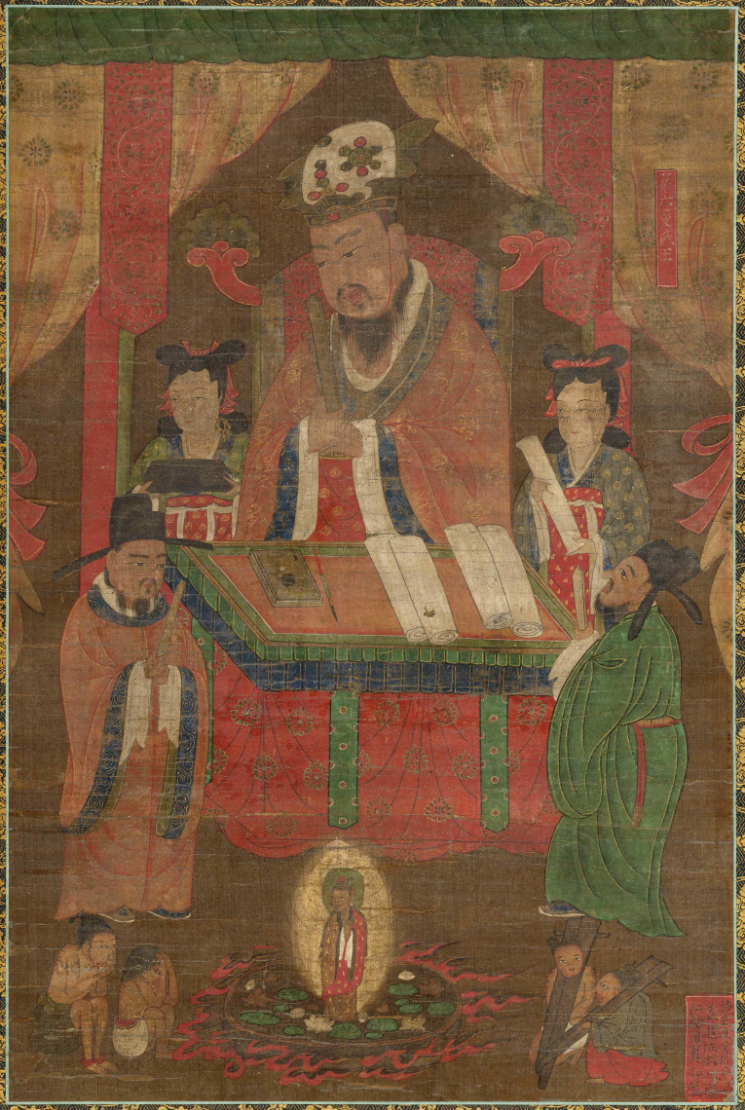
In the Hwatang Hell (where the condemned suffer in cauldrons of boiling molten metal) presided over by King Byeonseong, a glimmer of hope is also depicted. The boiling water transforms into a lotus pond of the Pure Land, illustrating the deceased's rebirth in paradise. An official from the Cultural Heritage Administration explained, "This is the first known example of the Buddhist concept of 'lotus rebirth' (Yeonhwahwasaeng) appearing in a hell scene," and "it conveys the hope that even in hell, one can be reborn in paradise after atoning for one's sins and repenting."
© The Asia Business Daily(www.asiae.co.kr). All rights reserved.
![Clutching a Stolen Dior Bag, Saying "I Hate Being Poor but Real"... The Grotesque Con of a "Human Knockoff" [Slate]](https://cwcontent.asiae.co.kr/asiaresize/183/2026021902243444107_1771435474.jpg)


















