With President Lee Jaemyung (61, 18th class of the Judicial Research and Training Institute) nearly completing the formation of his cabinet, the official season for confirmation hearings has begun.
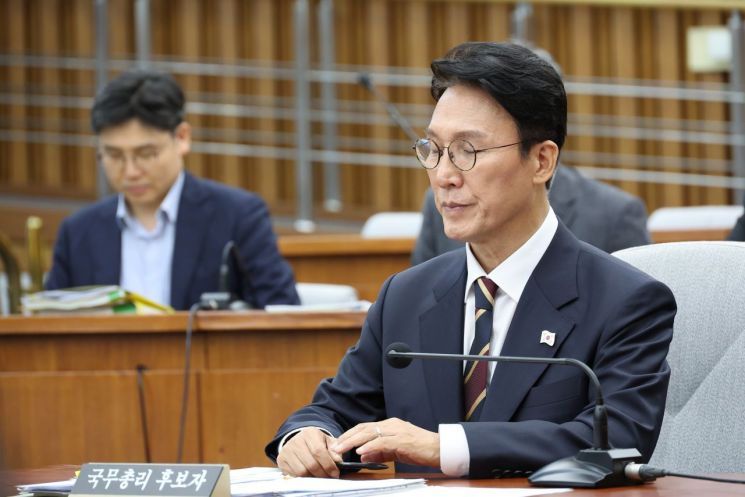
However, as seen in the confirmation hearing for Prime Minister nominee Kim Minseok, there is ongoing criticism that the hearings have once again devolved into arenas for political strife and public shaming of nominees under the pretext of verifying their morality, rather than genuinely assessing the competence and qualifications of high-ranking officials. Amid discussions questioning the very necessity of confirmation hearings, there is growing support for amending the law to enhance the effectiveness of the confirmation hearing system.
The National Assembly's confirmation hearing system was first introduced in 2000 for positions such as Prime Minister, Chairperson of the Board of Audit and Inspection, Chief Justice of the Supreme Court, and President of the Constitutional Court. Since then, the scope has expanded to include cabinet ministers, the Director of the National Intelligence Service, and the Chairman of the Joint Chiefs of Staff, and the system has become established. However, there have been persistent criticisms that the system was structurally limited from the outset in terms of conducting substantive verification of nominees.
According to Article 9 of the current Confirmation Hearing Act, the National Assembly must complete its review within 20 days of receiving a request for a confirmation hearing, and the relevant committee must finish its review within 15 days. Within this short time frame, even if nominees or related agencies respond insincerely to requests for materials or outright refuse to submit them, there are no legal means to sanction such behavior.
In fact, the confirmation hearing for nominee Kim Minseok, held on June 24 and 25, was the first to proceed without any witnesses since the introduction of the Confirmation Hearing Act. This was because the ruling and opposition parties failed to agree on the selection of witnesses by the deadline of June 20 for submitting requests for witnesses and reference persons, despite allegations concerning Kim’s asset formation, foreign exchange transactions, and the sources of funds for his children’s overseas education.
In its 2010 report, "Measures to Improve the National Assembly's Confirmation Hearing System," the National Assembly Research Service pointed out that, although there is a legal basis for requesting the submission of materials for hearings, the current structure makes effective oversight difficult, as simply submitting a statement of reasons suffices even if the request is not fulfilled. The report also suggested that explicitly stipulating in the law that the hearing period could be extended by the length of the delay if materials are not submitted by the deadline without just cause could serve as a practical sanction.
The current law allows the committee to request materials if there is a committee resolution or if at least one-third of the members so request (Article 12), and in principle, the deadline for submitting materials is within five days (Article 9). However, since the hearing must be completed within 15 days of the submission of the appointment agreement to the National Assembly, the actual period for committee members to request and review materials is little more than ten days. Due to these time constraints and the lack of sanctions, it is difficult for hearings to fulfill their substantive verification function, and there are concerns that the effectiveness of the hearings is fundamentally undermined if materials are insufficiently secured.
However, no legislative amendments have been made to achieve substantive improvements in the confirmation hearing system over the past 25 years. Although 215 bills to amend the Confirmation Hearing Act have been proposed in the National Assembly, only 8 have actually passed. Most of these were limited to "expanding the scope of the hearings in line with amendments to the National Assembly Act" or "refining terminology," while substantive amendments such as introducing penalties for perjury or concealing materials, and strengthening the obligation to submit materials, failed to pass the National Assembly.
The ruling party has stated its intention to accelerate amendments to the Confirmation Hearing Act. It has announced plans to conduct morality verification in closed sessions and policy verification in open sessions at the nominee's request. Kim Byungjoo, a senior member of the Democratic Party, said, "Verification of policy and competence has disappeared, and the focus has shifted solely to shaming and obstruction. Now, the public also keenly feels the need to amend the Confirmation Hearing Act."
Kim Jihyun, Law Times Reporter
© The Asia Business Daily(www.asiae.co.kr). All rights reserved.

















