Urban Railway Line 2 and Honam Expressway SOC Projects Gain Momentum
Mobility AX Demonstration Lab and Next-Generation Solar Cell Funding
Increased Budget for Livelihood Recovery Coupons and Gwangju Mutual Growth Card
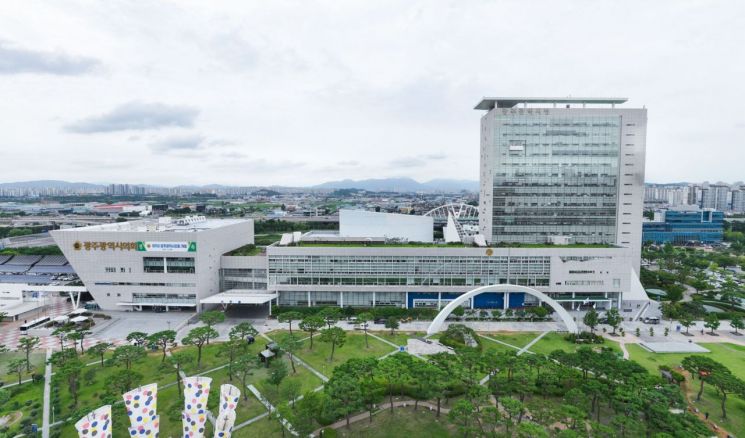
The Gwangju city government announced on July 7 that 99.4 billion won in funding for key pending projects requested by the city has been included in the 'Second Supplementary Government Budget for 2025,' which recently passed the National Assembly's plenary session.
Mayor Kang Gi-jung held a meeting with local National Assembly members on June 10 and met with government officials to actively advocate for the necessity and legitimacy of major projects, which led to meaningful results in this supplementary budget.
The main projects reflected in the budget include: 71.5 billion won for the construction of Urban Railway Line 2; 1.1 billion won for the establishment of an integrated wireless network for Urban Railway Line 1; and 18.3 billion won for the expansion of the Honam Expressway (Donggwangju to Gwangsan IC) section. These large-scale SOC (social overhead capital) project funds are expected to accelerate efforts to alleviate local traffic congestion and strengthen accessibility to industrial complexes and logistics bases.
In particular, the restoration of funding for the Honam Expressway expansion project was decisively influenced by Mayor Kang's decision to hold a 'Honam Expressway Expansion Project Citizens' Forum' on July 1, just before the National Assembly Special Committee on Budget and Accounts, where he expressed his commitment to the project by accepting citizens' opinions.
Mayor Kang and local National Assembly members worked closely with the government and the National Assembly to secure the restoration of the Ministry of Land, Infrastructure and Transport's budget. The city plans to resolve chronic congestion issues on the Honam Expressway section, enhance logistics competitiveness, and significantly improve safety and convenience in citizens' daily lives by reducing emergency transport times and decreasing traffic accidents.
Efforts to foster future growth industries have also gained momentum. The inclusion of 2 billion won for the Mobility AX Demonstration Lab is expected to accelerate the establishment of demonstration equipment for the second phase of the artificial intelligence project. Additionally, 2 billion won for next-generation solar cell demonstration, 3 billion won for support of the Super-Gap Startup 1000+ program, and 300 million won for establishing the foundation of the optical convergence industry innovation ecosystem have also been included, which are expected to contribute to the growth of local innovative companies and the creation of an industrial ecosystem.
However, the 1 billion won budget for the basic plan study for the National AI Mobility Pilot City was submitted to the National Assembly's Special Committee on Budget and Accounts but was ultimately not included, in line with the new government's supplementary budget focus on public livelihood. Nevertheless, as this project is a presidential regional pledge and has strong consensus with central ministries, the city plans to actively pursue its inclusion in next year's main government budget.
Regarding the project to establish Gwangju as an Asian Culture Hub City, 1 billion won for the Chungjang Creative Cultural Complex and 200 million won for the Global Culture and Tourism Town have also been secured. In addition, 3.36 billion won in national funding has been additionally secured for the Gwangju Youth Monthly Rent Temporary Special Support program to assist young people with housing stability and independence.
With a significant expansion in national funding for livelihood recovery consumption coupons and the Gwangju Mutual Growth Card, there are high expectations for boosting sales for small businesses and revitalizing local commercial districts. The livelihood recovery consumption coupons will provide between 150,000 and 550,000 won per person, depending on income and region, and the discount rate for local gift certificates will be raised from 8% to up to 13%. The city plans to continue improving citizens' quality of life and strengthening urban competitiveness through strategic national funding and regionally tailored policies.
Mayor Kang stated, "We did our utmost to ensure that Gwangju's future industries, transportation network, and livelihood issues were reflected in the national budget through this supplementary budget," adding, "We will continue to repay citizens with a better transportation environment, more jobs, and a more vibrant local economy that they can truly experience."
© The Asia Business Daily(www.asiae.co.kr). All rights reserved.
![Clutching a Stolen Dior Bag, Saying "I Hate Being Poor but Real"... The Grotesque Con of a "Human Knockoff" [Slate]](https://cwcontent.asiae.co.kr/asiaresize/183/2026021902243444107_1771435474.jpg)
















