Statement Submitted to USTR:
"Unintended Damage to Allies Must Be Minimized"
It has been confirmed that the South Korean government has requested the United States government to impose port entry fees on car carriers built in foreign countries only on China, while excluding South Korea.
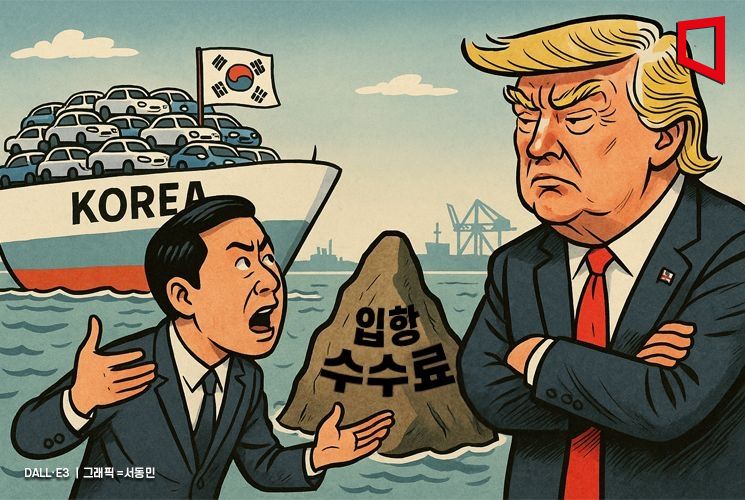
According to the Office of the United States Trade Representative (USTR) on July 6 (local time), the South Korean Ministry of Trade, Industry and Energy and the Ministry of Oceans and Fisheries submitted an official statement reflecting this position to the USTR on July 4. This statement concerns the port entry fees imposed on car carriers built in foreign countries, which is part of a series of policies announced by the USTR on April 17 to prevent China's dominance in the shipbuilding and shipping industries and to rebuild the U.S. shipbuilding industry.
The core of the USTR policy is to impose fees on ships operated by Chinese shipping companies or built in China when they enter U.S. ports starting October 14. However, in the case of car carriers, the policy does not limit the fee to China but applies it to all carriers built in foreign countries. This means that companies such as Hyundai Motor, Kia, and Hyundai Glovis, which export cars to the United States or operate car transport businesses, could face increased logistics costs.
In its statement, the South Korean government pointed out that "imposing port entry fees on car carriers would, contrary to its intended purpose, place a significant burden on the relevant industries of both countries and run counter to the mutually beneficial trade relationship between South Korea and the United States." The government went on to remind the USTR of the original purpose stated when implementing policies such as the port entry fee, and stated, "The South Korean government respectfully requests that the imposition of port entry fees on car carriers be clearly defined and limited to the originally targeted countries, in line with the original purpose of the measure." Although the government did not mention China directly, this is interpreted as a request to limit the car carrier port entry fee to Chinese companies or ships built in China.
The government also noted that car carriers often call at U.S. ports multiple times a year, and requested that a cap be set on the number of times port entry fees can be imposed.
The government emphasized that South Korean automakers, including Hyundai Motor and Kia, have faithfully implemented the investment plans promised during the first Donald Trump administration, and have also announced an additional $21 billion investment plan for the second Trump administration.
The government explained that, as the United States already imposes tariffs on automobiles and auto parts, the port entry fee on car carriers would impose a "double burden" on companies exporting cars to the United States. The government urged that, if the United States adjusts the scope and intensity of this measure as requested by South Korea, it would be possible to effectively address unfair global trade practices while minimizing unintended damage to the industrial ecosystem of allied countries like South Korea, which contribute to strengthening the U.S. economy through economic cooperation.
© The Asia Business Daily(www.asiae.co.kr). All rights reserved.

















