Guidance for Airline Passengers Starting July 8
"So Abnormalities Can Be Detected Early"
NHK reported on July 6 that the Japanese government plans to require airline passengers to keep lithium-ion portable batteries within their immediate reach, rather than in overhead cabin storage compartments.
According to the report, the Ministry of Land, Infrastructure, Transport and Tourism and Japanese airlines will begin informing passengers of this policy starting July 8. An official from the ministry explained, "If passengers keep the batteries near themselves, they can quickly notice any abnormality and respond immediately, which can help contain a potential fire at an early stage."
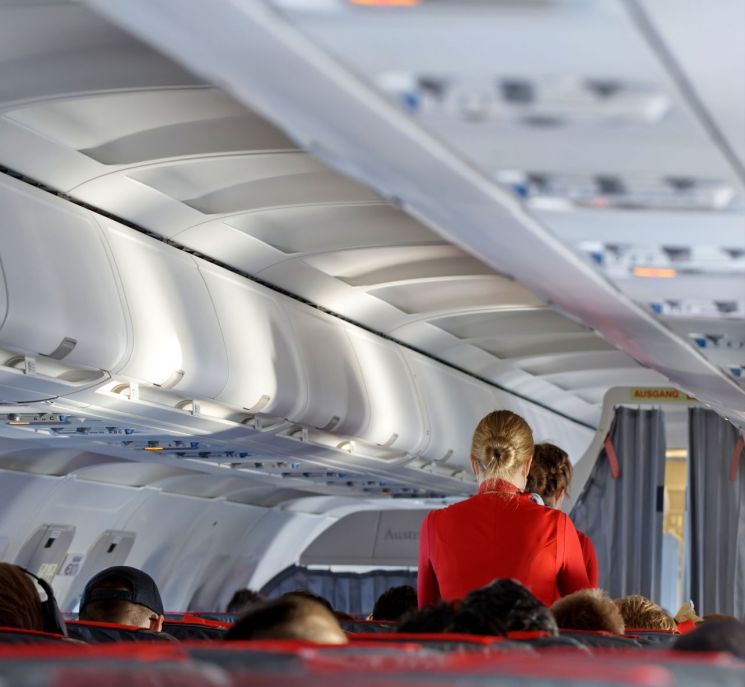
This measure comes amid growing global concerns over incidents involving lithium-ion batteries on aircraft, following a fire on an Air Busan flight at Gimhae Airport in January, which was attributed to a portable battery stored in an overhead compartment. In Japan, a Hawaiian Airlines passenger plane departing from Hawaii made an emergency landing at Tokyo Haneda Airport in April after a portable battery caught fire. Lithium-ion batteries with a capacity of up to 100Wh can be brought on board without any special declaration or approval, while those between 100 and 160Wh require airline approval.
Previously, in March, South Korea's Ministry of Land, Infrastructure and Transport implemented a new standard for strengthening the safety management system for lithium-ion portable batteries and electronic cigarettes, prompted by the Air Busan incident. The guidelines instruct passengers not to store portable batteries or electronic cigarettes in overhead compartments, but instead to keep them in a plastic bag in the storage space in front of their seat or in their clothing pockets. In addition, the ministry is considering further measures such as mandatory temperature-sensitive stickers, fire-resistant bags, and the provision of flame-retardant bags. Since June 28, China has also banned the carriage of portable batteries without the country's Compulsory Certification (3C) mark on domestic flights.
According to statistics from the Federal Aviation Administration (FAA), more than 60 battery fire incidents were reported on U.S. aircraft between 2017 and 2022. Most of these fires originated from mobile phones, portable batteries, and electronic cigarettes, with many cases occurring when devices became damaged after being caught between reclining seats.
To prevent portable battery fires, passengers should avoid covering batteries connected to devices with blankets or similar items, and always use genuine charging cables and adapters. Additionally, portable batteries with damaged charging ports should not be used.
© The Asia Business Daily(www.asiae.co.kr). All rights reserved.

















