Treasure No. 505...
A Historical Heritage Embracing the Spirit of Goryeo
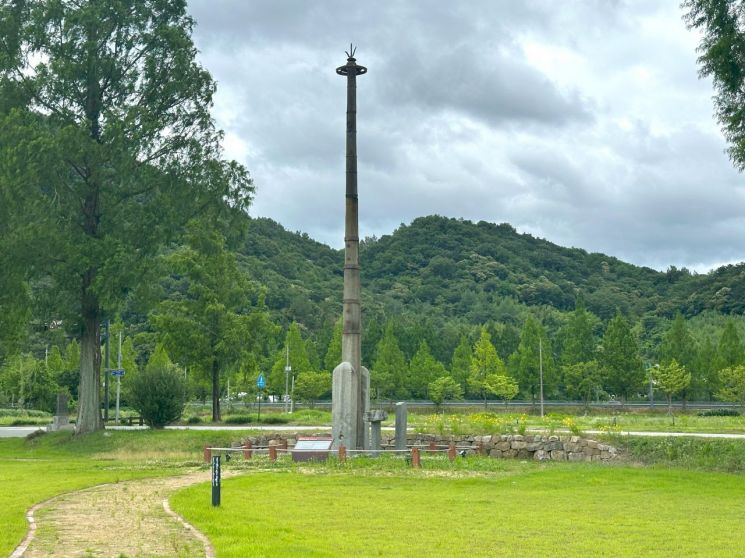
As you head from Damyang-eup in Damyang County, South Jeolla Province toward Sunchang, an unexpected sight comes into view. In the middle of the fields stands a single towering stone pillar. This is the 'Seokdanggan' located in Gaeksari, Damyang-eup, which has stood watch for 1,000 years.
The Damyang Seokdanggan is believed to have been first erected during the Goryeo Dynasty and was designated as Treasure No. 505 in 1969, making it a valuable cultural heritage asset. Originally, Seokdanggan pillars were set up at Buddhist temples to hang flags announcing dharma assemblies or rituals. These flags carried the meaning of 'Pasa Hyeonjeong,' which signifies 'breaking falsehoods and revealing the correct path.' Thus, the pillar served not only as a decorative element but also as a religious symbol.
Most Danggan pillars were made of wood and have been lost over time, while the remaining iron or stone Danggan pillars are extremely rare nationwide. In particular, the Seokdanggan in Gaeksari, Damyang, is one of only two remaining stone Danggan pillars in Korea, making its rarity and historical value highly regarded.
The Damyang Seokdanggan is presumed to have existed since the Goryeo Dynasty, and, together with the nearby Five-story Stone Pagoda from the same era (Treasure No. 506), it indicates that a large temple once stood in this area.
The current Seokdanggan was reconstructed in the fifth year of King Heonjong of the Joseon Dynasty (1839). According to the inscription erected at that time, the pillar had previously undergone several repairs due to natural disasters and damage. The style of the base supporting the pillar follows Goryeo conventions, indicating that the original form before reconstruction also adhered to the Goryeo style.
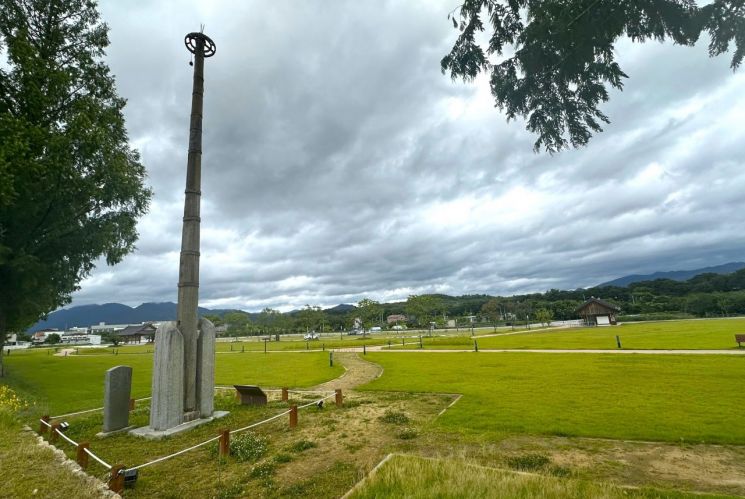
The Damyang Seokdanggan is more than just a Buddhist relic. According to a local geomancy story, since the Damyang area is said to resemble the shape of a boat, this stone pillar was regarded as the 'mast of the boat,' believed to maintain geographical balance and bring peace to the village. For this reason, local residents also call the Seokdanggan 'Jongdae' or 'Jimdae.' It is thus accepted as a spiritual symbol of the region.
The Seokdanggan boasts a delicate and intricate structure. Three slender, elongated octagonal stone pillars are joined atop a lotus-patterned stone base, with iron bands firmly securing the joints to enhance durability.
At the top of the pillar, there are double 'Boryun' (jewel wheel) ornaments and a wind chime, which produces a gentle sound when the wind blows. Above this, a sharp iron spike rises, which is believed to have served as a lightning rod at the time. Such finely crafted attachments remaining intact to this day are rare nationwide.
The Gaeksari Seokdanggan stands in the middle of a wide field along the roadside from Damyang-eup toward Sunchang, making it easily accessible to anyone. Visitors to this site can experience not only a historical relic but also the spirit of the Goryeo era and the local community.
An official from Damyang County stated, "The Gaeksari Seokdanggan is a symbolic heritage that contains both the long history and regional identity of Damyang," adding, "We will continue systematic preservation and utilization efforts so that many people can appreciate the value of this heritage."
© The Asia Business Daily(www.asiae.co.kr). All rights reserved.


















